
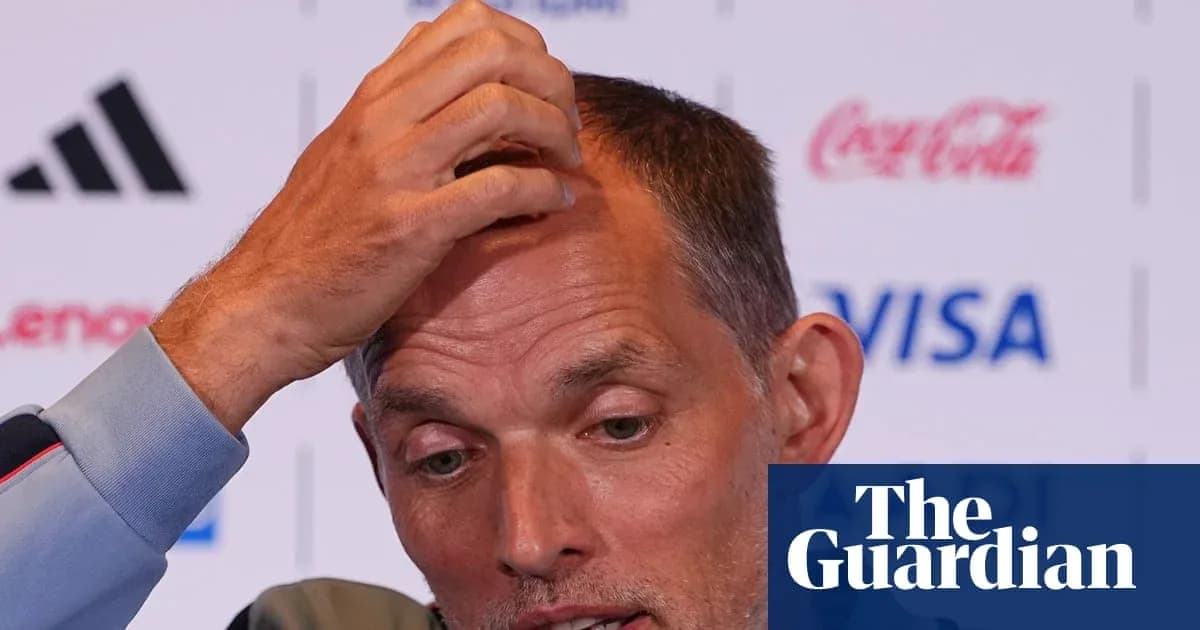
England's Tactical Dilemmas Ahead of Panama Clash
In another universe, Thomas Tuchel spends this week debating whether to wrap Harry Kane in cotton wool or unleash him for a Golden Boot tune‑up against Group L’s weakest seeds. In this one, England are stuck in New Jersey, still sweating over top spot and still searching for answers against teams who refuse to budge.
The 0-0 with Ghana changed everything. What should have been a gentle glide into the last 32 has turned into a slog. No early qualification, no luxury of rotation, no “dead rubber” for Ollie Watkins and Ivan Toney to finally enjoy a proper run while Kane rests his legs and chases Lionel Messi, Erling Haaland and Kylian Mbappé on the side.
Instead, England face the prospect of four matches in 13 days and a manager caught between pragmatism and risk.
Selection headaches at the worst time
There will be changes against Panama. Some Tuchel wants, some he really does not.
Declan Rice is one yellow card from suspension and finished the Ghana game with strapping on his left calf. That alone would be enough to make any coach pause. Losing Reece James is worse. Another hamstring problem, another spell out, at least two games gone from a tournament that was always going to test England’s depth in the full-back positions.
Everyone saw this coming. James’s muscle record is no secret – almost two months out at the end of the season – but Tuchel still rolled the dice with his defensive options. He picked only three attacking full-backs. Tino Livramento, another with a fragile history, has already left the camp and was replaced not by a like-for-like runner, but by centre-back Trevoh Chalobah.
Now the burden of width and invention from deep falls on Nico O’Reilly, still learning the rhythms of international football. The alternatives at right-back – Ezri Konsa, Jarell Quansah, Djed Spence – are all more comfortable defending than raiding. Every minute James misses will shine a harsher light on the decision to leave out Trent Alexander-Arnold.
What should have been a straightforward assignment against Panama suddenly feels loaded. The draw with Ghana means England cannot ease off. They cannot coast. They cannot treat this like a training exercise.
Kane, Bellingham and the rotation gamble
So does Tuchel keep his stars on the pitch or trust the squad? Kane and Jude Bellingham have carried the attacking burden for months. Resting both would be bold. Resting neither might be reckless.
Some of the A-listers will have to go again. Tuchel will not want a second-placed finish that twists England’s route through the knockouts. Just as importantly, he knows this team need to rediscover a spark. Beating Croatia with such freedom, then immediately stumbling in the second group game, has become an uncomfortable pattern at major tournaments.
The issue is not effort. It is the puzzle England have yet to crack: how to prise open a low block without losing their shape.
Ghana sat in a compact 4-5-1 and made the evening miserable. Panama will try to do the same. Thomas Christiansen’s side are already out after 1-0 defeats by Ghana and Croatia, but they were stubborn in both games and far removed from the naive group that lost 6-1 to England at the 2018 World Cup.
Tuchel expects a back five that occasionally looks like a back six or seven. He knows the warning signs. His England have produced some of their flattest football when faced with this kind of barricade. Give them space, as Croatia, Serbia and Wales did, and they can be exhilarating. Close the gaps, as Andorra, Albania and Latvia did in qualifying, and they can look slow, predictable, frustrated.
Ghana were exactly that kind of opponent. Thomas Partey tracked Kane everywhere, smothering the captain’s usual trick of dropping off to link play. The statistics told the story. Kane managed only 19 touches and combined with Bellingham just three times. England had 78.8% of the ball and still did not register a shot on target until after the break.
No magic formula – yet
Tuchel is still searching for the blueprint.
“It is normal that it is difficult for us to overcome these blocks,” he said afterwards. He felt England “did enough to win” but admitted they had to work hard just to control Ghana’s counters – and failed twice, both moments leaving them exposed.
“I haven’t found the recipe where: ‘They do this, then we do this and then we are fine,’” he added. Against Panama, he wants an “active and aggressive approach” but refuses to turn it into a reckless shoot-out. Seven players on the last line and only three defending? “It’s not serious enough.”
His football is built on control and carefully rehearsed patterns. England are supposed to create overloads in key zones, then quicken the tempo at the right moment. The snag?
“There was no overload against Ghana,” Tuchel said. “There will very likely be no overload against Panama.”
So the risk has to come somewhere else: in possession, in the willingness to take on a man, in the readiness to shoot when the perfect angle is not there. What England cannot do is fall into the same traps, letting Panama slow everything down and turn the game into a stop-start grind.
Bellingham’s irritation in New Jersey was obvious. He went looking for the ball, demanded responsibility, but too often team-mates did not find him. Just before half-time he snapped, conceding a needless free-kick. The impatience was understandable. It was also a warning.
Left side drifts, right side in flux
If England are to lift the tempo, the wide players must change the tone.
The centre-backs need to step in with more conviction. Kobbie Mainoo’s close control in tight spaces could be invaluable if he replaces Rice. Higher up, the wingers have to be braver, more direct, less content to recycle.
Tuchel hopes Bukayo Saka is ready to return on the right in place of Noni Madueke. On the left, Anthony Gordon has faded badly and may give way to Marcus Rashford. Another option is to start Eberechi Eze or Morgan Rogers and ask them to drift infield, closer to Bellingham, to knit the moves together.
Tuchel admits the chemistry on that flank has dipped. After a bright friendly win over Costa Rica, he thought Gordon and O’Reilly had solved the problem. “I thought: ‘OK, left side is solved,’” he said. Then came the competitive games. “They’re not clicking. It was not the same penetration, not the same verticality, and this was the same in the second match.”
Against Ghana, the reshuffle hurt. Spence, a right-footer, offered little going forward when he replaced the more adventurous O’Reilly at left-back. Rashford only appeared in the 83rd minute and has yet to convince Tuchel he can dominate a game from the start.
“He’s a candidate to start,” Tuchel said, before widening the lens. “But the left side in general needs to provide more threat.”
One-against-one or nothing
Tuchel keeps steering the conversation back to the collective. He talks about encouraging players to relish “one-against-ones”, to break the structure when the structure alone is not enough. Panama will try to smother those situations, too, by crowding the ball and suffocating space.
“It is difficult to accelerate the match against these low blocks,” Tuchel admitted. So the emphasis shifts to details: one clean cross, one decisive run, one shot from distance that takes a deflection and finally forces the breakthrough.
Are England attacking the box aggressively enough when the ball comes in? Are they shooting often enough from outside it? Those are the questions that will define their evening more than any grand tactical theory.
Tuchel, to his credit, is not losing his sense of proportion. He insists nobody will enjoy playing Carlos Queiroz’s Ghana. He has seen this kind of group-stage chess match before in the Champions League. Teams that celebrate every duel, every counterattack, every foray over halfway as if they have scored.
Ghana did exactly that. They treated 0-0 as a triumph.
England cannot. Expectations are higher, and so is the scrutiny. Against Panama, they will be asked not just to win, but to entertain, to release some of the tension that has crept into their football and stride into the knockouts with something close to swagger.
Tuchel’s task is clear. He has to find the moment, the tweak, the risk that finally lets this team release the handbrake.
Related News

Raphinha’s Hat-Trick Powers Barcelona to 7-2 Victory Over Racing Santander
Carabao Cup Fourth Round Draw: Liverpool Set to Clash with Chelsea, Arsenal to Face Fleetwood Town
Key Football Matches to Watch in Azerbaijan This Autumn
Hansi Flick Leads Barcelona to Record-Breaking Seven Wins in a Row
Gavi Reflects on Injury Return as Barcelona Dominate Racing Santander 7-2
Buffon Stands Firm in Support of Gattuso and Reflects on Italy Exit