
Can England Afford to Start Declan Rice and Elliot Anderson?
The argument has rumbled on all week: can England really afford to start both Declan Rice and Elliot Anderson?
For some, the answer is no. They want England on the front foot, flooding the pitch with creativity, two number tens buzzing around rather than two disciplined sixes patrolling the middle. They want risk. They want chaos. They want goals.
But strip away the noise and you’re left with a simple truth: Rice and Anderson are two of the best central midfielders in the Premier League. Different tools, same level. Anderson can slice teams apart with his passing range, while Rice brings that relentless engine, the ability to cover ground, break lines and keep the game moving.
The question isn’t whether they’re good enough. It’s how brave England are prepared to be with them.
At club level, both are used to starting the play, not finishing it. They sit, they build, they recycle. They’re the platform, not the headline act. Put them together at international level and the logic is obvious: they give England’s full-backs the licence to bomb on, knowing there’s a safety net behind them.
On paper, that structure makes sense. On grass, if it drifts into sideways passing and sterile domination, it becomes a problem.
That’s where the manager earns his money. If, by the hour mark, England are still prodding at a low block and running into the same brick wall, the dial has to shift. Positive substitutions. A different profile in midfield. A runner beyond the ball. It’s always a gamble, always a tightrope between control and chaos, but knockout football doesn’t reward caution for long.
Change things too early or too aggressively and you risk losing your grip on the game, leaving gaps for the counter. Change nothing and you risk sleepwalking out of a tournament you were supposed to navigate.
And this time, England cannot ignore the threat on the break. DR Congo are a step up from the likes of Panama. They’ve earned their place here. They’ve got pace, power and, crucially, players who know the Premier League tempo and aren’t remotely overawed by it.
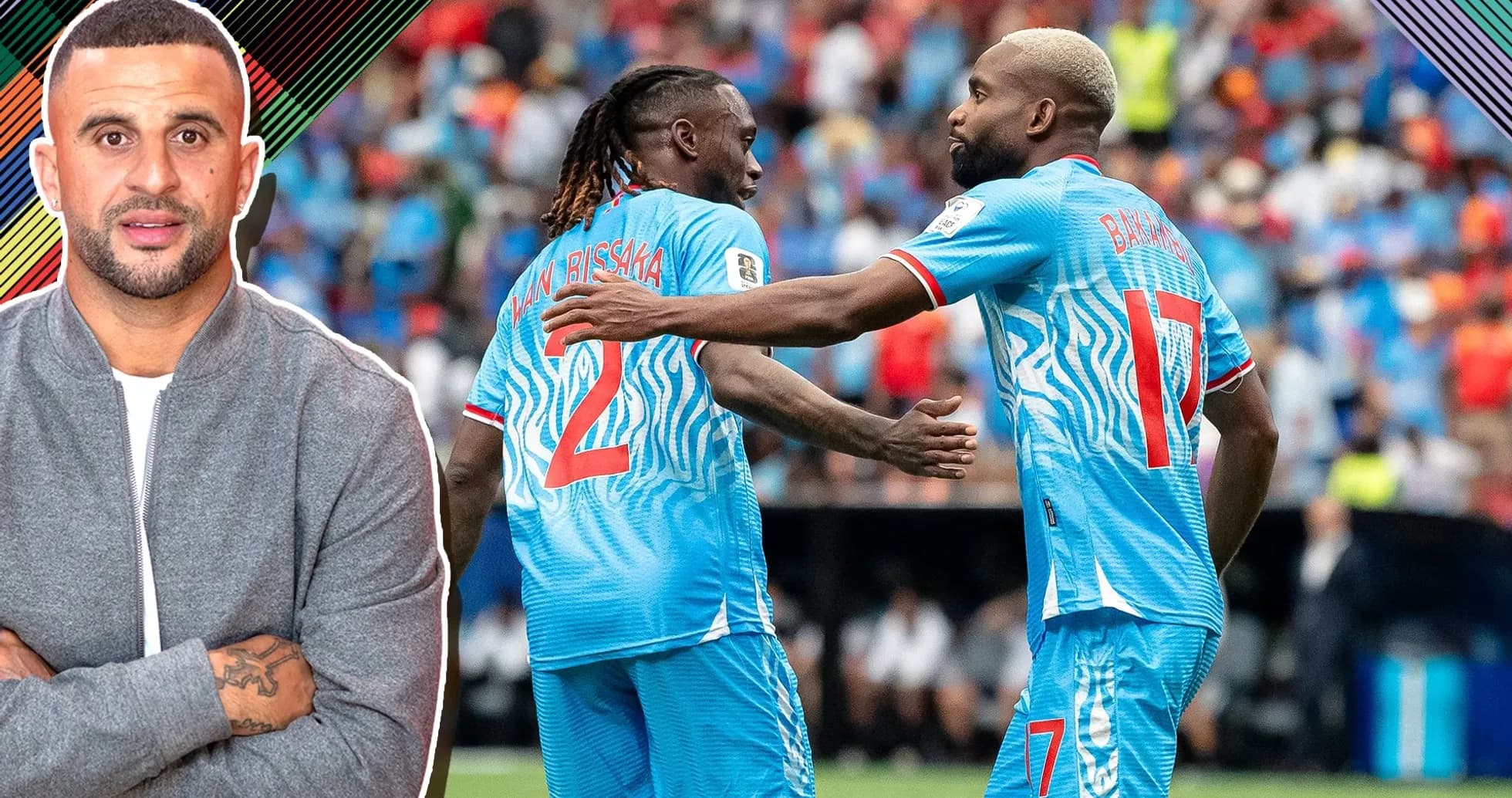
Yoane Wissa is the obvious danger. He harries defenders, never lets them settle, forces mistakes with his work-rate as much as his movement. His Newcastle spell hasn’t exploded yet in the way he would have hoped, but this World Cup has given him a different stage and he has lit it up. DR Congo lean on him heavily. England’s back line will know they’re in a game the moment he starts pulling into channels and asking questions.
Behind him, there’s a familiar figure marshalling things for DR Congo: Axel Tuanzebe. Those who watched AFCON closely saw a defender reborn, and those who’ve shared a dressing room with him talk about an “unbelievable” player whose pace bails him out of trouble and lets his team play 10 yards higher.
He doesn’t always look blisteringly quick to the naked eye. Then a ball drops into space, a striker thinks he’s away, and Tuanzebe eats up the ground. Strong, composed, and vocal, he gives this Congo side a spine. His injury history is well known, but so is his professionalism. The extra gym sessions, the meticulous preparation, the refusal to drift when sidelined – that’s what’s dragged him back to this level.
You don’t come through Manchester United’s academy and reach their first team without serious quality and serious mentality. Tuanzebe did both. Centre-back, right-back, he can handle either role comfortably, but there’s a complication for him in this Congo setup: Aaron Wan-Bissaka.
Wan-Bissaka has that right side locked down. Ask any winger who has tried to go past him. At City they nicknamed him “Go-Go Gadget” because just when you think you’ve skipped away, a telescopic leg appears from nowhere and the ball is gone. His one-v-one defending is elite, and he relishes those duels. He doesn’t just tolerate facing the best; he actively seeks them out.
If Marcus Rashford starts, that duel on England’s left could be one of the defining battles of the tie. Former Manchester United teammates, now on opposite sides, both knowing each other’s tricks, both desperate to land the decisive blow.
All of this unfolds under the heavy, familiar weight of expectation. England, in a knockout World Cup tie, in a game they are “meant” to win. The script feels comfortable. That’s exactly why it’s dangerous.
Players who’ve lived through nights like Iceland in 2016 don’t need reminding. On paper, that was a formality too. On the pitch, it became a scar that still shapes the way England approach these occasions. Lose here, and you’re out. No second leg. No group-stage safety net. Just a long, hard look at what went wrong.
So the mindset has to shift from what we saw against Ghana and Panama in phases of those games. The ball will be England’s for long stretches. DR Congo will likely sit deep, compress space, and dare England to find something different. That can’t just mean more of the same sideways probing.
They need variety. Shots from distance. Midfielders prepared to step in and take responsibility rather than endlessly recycling. One of Rice or Anderson must be encouraged to break the line, to arrive at the edge of the box, to join attacks with conviction instead of hovering 10 yards behind them.
The key is not to play with the handbrake on. Risk those forward passes between the lines. Some will go astray. Some will be cut out. That’s the nature of it. The danger is not in losing the ball; it’s in never daring to play it.
England have the quality. DR Congo have the weapons to punish any lapse. Somewhere between those truths, this tie will be decided.
And if England freeze again under the weight of a game they’re supposed to win, the names on the teamsheet in midfield will be the least of their problems.
Related News

Raphinha’s Hat-Trick Powers Barcelona to 7-2 Victory Over Racing Santander
Carabao Cup Fourth Round Draw: Liverpool Set to Clash with Chelsea, Arsenal to Face Fleetwood Town
Key Football Matches to Watch in Azerbaijan This Autumn
Raphinha's Hat-Trick Drives Barcelona to 7-2 Triumph Over Racing Santander
Hansi Flick Leads Barcelona to Record-Breaking Seven Wins in a Row

Gavi Reflects on Injury Return as Barcelona Dominate Racing Santander 7-2