
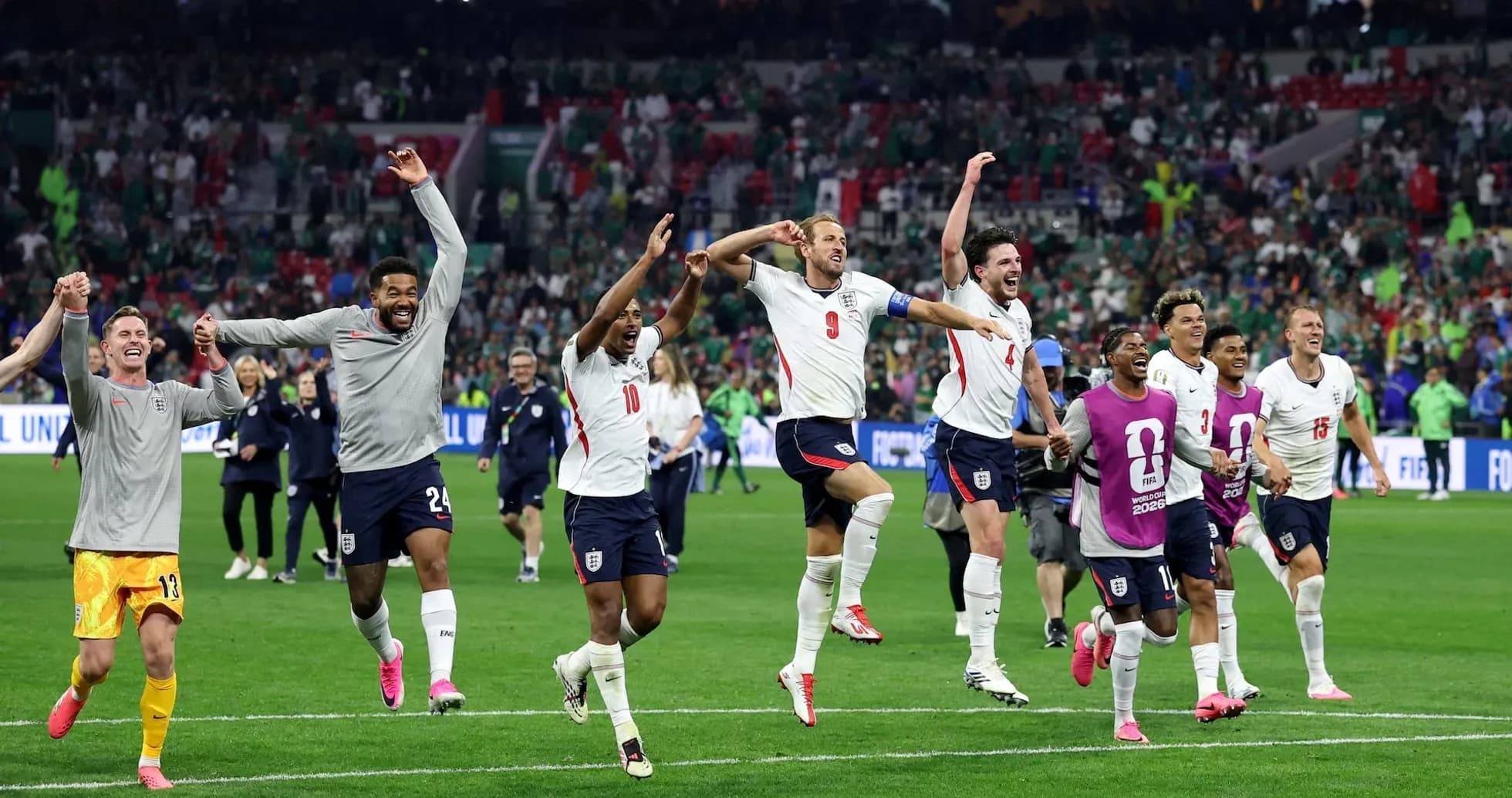
England Edges Out Mexico in Thrilling Round of 16 Clash
The night at Estadio Banorte felt built for a Mexico surge. Group A’s flawless leaders, 3 wins from 3 with a total goal difference of 6 (6 scored, 0 conceded), walked into the Round of 16 with the weight of expectation and the comfort of a familiar 4-3-3. Across from them, England – unbeaten out of Group L with 7 points and a total goal difference of 4 (6 scored, 2 conceded) – arrived with a 4-2-3-1 that has quietly become their tournament identity. By the final whistle, the scoreboard read Mexico 2–3 England, and the story of the night was how England’s attacking spine bent but did not break under Mexico’s pressure.
Mexico’s seasonal DNA had been clear heading into this game. Across the tournament, they had played 5 fixtures in total: 4 at home, 1 on their travels. They had won 4 and lost just 1, scoring 10 overall – 7 at home and 3 away – at an overall average of 2.0 goals per match. Defensively, they had conceded only 3 overall, all at home, with an overall average of 0.6. Four clean sheets in total underpinned a side that usually controlled both territory and tempo, and they had not failed to score once. The 4-3-3 had been their base in 4 of 5 matches, and Javier Aguirre leaned into that continuity again.
England’s profile was more balanced, but just as ominous. Over 5 fixtures in total, they had 4 wins and 1 draw, with no defeats. They had scored 11 overall – 6 at home, 5 away – at an overall average of 2.2 goals per match, and conceded 5 overall at an overall average of 1.0. They were not as watertight as Mexico, but their attacking depth and ability to score both at home and on their travels made them a constant threat. Their 4-2-3-1 had been used in 4 of 5 matches, and Thomas Tuchel stuck with it here, trusting the structure that best suits his stars.
Lineups
The lineups told the tactical story before a ball was kicked. Mexico’s back four of J. Gallardo, J. Vasquez, C. Montes and J. Sanchez sat in front of R. Rangel, with a midfield trio of L. Romo, E. Lira and G. Mora tasked with both screening and linking. Ahead of them, the trident of J. Quiñones, R. Jimenez and R. Alvarado was designed to stretch England horizontally and vertically. J. Quiñones arrived as one of the tournament’s most influential figures: 4 goals and 1 assist from 5 appearances, with 11 shots in total and 10 key passes. R. Jimenez, with 3 goals from 4 appearances and a penalty converted, offered penalty-box craft and aerial presence, while Alvarado’s 3 assists and 13 key passes made him Mexico’s creative metronome from wide.
England’s spine, meanwhile, was built around three headline acts. H. Kane, with 6 goals and 1 assist from 5 appearances, had turned 15 total shots and 10 on target into ruthless end-product, including 2 penalties scored from 2 attempts. Just behind him, J. Bellingham had matched Mexico’s Quiñones in scoring output – 4 goals and 1 assist from 5 appearances – while adding 8 key passes and 15 dribble attempts, 9 of them successful. On the right, B. Saka came into this match as the tournament’s standout provider with 3 assists from only 192 minutes, his 4 successful dribbles from 8 attempts hinting at a winger capable of breaking structure in an instant.
Defensive Strategies
If Kane was the hunter, Mexico’s defensive shield had been their collective structure. Across the campaign, they had kept 4 clean sheets in total and conceded just 3 overall. C. Montes, one of the tournament’s notable red-card recipients, had still been quietly effective: 176 passes completed at 90% accuracy, 2 tackles, 1 blocked shot and 2 interceptions. His duel numbers – 26 contested, 14 won – underlined a centre-back who typically holds his ground. But against Kane’s movement and Bellingham’s late arrivals, Mexico’s back line was always going to be stretched in ways they had not yet faced.
On the other side, England’s defensive platform depended heavily on D. Rice. Across 4 appearances, Rice had completed 166 passes with 91% accuracy and created 12 key passes, but his disciplinary line told another story: 2 yellow cards, making him one of the tournament’s leading card collectors. In a match where Mexico’s midfield three looked to overload central spaces and draw fouls, Rice’s aggression was both an asset and a risk. Behind him, J. Quansah – who carried 1 yellow and 1 red card from just 2 appearances – added another layer of volatility in England’s back four. His 10 duels won out of 13 showed physical dominance, but his disciplinary record meant any mistimed challenge could tilt the tie.
Disciplinary Profiles
The disciplinary profiles of both teams hinted at a combustible middle stretch. Mexico’s yellow cards had clustered at 16–30 minutes (25.00%), 61–75 minutes (50.00%) and 91–105 minutes (25.00%), while their solitary red had also arrived in the 91–105 window. England’s yellows were more evenly spread, but peaked between 61–75 minutes at 28.57%, and their single red card had come in the 46–60 band. The intersection was clear: this was a match primed to boil over in the hour mark, just as legs tired and tactical plans met desperation.
Midfield Dynamics
In the engine room, the duel between creators and enforcers framed the narrative. For Mexico, Alvarado’s 191 completed passes at 83% accuracy and 21 duels won from 36 made him both a press-resister and a chance-builder. L. Romo and E. Lira were the glue, tasked with shuttling to Rice’s zone, disrupting England’s build-up and feeding Quiñones between the lines. For England, Rice’s positional discipline and D. Anderson’s energy had to contain the trio, while Bellingham’s freedom to step beyond them would dictate whether England could turn midfield parity into territorial dominance.
Statistically, both sides arrived with attacking profiles that justified the 3–2 scoreline that ultimately unfolded. Mexico’s overall average of 2.0 goals scored and 0.6 conceded suggested a side accustomed to controlling games and suffocating opponents. England’s overall averages of 2.2 scored and 1.0 conceded pointed to a more open, end-to-end pattern. With neither side having missed a penalty in the tournament – Mexico 1 from 1, England 2 from 2 – any spot-kick always loomed as a near-certain conversion rather than a lottery.
Following this result, the tactical verdict tilts toward England’s capacity to win chaotic, high-talent games. Mexico’s structure, which had carried them through a perfect group stage, finally met an opponent whose attacking ceiling was just higher. Kane’s finishing, Bellingham’s all-court influence and Saka’s incision on the flank combined with a resilient, if occasionally reckless, defensive core. Mexico’s stars – Quiñones, Jimenez, Alvarado – showed enough to suggest they belonged deep in this tournament, but in a Round of 16 defined by fine margins, England’s offensive variety and set structure in the 4-2-3-1 proved the decisive edge.
Related News

Thomas Tuchel Reflects on England's 10-Man World Cup Triumph and a Surprising Regret

Robert Moreno Takes Over as Interim South Korea Coach After World Cup Setback

Jude Bellingham Returns to Form with Real Madrid After World Cup Success

Chloe Kelly, Beth Mead & 13 Lionesses Who Must Shine in the Upcoming WSL Season for England’s 2027 World Cup Bid

Barcelona Cancels World Cup Tribute Amid Political Tensions
Messi Breaks Record for Most Penalties Taken and Missed in FIFA World Cup History