
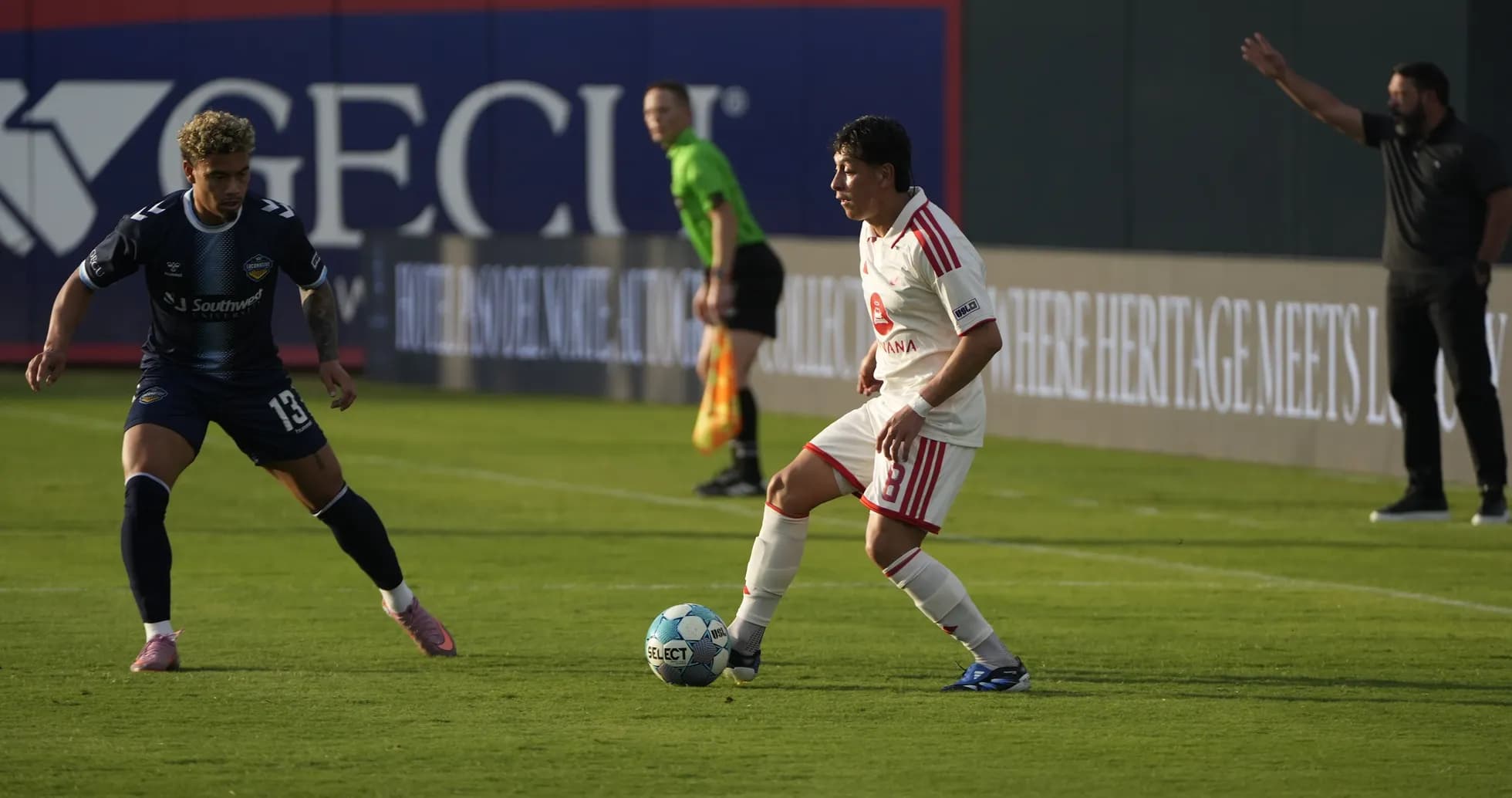
El Paso Locomotive vs Phoenix Rising: Tactical Insights from a 1-1 Draw
Under the desert lights of Southwest University Park, El Paso Locomotive and Phoenix Rising shared a 1-1 draw that felt less like a simple group-stage point and more like a clash between two evolving identities in the USL Championship. Following this result, the table still shows Phoenix marginally ahead in the group – they sit 4th on 17 points with a goal difference of 1, while El Paso remain 6th on 16 points, also with a goal difference of 1 – but the narrative of the night was about contrasting structures and how each squad is trying to solve its own tactical puzzle.
I. The Big Picture: Two Different Roads to the Same Scoreline
Heading into this game, El Paso had been one of the league’s more volatile sides. Overall they had scored 23 and conceded 22 in 12 matches, an open, high-event profile under Junior Gonzalez. At home, they had been particularly wild: 10 goals for and 16 against in 6 games, an average of 1.7 scored and 2.7 conceded at Southwest University Park. Their 6th-place standing and form line of “DDLLD” hinted at a team in search of balance rather than brilliance.
Phoenix arrived with a more controlled, pragmatic profile. Overall they had scored 16 and conceded 15 in 13 matches, with both goals for and against sitting at an average of 1.2 per game. On their travels they were tighter, with 7 scored and 9 conceded in 7 away games, averaging 1.0 for and 1.3 against. Their 4th-place rank and “DLWLD” form suggested a side that often keeps games in the margins and trusts its structure.
The 1-1 final mirrored those identities: El Paso’s willingness to open the game up, Phoenix’s insistence on managing risk, and both sides ultimately landing in the middle ground.
II. Tactical Voids and Disciplinary Shadows
There were no listed absentees in the data, so both coaches effectively had full squads, making the selection choices themselves the first tactical statement.
For El Paso, the decision to start S. Mora-Mora in goal behind a back line anchored by Tony Alfaro and K. Twumasi set the tone. Alfaro’s presence hints at a desire for aerial dominance and calm first passes out of pressure, while Twumasi’s inclusion suggests athletic coverage in the channels – essential for a home side that often commits numbers forward. The supporting cast of N. Cardona and A. Quezada added legs and aggression, with Gabriel Torres and R. Coronado likely tasked with shuttling between lines and linking midfield to attack.
In midfield, E. Calvillo and A. Mendez offered a blend of control and verticality, with R. Avila and R. Rubin giving Gonzalez options between dropping in to overload the middle or stretching Phoenix’s back line. The bench – with profiles like A. Romero, A. Ortiz, G. Diaz and the energetic D. Abitia – was built to change tempo rather than simply hold a result.
Phoenix’s structure under Pa-Modou Kah looked more conservative but no less ambitious. P. Rakovsky in goal, shielded by C. Smith and P. Mar Boye, formed the spine of a side that has conceded just 6 at home and 9 away overall. JP Scearce and D. Flores added flexibility: Scearce as a hybrid defender-midfielder capable of stepping into the line, Flores with the energy to close gaps and initiate transitions.
Ahead of them, the likes of D. Gomez and J. Moursou provided Phoenix with ball progression and second-line pressure, while I. Sacko and G. Rivera offered width and direct running. L. Biasi and G. Studenhofft gave Kah a front line capable of both pressing and attacking space, supported by a bench that included the powerful D. Badji, the direct K. Arase, and the versatile A. Vukovic.
Disciplinary tendencies hung over the tactical choices. Heading into this game, El Paso’s yellow cards clustered heavily between 31-75 minutes, with a peak of 28.13% in the 61-75’ window, and their red cards skewed early – 40.00% of reds arriving between 16-30’. Phoenix, meanwhile, were most combustible right after halftime, with 31.82% of their yellows in the 46-60’ range and all of their reds coming between 31-45’. Both coaches knew that the middle phases of each half were likely to tilt on discipline as much as on tactics.
III. Key Matchups: Hunter vs Shield, Engine Room vs Enforcer
Without explicit top-scorer data, the “Hunter vs Shield” duel becomes more systemic than individual. El Paso, overall, had been an attacking force: 1.9 goals per game in total, 2.2 on their travels and 1.7 at home. Their issue was not scoring but control. Phoenix, in contrast, had built their season on defensive solidity, conceding just 1.0 per game at home and 1.3 away, and collecting 4 clean sheets overall.
On the night, that meant the burden fell on players like Rubin, Avila and Mendez to find gaps between Phoenix’s lines, testing the compact block organized around Scearce, Mar Boye and Flores. Phoenix’s shield was less about a single destroyer and more about collective distances – Smith and Mar Boye holding the line, Flores and Gomez stepping into passing lanes, and Rakovsky commanding the box.
In the “Engine Room” battle, Calvillo and Mendez were pitted against Gomez and Moursou, with Sacko and Rivera as auxiliary outlets. El Paso needed their midfield to push Phoenix back, especially given their own defensive fragility at home, where they had conceded 16 in 6. Phoenix, conversely, sought to keep the game in front of them, then break quickly through Sacko’s direct running and Studenhofft’s movement off the last line.
The benches sharpened these matchups. Gonzalez could inject Romero or Abitia to chase a late winner, while Kah’s options like Badji and Arase were perfectly suited for a stretched game state, attacking tired legs and exploiting any late El Paso overcommitment.
IV. Statistical Prognosis and What the 1-1 Tells Us
From a statistical lens, a draw felt almost pre-written. Heading into this game, El Paso’s overall goal difference was 1 (23 for, 22 against), Phoenix’s was also 1 (16 for, 15 against). Both sides lived on the knife edge of one-goal margins, and both had a habit of playing tight contests. El Paso’s penalty record – 4 taken, 4 scored, 100.00% overall – spoke to a side that capitalizes ruthlessly when given clear chances. Phoenix matched that composure with 5 penalties taken and 5 scored, also at 100.00%. Neither team was likely to waste a big moment.
Without explicit xG numbers, the expected goals story can only be inferred from profiles. El Paso’s high-scoring, high-conceding pattern suggests they routinely generate and allow good chances. Phoenix’s lower-scoring but balanced record hints at games where xG is compressed and margins small. A 1-1, therefore, likely reflected a contest where Phoenix’s structure muted El Paso’s usual attacking volume, while El Paso’s defensive openness still allowed Phoenix enough space to create.
Following this result, the tactical verdict is clear: El Paso remain a side whose attacking upside is undeniable but who must tame their defensive chaos, particularly at home. Phoenix leave with a point that fits their season-long trend – controlled, narrow, and built on defensive organization – but the question persists whether they can consistently turn these balanced xG profiles into wins rather than stalemates.
For both squads, this 1-1 does not just share the points; it crystallizes the next step in their evolution. El Paso must learn to win games they can already open up. Phoenix must learn to tilt tight contests more decisively in their favor.
Related News
San Antonio Triumphs Over Colorado Springs in USL Championship Clash

Charleston Battery's Dominance Over Loudoun United: A Tactical Analysis

Orange County SC Triumphs 4-2 Over Miami FC in USL Showdown
Colorado Springs vs San Antonio Match Preview
Colorado Springs vs San Antonio: USL Championship Clash Preview

Miami FC vs Orange County SC Match Preview