
Egypt Makes History with Penalty Shootout Victory Against Australia
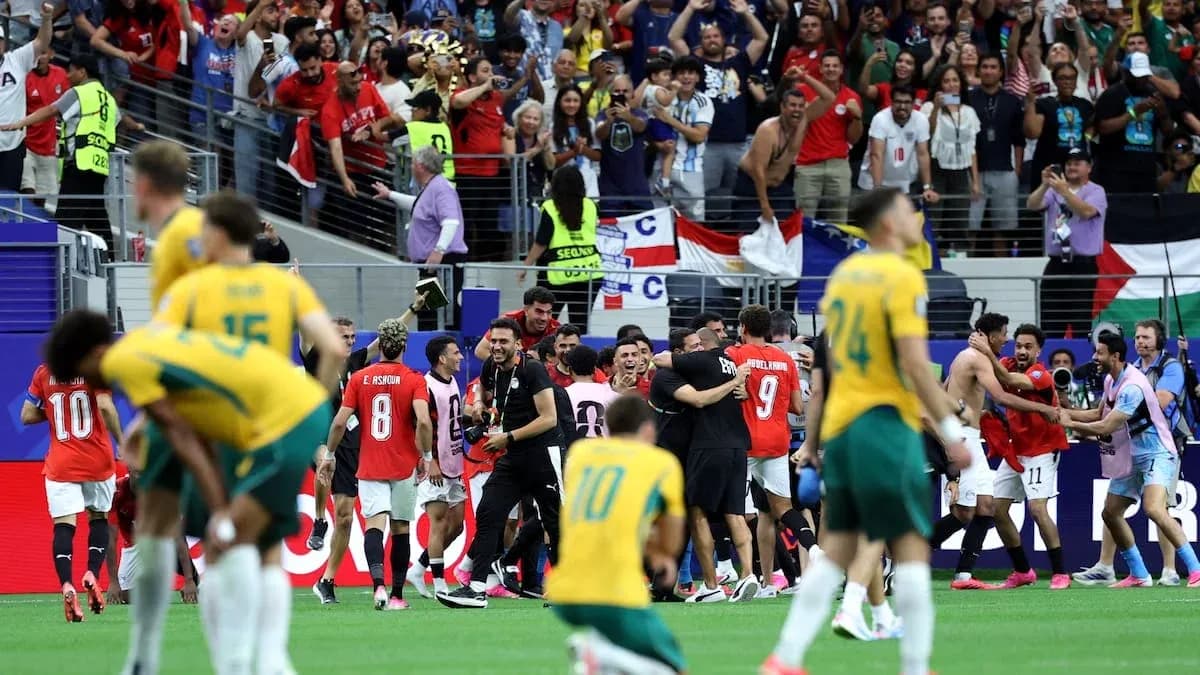
Egypt held their nerve from the spot to break new ground at the men’s World Cup, edging out Australia in a penalty shootout after a tense, attritional contest in Texas that left Mohamed Salah in tears of joy and the Socceroos shattered.
A shootout under fire
Tony Popovic played his big card at the death, sending on veteran goalkeeper Mathew Ryan purely for penalties. It was a bold, late gamble.
It didn’t start well.
With whistles pouring down from the bank of Egypt fans behind the goal, Harry Souttar strode up for Australia’s first kick and thrashed it over the bar. The defender’s miss immediately tilted the shootout Egypt’s way.
From there, five successive takers scored. Salah, who had laboured for most of the night, walked up with that familiar slow stride and rolled in a penalty of utter calm, the kind that silences doubt in an instant.
The pressure eventually found a new victim. Lucas Herrington, just 18 and carrying the weight of a nation’s hopes, crashed his effort against the bar. Abdelmaguid then stepped up, stayed ice-cool and buried his kick to send Egypt through and Australia out, sparking wild celebrations and leaving the Socceroos on their knees.
Egypt strike first, against the grain
This World Cup had already been historic for Egypt. Their 3-1 win over New Zealand in the group phase brought a first-ever victory at the tournament. The next barrier was a knockout win. It arrived the hard way.
Early on, it looked like the night might be more straightforward. In front of 70,000 fans at the air-conditioned home of the Dallas Cowboys, Emam Ashour struck after just 13 minutes. Australia switched off, Nestory Irankunda lost his man at the back post, and Ashour ghosted in to nod home Karim Hafez’s cross for his second goal of the tournament.
That goal came slightly against the run of play. Australia had already rattled the frame of the goal, Cristian Volpato – who switched allegiance from Italy to the Socceroos on the eve of the World Cup – smacking the top of the bar inside the opening five minutes.
Egypt, despite their pedigree as seven-time African champions, looked jittery at the back. For an Australia side that had scored only twice in the group stage, the onus to attack was unfamiliar and uncomfortable, but the chances were there.
They lacked the finish. Their first effort on target didn’t arrive until 10 minutes before half-time, Aziz Behich driving a tame shot straight at Mostafa Shoubir, son of Ahmed Shoubir, the goalkeeper who represented Egypt at the 1990 World Cup.
Injuries, attrition and a turning point
The first half never really caught fire. Salah, 34 and coming off a hamstring strain, barely influenced proceedings, marooned on the fringes of the game as tackles flew and space vanished.
The half ended with a thud – literally. Jordan Bos, one of the quickest players at this tournament, was left in a heap after a fierce, flying challenge from Rabia. The wing-back could not continue and failed to re-emerge after the break, replaced by Kai Trewin in a significant blow to Australia’s plans on the flanks.
Seconds into the second half, Egypt should have killed the contest. Omar Marmoush, the Manchester City attacker, slid in at close range but somehow steered the ball wide. It felt like a let-off, and it was.
Australia, rugged and persistent, dragged themselves back into it. Egypt’s coach had warned about the Socceroos’ physical edge, and that warning materialised in brutal fashion for Mohamed Hany. Under heavy pressure from an in-swinging free-kick, the defender misjudged his header and diverted the ball into his own net.
It was his second own goal of the tournament. For Australia, it was a lifeline.
History on the line
At 1-1, the game changed. Both sides knew the stakes. Neither country had ever won a men’s World Cup knockout match. Every tackle, every second ball, every set-piece carried the weight of history.
Egypt grew stronger as normal time ticked away. Salah remained on the periphery but finally had a hand in the build-up as they pushed late on. Patrick Beach, Australia’s goalkeeper until Ryan’s late arrival, produced a superb save deep into added time to deny Ramy and drag the match into an extra 30 minutes.
Extra time belonged mostly to Egypt. Legs tired, gaps opened, but the finish deserted them. Salah, cutting inside on his weaker right foot early in the additional period, lashed a shot high over the bar. The longer it went, the more penalties loomed over the stadium like a storm cloud.
Neither side could find a breakthrough. The tension thickened. A first knockout win for one, another brutal near-miss for the other – and it would be decided from 12 yards.
Salah’s final say
On the night, Salah never came close to his devastating best. The hamstring, the heavy schedule, the suffocating Australian marking – it all played a part. Yet when the contest narrowed to a mental duel from the spot, he stepped forward and delivered.
His penalty in the shootout, struck with trademark composure, underlined why Egypt cling to him in these moments. Ryan’s introduction could not change that. Souttar’s early miss and Herrington’s cruel brush with the crossbar proved decisive.
Egypt now move into uncharted territory at a men’s World Cup, armed with their first knockout victory and a belief that this generation can finally translate continental dominance onto the global stage.
Australia, who came within a crossbar and a few inches of glory, are left to ask how close this group is to its ceiling – and how long it will be before a night like this falls their way instead.
Related News
Ilia Topuria Accuses Justin Gaethje After UFC Defeat

Tyson Fury vs Anthony Joshua Fight Date and Venue Confirmed
Switzerland Calls Up In-Form Sion Striker Winsley Boteli for Nations League

Bournemouth Secures Historic 2-1 Win Over Real Sociedad in Spain
Portugal Announces Squad for 2026 UEFA Nations League; Cristiano Ronaldo Expected to Play

Raphinha Channels Ronaldo Nazario as Barcelona's Leading Striker After Position Change