
Egypt's Historic World Cup Knockout Victory
Egypt’s night of history in Dallas did not end on the pitch. It spilled into the streets of Cairo, into the tents and shattered homes of Gaza, and across a region that clung to a rare moment of shared joy.
At Dallas Stadium, under the strain of a tense round-of-32 tie, Egypt finally cracked the World Cup knockout code. A 1-1 draw after extra time. Then a 4-2 win on penalties over Australia. Nerve, not spectacle, carried them through.
And when it was over, their coach made clear who he believed this belonged to.
Egypt hold their nerve
The match itself was tight, anxious, short on rhythm. It suited Egypt.
Emam Ashour broke it open early. In the 13th minute he ghosted into space and met a cross with a firm header, guiding the ball past the Australian goalkeeper to send the Egyptian end into eruption. It was the start they craved, the kind of early punch that can shape a knockout tie.
Australia responded with possession and pressure, but not much incision before the break. Egypt sat compact, disciplined, content to protect what they had.
The equaliser, when it came 10 minutes into the second half, was a gut punch. Mohamed Hany, under pressure, turned the ball into his own net and dragged Australia level. In an instant, the mood shifted. The lead was gone, the margins thinner than ever.
From there, the game tightened again. Half-chances, heavy legs, and a creeping sense that one mistake could end a dream. Neither side found the moment of quality to settle it in normal time or extra time. Penalties would decide Egypt’s World Cup fate.
Penalty drama and a breakthrough
In the shootout, Egypt’s composure told.
Hossam Abdelmaguid stepped up with the chance to write a line into his country’s football history. He rolled in the decisive spot-kick, cool and assured, as Harry Souttar and Lucas Herrington’s earlier misses for Australia loomed large.
4-2 on penalties. A first-ever World Cup knockout victory for Egypt, secured with a blend of resilience and nerve rather than attacking flair.
The reward is a last-16 clash with Argentina or Cape Verde. The scale of that challenge can wait. On this night, the moment belonged to something bigger.
A victory dedicated beyond borders
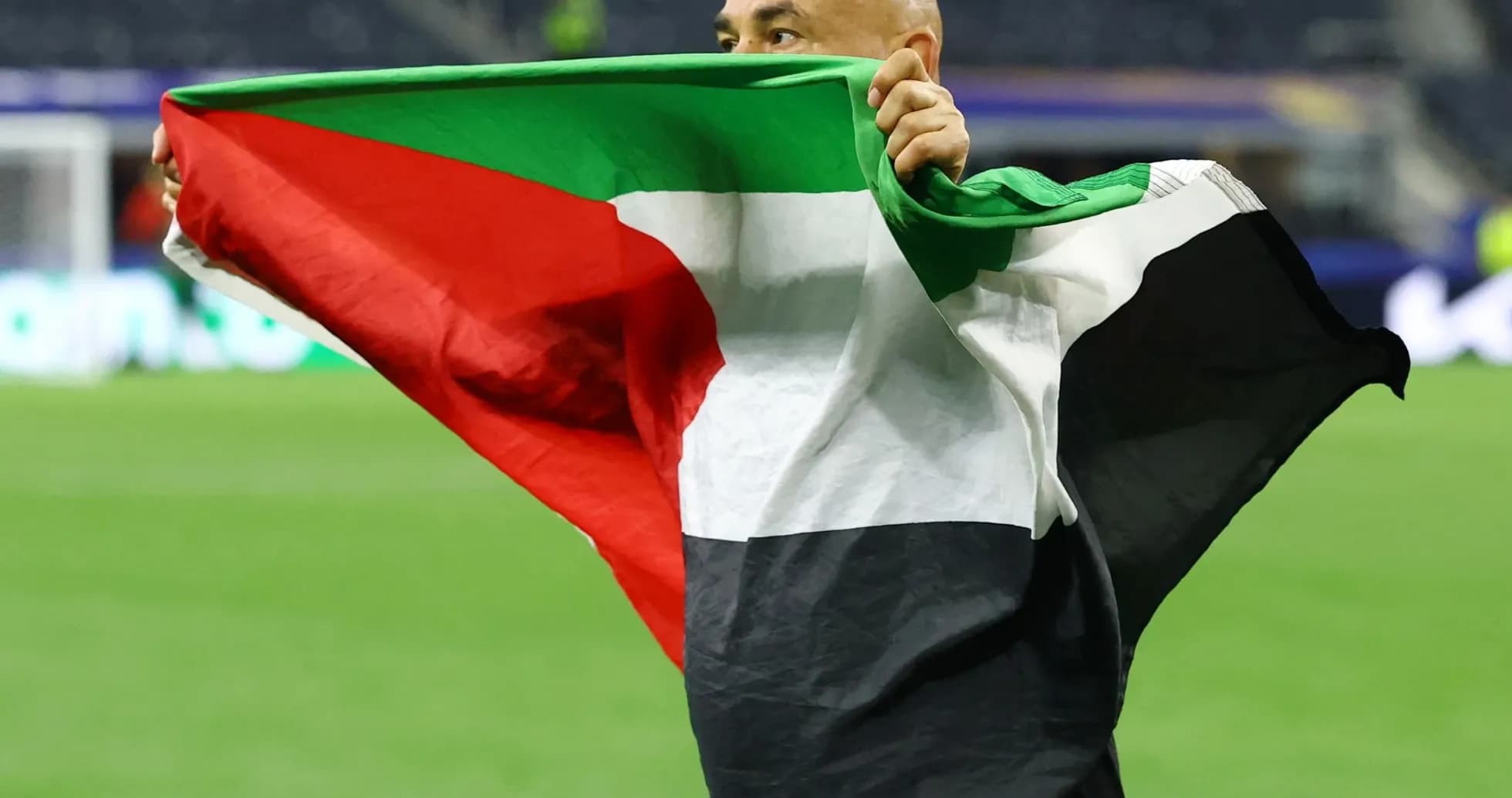
As the players sank to the turf in prostration, Hossam Hassan walked onto the pitch carrying two flags: Egyptian and Palestinian. The image was unmistakable, and entirely deliberate.
“May God grant them victory, may God have mercy on their martyrs,” he told reporters afterward, speaking of the Palestinians. “I’m saying to them: I’m dedicating this victory to the Egyptian people and Palestinian people, those kind and honourable people.”
It was not just a sporting dedication. It was a gesture that resonated far beyond the stadium.
Across social media, Palestinian fans celebrated as if it were their own national team that had advanced. From Gaza, where daily life is marked by destruction and displacement, came a different kind of match report.
“For the first time, I’m following the World Cup with this much excitement,” wrote Gaza-based Tamer Nahed on X. He described thousands leaving tents and damaged homes to watch Egypt play, faces “lit up with smiles” as cheers cut through the bleakness. For a brief spell, football offered what it so often promises but rarely delivers so starkly: a moment of life, as he put it, “despite everything surrounding them.”
Footage from the strip showed crowds gathered in front of screens framed by bombed buildings and makeshift shelters. Some fans held Egypt flags. Children had them painted on their faces. In those scenes, the sport felt both impossibly small and suddenly enormous.
Tension off the pitch
The day was not without flashpoints.
Hours before kickoff, members of the Egypt squad were involved in an altercation with police officers at their team hotel in Dallas. The national team said a Dallas police officer pushed team director Ibrahim Hassan and player Trezeguet as they tried to take a photo with a fan.
The incident spread quickly on social media, another layer of drama around an already charged fixture. The Dallas Police Department later stated that the situation had been resolved at the scene, and it did not spill over into the match itself.
What did spill over was emotion.
From the players’ mass prostration to the flags in Hassan’s hands, Egypt’s breakthrough on the World Cup stage became something more than a footballing milestone. It was a release, a statement, and a shared celebration stretching from Dallas to Cairo to Gaza.
Next comes Argentina or Cape Verde, and a different kind of examination. But for one night, Egypt were not just playing for progression. They were playing for people who needed a reason to stay up and celebrate under a broken sky.
Related News

Ilia Topuria Accuses Justin Gaethje After UFC Defeat

Tyson Fury vs Anthony Joshua Fight Date and Venue Confirmed

Switzerland Calls Up In-Form Sion Striker Winsley Boteli for Nations League

Bournemouth Secures Historic 2-1 Win Over Real Sociedad in Spain

Portugal Announces Squad for 2026 UEFA Nations League; Cristiano Ronaldo Expected to Play

Raphinha Channels Ronaldo Nazario as Barcelona's Leading Striker After Position Change