
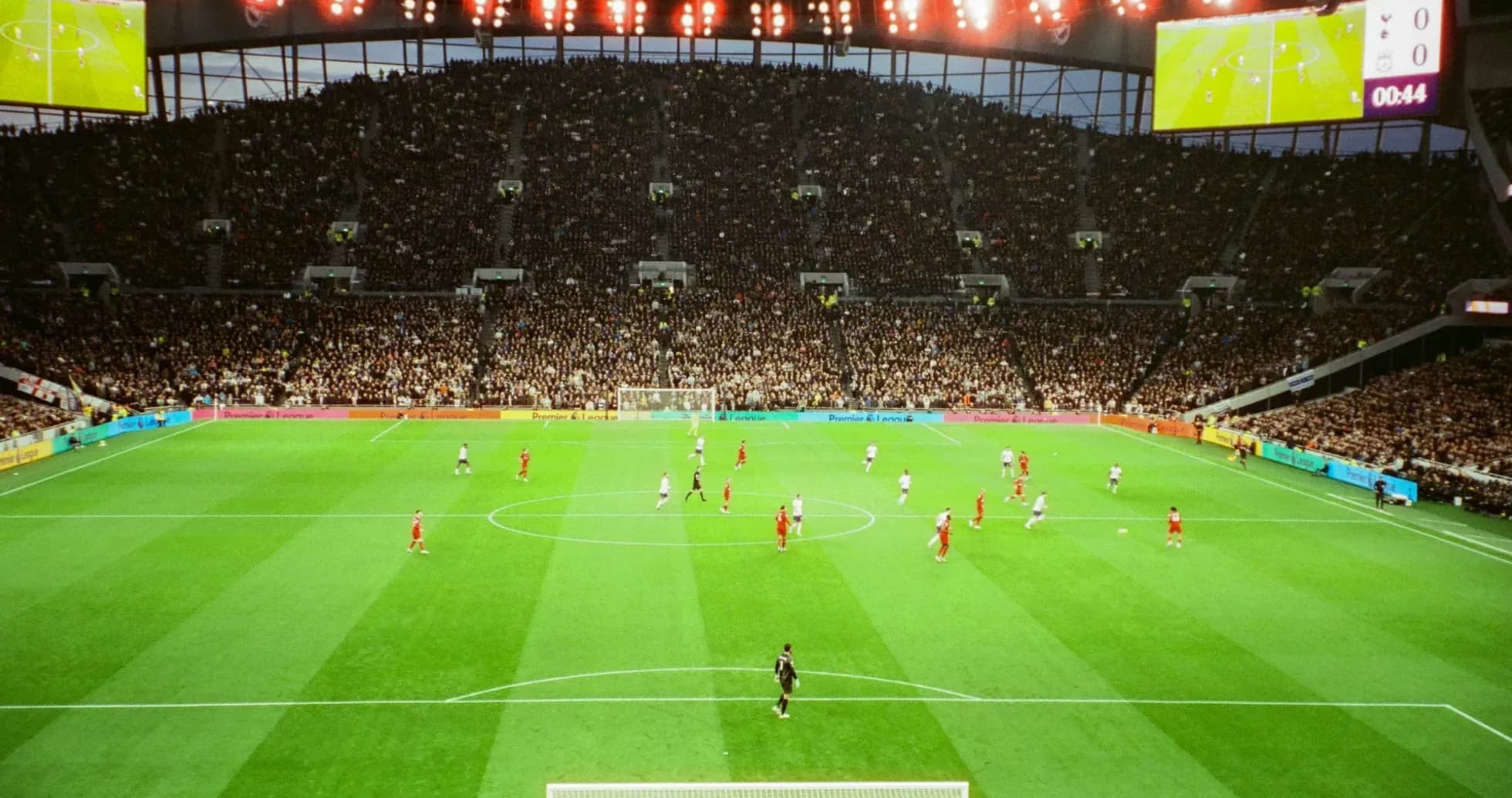
Egnatia Rrogozhinë vs Lillestrom: Tactically Tight Europa League Draw
Egnatia Rrogozhinë’s 0-0 draw with Lillestrom at Arena Egnatia was a tight, attritional Europa League Play-offs tie defined more by structure and control than by clear chances. Both sides finished with one yellow card and similar possession (51% for Egnatia Rrogozhinë, 49% for Lillestrom), and the shot profile underlined the balance: the hosts produced 4 shots on goal to the visitors’ 2, with Lillestrom registering the only blocked effort of the night. Across 90 minutes, the tactical story was of Egnatia Rrogozhinë’s three-at-the-back platform trying to impose territorial pressure, while Lillestrom’s 4-3-3 prioritised compactness, defensive discipline and selective transitions to emerge from Albania with a clean sheet and the tie finely poised.
The card and substitution pattern reinforces how the game evolved from measured to increasingly pragmatic. At 56', Fernando Medeiros (Egnatia Rrogozhinë) received a yellow card, signalling the home side’s growing aggression in midfield as they tried to tilt the contest. Three minutes later, at 59', Lars Ranger (Lillestrom) was booked, evidence that the visitors were also forced into more assertive defensive interventions as Egnatia Rrogozhinë pushed forward. From there, both coaches turned to their benches to adjust the tactical dynamics.
The first substitution wave arrived on 67'. For Egnatia Rrogozhinë, D. Adjessa (OUT) was replaced as J. Montenegro (IN) came on, a clear attempt by coach Nevil Dede to refresh the front line and add a different reference in attack within the 3-5-2. Simultaneously, Lillestrom coach Hans Odegaard altered his midfield structure: K. Krygard (OUT) made way as H. Melland (IN) came on, reinforcing legs and energy in the central trio to cope with the hosts’ growing territorial push.
On 72', Egnatia Rrogozhinë doubled down on midfield recalibration. A. Aleksi (OUT) was replaced as I. Diabate (IN) came on, and almost in parallel I. Gruda (OUT) left the pitch with A. Kryeziu (IN) introduced. These twin changes suggested a shift in the balance of the 3-5-2, looking for more dynamism and possibly more vertical passing from central areas while maintaining width through the wing-backs.
Lillestrom’s response came later and was more about managing the final phase. At 80', F. Gulbrandsen (OUT) was withdrawn for S. Akanji (IN), altering the profile of the centre-forward role and adding fresh pressing capacity against Egnatia Rrogozhinë’s back three. One minute later, at 81', Y. Paintsil (OUT) was replaced as E. Kitolano (IN) entered, another midfield-oriented change to maintain compactness and ball-winning ability as the game moved into its decisive moments. Finally, at 90+1', Egnatia Rrogozhinë made a late structural tweak: Fernando Medeiros (OUT) came off with N. Ajetovikj (IN) introduced, hinting at a desire either to secure defensive stability against late counters or to exploit set-pieces with an extra defensive profile.
From a structural standpoint, Egnatia Rrogozhinë’s 3-5-2 was built to control central spaces and push numbers into wide areas. With three centre-backs behind a five-man midfield, they could step a central defender into midfield when in possession, trusting the wing-backs and the double forward line to pin Lillestrom’s back four. The 6 corner kicks to Lillestrom’s 4 reflect this territorial tilt: the hosts spent more time in the final third, forcing the visitors into clearances and last-line defending.
In possession, the 51% share for Egnatia Rrogozhinë suggests a slight but consistent initiative. Their 4 shots on goal indicate that the structure did generate attempts, but the lack of blocked shots (0) and the absence of recorded total shots and shots inside the box point to a game where they struggled to create repeated, high-volume pressure. The midfield reshuffles – bringing on I. Diabate and A. Kryeziu – were logical attempts to add creativity and ball progression, but Lillestrom’s compact 4-3-3 block largely kept them to manageable zones.
Out of possession, Egnatia Rrogozhinë were relatively clean, committing 11 fouls and taking just 1 yellow card. That disciplinary profile fits a team defending mostly in organised structures rather than in emergency situations. The back three, supported by a dense midfield, allowed them to contest second balls and transitions without resorting to persistent tactical fouling.
Lillestrom’s 4-3-3, by contrast, was clearly calibrated for containment and counter-punching. With four defenders and a narrow three-man midfield, they focused on blocking central progression and funnelling Egnatia Rrogozhinë wide, where crosses could be contested by the centre-backs. Offensively, their 2 shots on goal and 2 shots off goal show a more selective approach: fewer efforts but often in transition or from more direct build-up. The single blocked shot underlines that they rarely took speculative efforts against a crowded box; instead, they sought cleaner looks when breaking forward.
Defensively, Lillestrom’s 17 fouls and 1 yellow card for Lars Ranger show a willingness to disrupt rhythm higher up the pitch. The foul count, significantly higher than Egnatia Rrogozhinë’s, reflects a game plan built on aggressive duels and breaking up counter-attacks before they reached the final third. The offside numbers (2 against Egnatia Rrogozhinë, 1 against Lillestrom) also hint at Lillestrom’s back line holding a relatively high and well-coordinated line, catching the home forwards offside twice.
Set-pieces were another subtle tactical battleground. Egnatia Rrogozhinë’s 6 corners to Lillestrom’s 4 suggest that the Albanian side were more successful at sustaining pressure phases, forcing the visitors to concede restarts deep in their own half. However, Lillestrom’s defensive organisation on these plays held firm, as the scoreline and low shots-on-goal figure against them (4) confirm.
Statistically, the match reads as a near-deadlock in control but with a slight attacking edge to Egnatia Rrogozhinë. The hosts led in shots on goal (4 vs 2), corners (6 vs 4), and possession (51% vs 49%), and committed fewer fouls (11 vs 17). Yet Lillestrom’s higher foul count was a feature, not a bug, of their approach: they accepted defensive risk in the form of free-kicks to prevent more dangerous open-play situations.
With expected goals and passing data not recorded, the clearest indicators come from the shot and set-piece patterns. Egnatia Rrogozhinë can frame this as a solid home performance built on territorial control and structural stability, but one lacking the final-third precision to translate pressure into goals. Lillestrom, for their part, executed a disciplined away game: compact 4-3-3 defending, controlled aggression, and enough threat in transition to keep the tie balanced heading into the return leg.
Related News
Francesco Totti Reveals Offers from Top European Leagues at Age 48
Benfica Dominates AC Milan in UEFA Europa League Opener
Levski Sofia vs Red Bull Salzburg: Europa League Defeat Analysis
Five Europa League Players to Watch in the 2026/27 Season
Celje vs Red Bull Salzburg Predicted Lineups and Team News

Anderlecht vs Red Bull Salzburg Predicted Lineups and Team News