
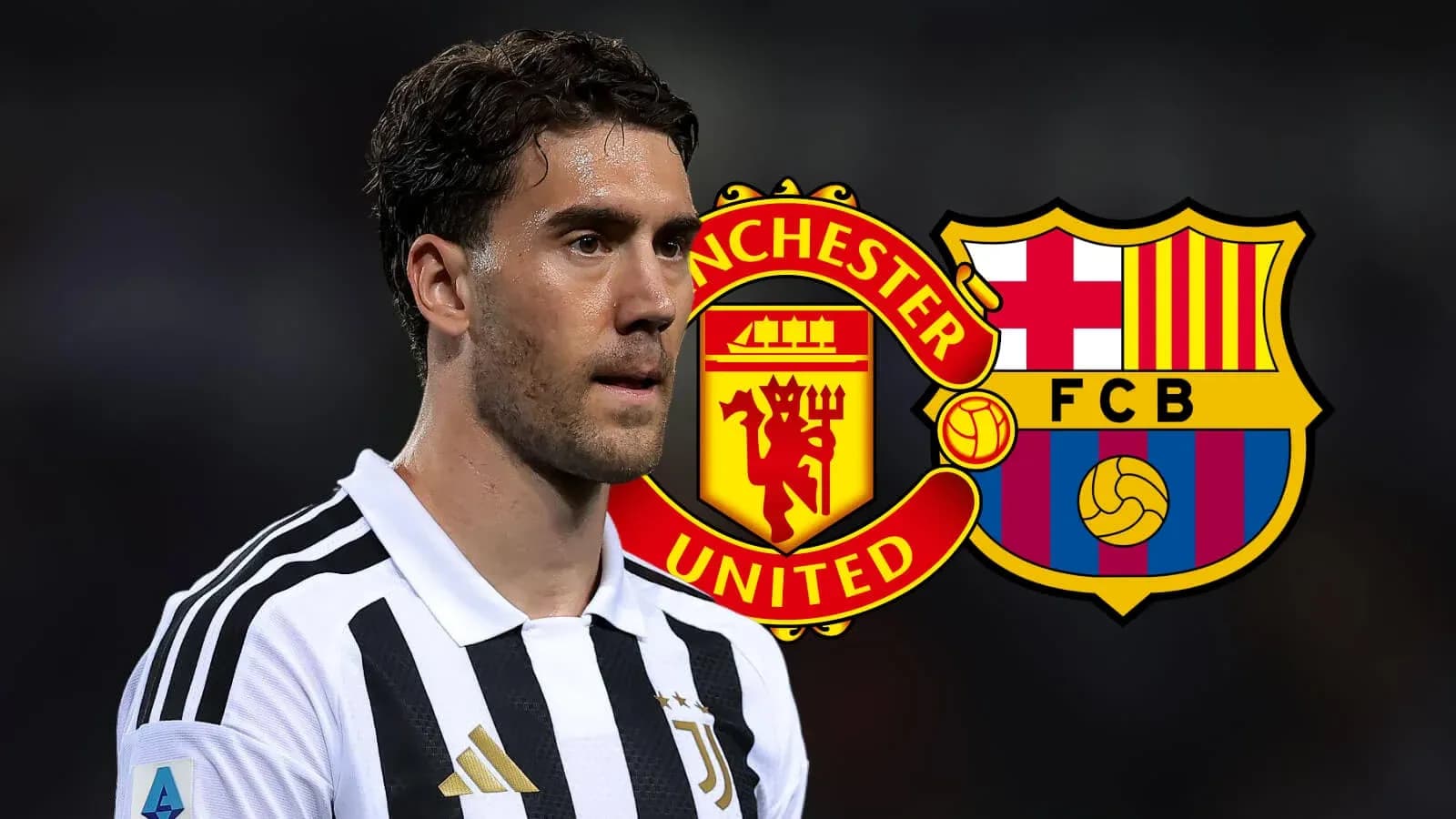
Dusan Vlahovic: The Valuable Free Agent Waiting for a Club
In a summer when cast-offs are snapped up almost as soon as their contracts expire, one name still hangs strangely in the air.
Dusan Vlahovic. Free. Available. Untouched.
As August looms and squads take shape, the most valuable free agent on the market – valued at around £30 million by Transfermarkt – is training alone and waiting for his phone to ring.
This is no journeyman forward drifting through the twilight of his career. Vlahovic is 26. Eight full seasons of Serie A behind him, split between Fiorentina and Juventus. Six consecutive campaigns hitting double figures. A striker, on paper, entering the years that should define him.
Yet here he is. Between clubs. Between versions of himself.
The striker caught between realities
The Vlahovic dossier is easy to sell in bullet points.
- Big, powerful frame.
- Scores with both feet.
- Dominant in the air.
- Threat from free kicks.
- Can run in behind, can hold it up, can carry the ball.
You can see why Juventus paid up to €80m for him when he was just turning 22. You can see why Arsenal chased him back then. He looked like the next great No 9 off the European production line.
But the numbers since that move tell a different, more complicated story.
His best league return for Juventus? Eighteen goals in 2023-24.
Last season? Ten.
Across his time in Turin, he averaged roughly 15 goals a season. Decent. Respectable. Just not the devastating 20-plus-a-year machine Juve thought they were buying.
That gap – between good and elite – is where the doubts live. Clubs know what he is. They’re less sure what he can still become.
Elite wages, non-elite output
The real snag, though, isn’t just about finishing or movement. It’s about money.
Vlahovic didn’t just sit atop Juventus’ wage bill last season. He was the highest-paid player in all of Serie A. And 22 players earning less than him scored more.
His salary reflected the player he was forecast to become, not the one he actually turned into. The market is now reacting to that reality.
Top clubs see a striker who doesn’t quite press at the intensity they demand, whose link-up play can be loose, whose form runs hot and cold. For the very best, that profile at that price point is a risk.
When his name was floated to Barcelona – a club actively looking for a striker – there was hesitation. Not because they can’t see the talent, but because they can see the wage slip.
The tier just below, the ambitious-but-flawed giants like Manchester United, face the same dilemma. They need a No 9. They can afford him. But do they want to bend their structure for a player who might never fully justify it?
Even Juventus, who knew him better than anyone, backed away once his demands reached the reported €8m a year, roughly £132,000 per week. Giorgio Chiellini, now a director at the club and once his team-mate, put it bluntly: “With these figures, he won’t remain in Italy, so it is only fair and legitimate that he is seeking a different type of salary.”
Fair. Legitimate. Still a problem.
Pride, compromise and the clock
There is an obvious escape route from this stalemate. Vlahovic lowers his demands.
Reports suggest he is willing to do exactly that – but not for everyone. The idea is simple enough: he would accept less from a Barcelona than from a Besiktas. Status matters. Stage matters. That sliding scale makes sense from the player’s side.
From the clubs’ perspective, the calculation is colder. If they compromise on salary, are they also compromising on quality? Or are they stealing a march on a market that has talked itself into being overly cautious?
Because here’s the other truth: there are not many truly elite centre-forwards around. Even fewer are available. Fewer still are available for nothing.
That should make a “good but not great” striker like Vlahovic more attractive as the window wears on and panic starts to creep into boardrooms. The longer a club goes without solving its No 9 problem, the more a 26-year-old free agent with a proven scoring record starts to look like a bargain rather than a gamble.
And Vlahovic has one more card in his hand. As a free agent, he is not bound by the transfer deadline. He can sign after the window closes. He can wait.
But can he really afford to?
A career at a crossroads
For a forward who once looked destined to sit alongside Europe’s very best, this is an uncomfortable limbo. Time is not running out yet, but it has certainly stopped feeling infinite.
He needs a team, a system, a manager willing to build around his strengths and iron out the rough edges in his pressing and link play. He needs minutes, rhythm, goals. He needs to feel like the main man again, not a spreadsheet problem.
Right now, though, the market is unconvinced. The offers are tentative. The links – Manchester United, Barcelona, Besiktas – swirl without hard agreements, medicals or announcements.
So the most valuable free agent in Europe waits.
Waits for a club to blink.
Waits for someone to decide that the upside is worth the salary, that 15 goals a season can be nudged towards 20 with the right environment.
If no one does, Vlahovic will watch the new season kick off without a badge on his chest. For a striker who once looked like the future of the position, that would not just be a shame.
It would be a warning about how quickly a career can drift when the numbers on the payslip grow faster than the numbers on the scoresheet.
Related News

Ilia Topuria Accuses Justin Gaethje After UFC Defeat

Tyson Fury vs Anthony Joshua Fight Date and Venue Confirmed
Switzerland Calls Up In-Form Sion Striker Winsley Boteli for Nations League
Bournemouth Secures Historic 2-1 Win Over Real Sociedad in Spain
Portugal Announces Squad for 2026 UEFA Nations League; Cristiano Ronaldo Expected to Play

Raphinha Channels Ronaldo Nazario as Barcelona's Leading Striker After Position Change