
Curaçao's World Cup Upset and the Impact of Hydration Breaks
For a few wild seconds in Houston, football turned on its head.
Livano Comenencia swept the ball home, Curaçao’s bench exploded, and the smallest nation by population ever to reach a World Cup had dragged four-time champions Germany into a 1-1 fight. Blue shirts sprinted to the corner, fans in the stands clutched their heads in disbelief. A famous upset wasn’t just a fantasy; it was taking shape in real time.
Then the whistle went.
Not for offside. Not for a foul. For water.
The first-half hydration break arrived, momentum was ripped out of the contest, and by halftime Germany led 3-1. By full time, it was 7-1. The scoreboard will live in the record books. The timing of that pause will live in the arguments.
“I actually felt sorry for them,” Alan Shearer said on The Rest is Football podcast. “They scored and then it was maybe 30 seconds after that it stopped. So it’s killed their momentum.”
This World Cup’s great tactical innovation hasn’t come from a coach’s whiteboard. It has come from FIFA’s stopwatch.
A game cut into pieces
Hydration breaks, dropped in midway through each half, are officially about player welfare. With matches staged in the summer heat of the United States, Canada and Mexico, and temperatures expected to climb above 90 F (32 C) in some venues, FIFA wants to protect players from the worst of the conditions.
On paper, it sounds sensible. In practice, it is reshaping matches.
Referees now halt play at around 22 minutes in each half, ushering players to the sidelines for a three-minute pause. It is supposed to be a drink stop. In reality, it has become a rolling tactical summit.
“You can use the break to tell the players what they need to improve or what is good or what they should do better,” Netherlands coach Ronald Koeman said. “So you can use it in different ways to your advantage, and this is what we will be doing.”
Plenty already are. In eight of the first 16 games, a goal arrived within 10 minutes of a hydration break. The pattern is hard to ignore.
Curaçao’s resistance collapsed after theirs. Morocco, brilliant and bold early on against Brazil in New Jersey, struck first and looked in control going into the pause. Less than 10 minutes after play resumed, Vinicius Junior had dragged Brazil level.
Canada, the United States, Australia, Scotland, Sweden and Iran have all cashed in with goals soon after these enforced stoppages. Momentum maps tracking the flow of games show sharp swings immediately following the breaks, as if someone has grabbed the match by the collar and yanked it in a new direction.
The modern touchline has always been a theatre of instruction, but this is different. This is a guaranteed window, twice a half, for coaches to reset shape, tweak pressing triggers, flip matchups and calm fraying nerves. It is no coincidence that the most organised, detail-obsessed benches are thriving in those windows.
“It’s like a timeout”
The idea of football as a continuous, flowing spectacle has always separated it from the stop-start rhythms of American sports. That line is blurring.
“We’re in America, right? So, it’s like it is it’s like it’s a timeout,” Roy Keane said on The Overlap. “We love football because of the pace of the game ... what it’s doing is stopping the flow of the game, the momentum.”
Inside the stadiums, not everyone is buying into the new reality. There were boos when the first break halted Iraq vs Norway in Foxborough, Massachusetts, a match played in front of fans who had not turned up to watch players stand around with water bottles while coaches sketch shapes in the air.
The frustration is not just about rhythm. It is also about motive.
FIFA has decreed that the breaks will be implemented regardless of weather, venue or location. So Spain vs Cape Verde in Atlanta stopped for hydration despite being played under a roof, in an air-conditioned arena. The governing body’s line is that this ensures “equal conditions for all teams, in all matches.”
Spain coach Luis de la Fuente could see the logic in oppressive heat. In a chilled dome? Less so.
“Pause, freshen up and continue. Tomorrow, when the temperature that we’ll have in this stadium is chill, maybe these breaks are not so needed, but we need to abide by the rules,” he said.
Norway coach Staale Solbakken struck a similar note. “I can understand it when it’s like it’s been in Greensboro, when it’s been 35 degrees (95 Fahrenheit) and a really hot climate and there’s a bit of vibration in the air – then I think it’s fine. But I don’t like it otherwise. I think it’s unnecessary.”
The suspicion is obvious: if the weather is not dictating the pause, something else is.
The commercial carve-up
For broadcasters, the arrival of a fixed mid-half stoppage is a dream. In the United States, Fox has wasted no time in turning hydration breaks into commercial windows, cutting away from the stadium as soon as the referee signals the pause. Telemundo, by contrast, has chosen to stay with the action.
For a sport that has long resisted the lure of in-game advertising breaks, it feels like a line being crossed. Baseball, basketball and American football have always been built around commercial slots. Football has not. Apart from half-time, the 90 minutes have traditionally belonged to the game.
“Every time going to a commercial is a bit ... not really (something) that I like,” Netherlands captain Virgil van Dijk said, speaking as a viewer before his side’s 2-2 draw with Japan. “I think for the neutral watchers on TV it’s also not great.”
France coach Didier Deschamps, though, framed it as evolution rather than intrusion.
“It’s not two half times, it is four quarter times basically that we’ve got. This is what’s been decided and so the players and the coaches adapt to this new reality,” he said.
The sport, once defined by its uninterrupted sweep, now comes in quarters. Coaches adjust. Broadcasters adapt. Players learn to ride the breaks, or get crushed by them, as Curaçao discovered in brutal fashion.
Whether FIFA will carry this model into future World Cups is unclear. The English Football Association has already indicated it does not expect such breaks to be part of the European Championship in 2028, when the UK and Ireland host the tournament. For now, though, this World Cup belongs to the age of the mandated pause.
Ronaldo, still the reference point
While the structure of the game bends and shifts, one figure at this World Cup stands as a constant.
Cristiano Ronaldo, 41 years old and on the brink of a sixth World Cup, prepares as if he is walking into his first. That is the message from Portugal coach Roberto Martinez, who continues to build his attack around a forward many believed would be phased out by now.
“He is an example and a reference for football. For all those children on the street who begin to feel the love for sport, following the example of Cristiano Ronaldo is wonderful,” Martinez said before Portugal’s opener against DR Congo.
“It is his sixth World Cup, but I can say that internally it seems to be his first World Cup in terms of intensity, in terms of emotional output, of how important it is for him to be prepared to lead the group.
“Within the team he is a vital player because he is the finisher, he is the player in the penalty area, he is the player who has those movements that can open spaces for other players. Within our attacking game, his numbers reflect the importance he has.”
The numbers still tower over everyone else’s: 143 international goals, a record that may stand for a generation. Yet his recent major tournament record is stark. Nine matches without a goal. Limited defensive work when the opposition build from the back. The debate around his role has not gone away.
Inside the Portugal camp, though, reverence remains strong. Bruno Fernandes, fresh from sweeping Premier League player of the year awards, grew up watching Ronaldo drag Portugal to the brink of glory at Euro 2004.
“All of us in this national team we have grown up watching Cristiano Ronaldo play and for us it’s such an honor to play next to him now in the same team,” the Manchester United captain said. “We’re all here to support him and to support Portugal to go as far as possible.”
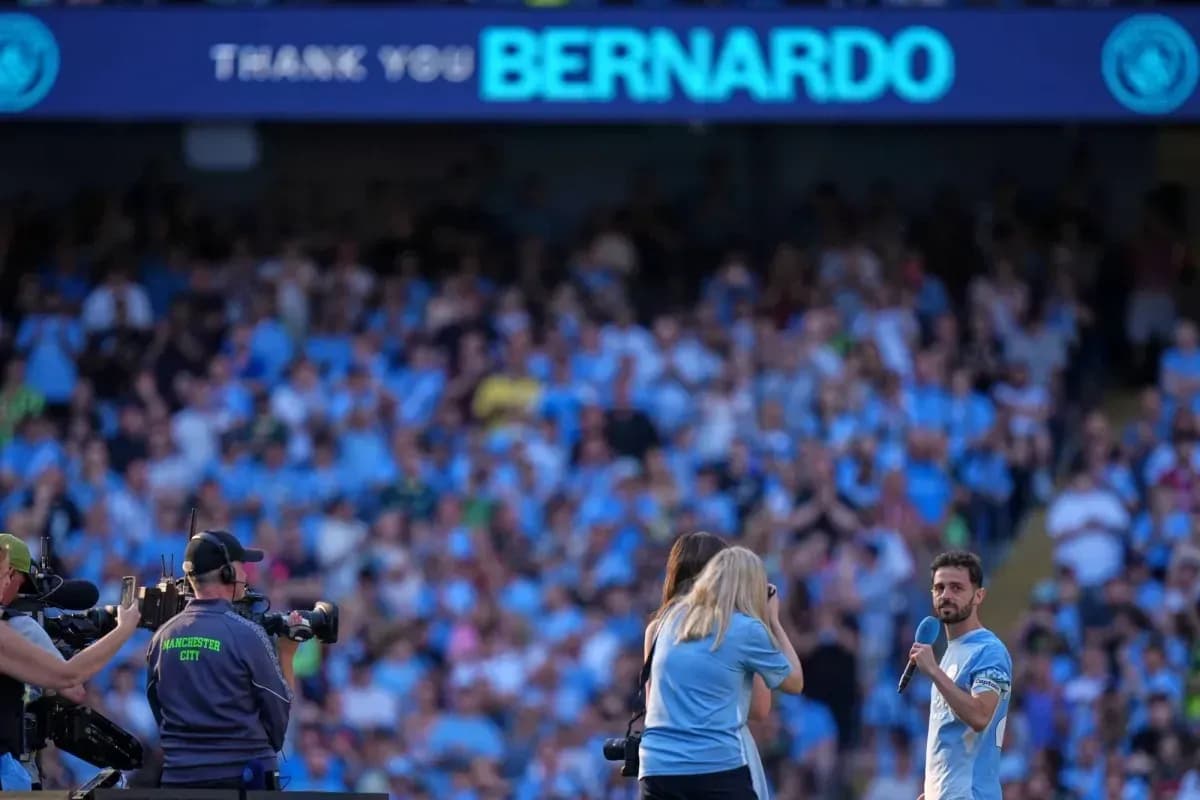
This is not a one-man show. Portugal arrive with one of the most complete squads in the tournament. Fernandes anchors a midfield bursting with pedigree: Vitinha and Joao Neves come in as back-to-back Champions League winners with Paris Saint-Germain, while Bernardo Silva is poised to join Real Madrid after a glittering nine-year spell at Manchester City.
“We have a very strong team, great individual quality, and beyond the individual quality and the strengths that we have as individual players, I think we are a very cohesive team, a very united team,” Fernandes said. “Obviously our dream is to be there (winning the World Cup) and I think that dreaming is not forbidden.”
No easy steps, no soft landings
On paper, Group K looks manageable for Portugal. DR Congo, Uzbekistan and Colombia stand between them and the knockouts. On the ground, Martinez wants no talk of strolls.
“We’ve got very little to win tomorrow from the outside. If you win against Congo, it’s expected. If you win by one, it’s a big problem. If you draw, it’s a catastrophe. If you lose, this is the end of the world,” he said, pointing to Spain’s goalless draw with Cape Verde as a warning shot.
“They come with no expectations, they are enjoying being here. We’ve seen incredible performances from teams like Qatar, Cape Verde, exemplary performances, that shows you that there are no easy games in a World Cup.”
Martinez also confirmed that his own time in charge is nearing its end. His contract runs out after this World Cup, and he will walk away once Portugal’s campaign is over.
“My contract ends after the World Cup. This is not news, this is just a fact,” he said. “We’re now focused on finishing the work that we’ve begun three-and-a-half years ago. When I came to Portugal the focus was to try to win everything, but most importantly to prepare for the World Cup.”
So Portugal step into a tournament cut into quarters, led by a 41-year-old striker chasing one last shot at the trophy that has always eluded him, guided by a coach who knows his own clock is ticking.
Curaçao have already felt how quickly a World Cup can turn. Ronaldo and Portugal now walk into the same storm, breaks and all. In a competition that keeps stopping, who will handle the restarts best?
Related News
Raphinha’s Hat-Trick Powers Barcelona to 7-2 Victory Over Racing Santander
Carabao Cup Fourth Round Draw: Liverpool Set to Clash with Chelsea, Arsenal to Face Fleetwood Town
Key Football Matches to Watch in Azerbaijan This Autumn
Raphinha's Hat-Trick Drives Barcelona to 7-2 Triumph Over Racing Santander
Hansi Flick Leads Barcelona to Record-Breaking Seven Wins in a Row
Gavi Reflects on Injury Return as Barcelona Dominate Racing Santander 7-2