
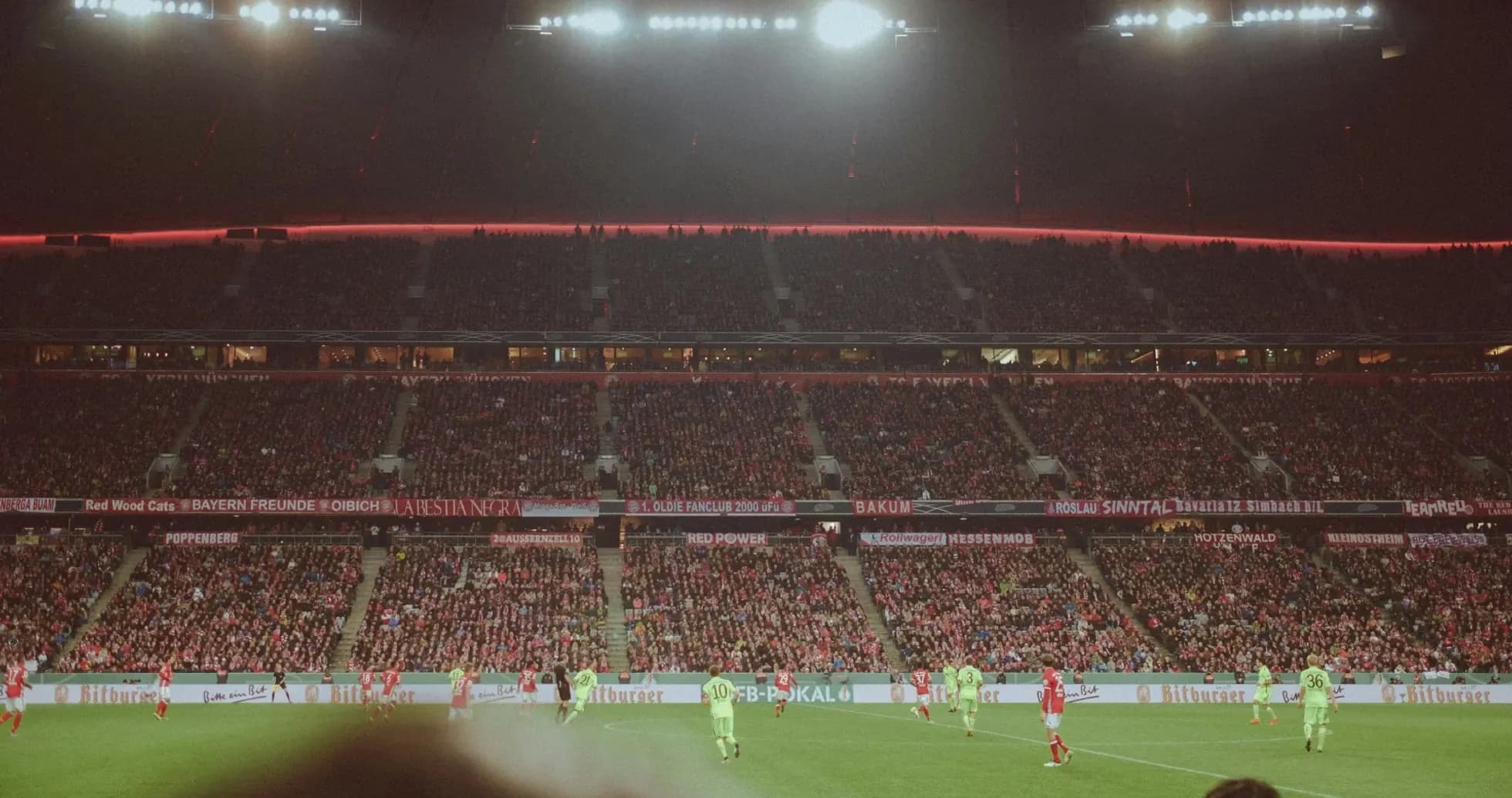
CSKA Sofia Dominates Maccabi Tel Aviv in UEFA Europa League
Maccabi Tel Aviv’s 3-0 defeat to CSKA Sofia at Batumi Arena in the UEFA Europa League 3rd Qualifying Round was shaped less by territory and more by clarity of structure and execution. Possession was almost even (49%–51%), but CSKA’s 4-3-3 repeatedly converted midfield control into high-quality final-third actions, while Maccabi’s 4-2-3-1 struggled to turn phases of buildup into sustained threat.
Kenny Miller set Maccabi Tel Aviv up in a classic 4-2-3-1 with O. Melika in goal, a back four of S. Rosen, R. Shlomo, M. Camara and I. Ben Hamo, and a double pivot of I. Noy and I. Shahar. Ahead of them, I. Sissokho, D. Peretz and H. Varela supported lone forward S. Abu Farkhi. The idea was clear: a stable double pivot to circulate under CSKA’s first line and free the three advanced midfielders between the lines.
However, CSKA Sofia’s 4-3-3 under Hristo Yanev was better calibrated to the game’s tempo. With F. Lapoukhov starting as the nominal goalkeeper, a back four of A. Martino, F. Rodriguez, T. Ivanov and Pastor, and a midfield three of S. Sensi, B. Jordao and M. Ebong, CSKA had both a screening presence and vertical runners. J. Gbamin, although listed as a defender, operated higher on the right line with forwards L. Godoy and I. Pittas, giving the visitors a flexible front three that could press in a 4-1-4-1 or break in a 4-3-3.
The early goal at 9' from M. Ebong, assisted by L. Godoy, underlined CSKA’s superior spacing. Their midfield three created central overloads against Maccabi’s double pivot, forcing the home side’s full-backs to hesitate about stepping out. Once the first line was broken, CSKA could attack the back four with numbers. The second goal on 29' – L. Godoy finishing from an I. Pittas assist – again came from exploiting those central pockets, then attacking the channels before Maccabi’s block could reset.
Maccabi’s response was reactive rather than structural. With only 2 shots on goal and 4 off target, they never translated their near-equal share of the ball into volume or quality of chances. The 4-2-3-1 often became flat: Noy and Shahar were pinned deep by CSKA’s midfield, while Sissokho, Peretz and Varela were forced wide or dropped too close to the pivot to receive cleanly between the lines. That left Abu Farkhi isolated against CSKA’s centre-backs, who could defend aggressively without fear of runs in behind.
The halftime double change at 46' – T. Asante (IN) for I. Ben Hamo (OUT) and N. Ben Harush (IN) for S. Rosen (OUT) – was an attempt to refresh the flanks and push the full-backs higher. It marginally improved Maccabi’s ability to progress, but CSKA’s compactness in a mid-block limited the impact. The visitors’ back four stayed narrow, trusting Martino and Pastor to manage wide spaces while the midfield three slid across as a unit.
On 66', Miller doubled down on attacking intent: E. Sokler (IN) came on for S. Abu Farkhi (OUT) and O. Davida (IN) for I. Shahar (OUT). Sokler’s presence provided more direct running and willingness to attack crosses, while Davida tried to inject tempo from the half-spaces. Yet the structural issue remained: with CSKA leading 2-0, they could compress the central lane, invite Maccabi wide, and then dominate the box. CSKA’s 6 blocked shots underline how effectively they protected the danger zone, stepping out to challenge attempts before they truly tested Lapoukhov.
Yanev’s in-game management was equally decisive. At 66', J. Zwarts (IN) replaced I. Pittas (OUT) and J. Eto'o (IN) came on for B. Jordao (OUT), freshening both the front line and midfield legs to maintain counter-attacking threat. Later, M. Brahimi (IN) for L. Godoy (OUT) at 78' and Leo Pereira (IN) for Pastor (OUT) at 90+1' helped manage the game state, preserving defensive solidity while keeping enough pace up front to threaten in transition.
The third goal at 90' – J. Zwarts finishing from a Pastor assist – captured the tactical story of the second half. With Maccabi pushing numbers forward and their structure increasingly stretched, CSKA exploited the spaces left behind. Zwarts’ impact off the bench validated Yanev’s substitutions: a fresh forward attacking a tired back line in open field, with Pastor still able to contribute from deep before being withdrawn.
Discipline-wise, the foul count (21 for Maccabi, 17 for CSKA) and the yellow card tally (3–4) reflected Maccabi’s growing frustration and CSKA’s willingness to break rhythm when necessary. Bookings to Saied Abu Farchi, Mohamed Camara and Raz Shlomo for the hosts came at key phases where counter-pressing or recovery runs were late. For CSKA, cautions to Bruno Jordão, Ioannis Pittas, Joël Zwarts and Stefano Sensi were the by-product of an aggressive, proactive defensive approach that nonetheless remained within control.
Statistically, CSKA’s 7 shots on goal to Maccabi’s 2 underscore the gap in chance quality and finishing. Even with only a slight edge in possession and the same number of corners (2–2), CSKA were far more purposeful with the ball, turning central superiority into direct, vertical attacks. Maccabi, by contrast, held the ball in deeper zones without a reliable mechanism to break CSKA’s compact 4-3-3 block.
In tactical terms, the match was decided in midfield. CSKA’s three-man unit outnumbered and outmanoeuvred Maccabi’s double pivot, dictating both tempo and territory. Maccabi’s series of substitutions altered personnel but not the underlying structure enough to disrupt that dominance. The 3-0 scoreline at Batumi Arena was therefore not just a reflection of clinical finishing, but of a visiting side whose shape, pressing triggers and in-game adjustments were consistently superior across the 90 minutes.
Related News

Francesco Totti Reveals Offers from Top European Leagues at Age 48
Benfica Dominates AC Milan in UEFA Europa League Opener
Levski Sofia vs Red Bull Salzburg: Europa League Defeat Analysis
Five Europa League Players to Watch in the 2026/27 Season

Celje vs Red Bull Salzburg Predicted Lineups and Team News

Anderlecht vs Red Bull Salzburg Predicted Lineups and Team News