
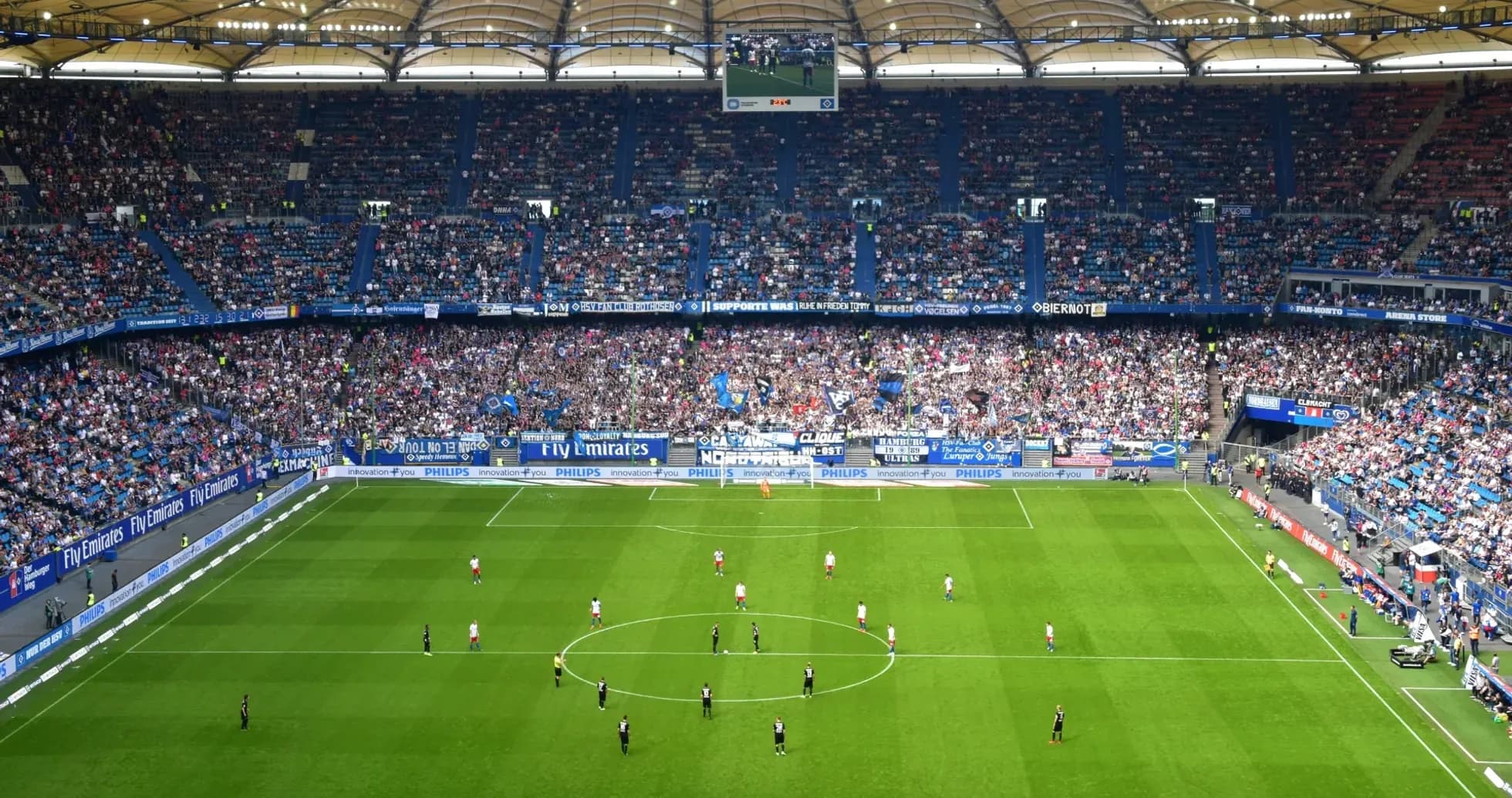
CSKA Sofia's Tactical Masterclass in Penalty Shootout Against Qarabag
CSKA Sofia’s penalty shootout win over Qarabag at Vasil Levski National Sports Academy was built on defensive density, vertical directness, and emotional resilience rather than territorial control. Across 120 minutes of a UEFA Europa League 2nd Qualifying Round tie that finished 0-0 in open play, the Bulgarians accepted a reactive role: 42% possession, fewer shots on goal (3 to Qarabag’s 5), and only 2 corners against 10. Yet their 4-1-4-1 structure, heavy on duels and fouls (26 to 14), successfully disrupted Qarabag’s more elaborate 4-2-3-1, dragging the contest into a low-margin, attritional battle where penalties became the decisive phase.
Tactical Overview
Tactically, CSKA’s 4-1-4-1 under Hristo Yanev was built around compactness and horizontal coverage rather than pressing high. F. Lapoukhov, listed at the base of the structure, anchored the first line in front of the goalkeeper, with Pastor and Ángelo Martino as full-backs and T. Ivanov plus F. Rodriguez central. J. Gbamin, nominally marked as a defender but stationed in the “3:1” line, effectively acted as a single pivot screening the centre-backs. Ahead of him, a four-man band of M. Ebong, S. Sensi, Bruno Jordão and I. Pittas supported lone striker Leandro Godoy.
Without the ball, this morphed into a 4-5-1 mid-block: the wide midfielders dropped to flatten the line of four, while Pittas tucked in to narrow the half-spaces. The statistical profile—26 fouls, 6 yellow cards—shows a clear intent to break Qarabag’s rhythm early in build-up and transition, rather than allowing clean progression through the double pivot of Pedro Bicalho and M. Jankovic. The low corner count (2) reflects how rarely CSKA could sustain pressure; attacks were largely direct, looking to Pittas and Godoy to hold or run channels, with Sensi and Jordão arriving from deep.
Qarabag's Approach
Qarabag, by contrast, imposed the territorial framework of the game. Qurban Qurbanov’s 4-2-3-1, with M. Kochalski in goal, a back four of Matheus Silva, B. Huseynov, B. Varkonyi and E. Cafarquliyev, and a double pivot of Pedro Bicalho–M. Jankovic, was designed to dominate the ball and pin CSKA back. With 58% possession and a 10-2 advantage in corners, they consistently advanced into the attacking third. O. Kashchuk and A. Zoubir (starting in the line of three behind Z. Sawo) looked to receive between the lines, while Kady Borges initially operated as the central creator before later being replaced.
The shot profile underlines Qarabag’s territorial edge: 5 shots on goal to CSKA’s 3, and 7 blocked shots, indicating sustained pressure against a deep block that often threw bodies in front of attempts. CSKA’s 3 blocked shots, by contrast, suggest more sporadic defending of isolated Qarabag breaks or set-piece second balls rather than long spells of siege.
Disciplinary Timeline
The disciplinary timeline reveals how the game’s tactical tone hardened as CSKA leaned into a combative plan to slow Qarabag’s circulation. Chronologically, the cards were:
- 39' Bruno Jordão (CSKA Sofia) — Yellow Card
- 48' Leandro Godoy (CSKA Sofia) — Yellow Card
- 50' Marko Janković (Qarabag) — Yellow Card
- 55' Bence Várkonyi (Qarabag) — Yellow Card
- 75' James Eto’o (CSKA Sofia) — Yellow Card
- 95' Ángelo Martino (CSKA Sofia) — Yellow Card
- 105+3' Teodor Ivanov (CSKA Sofia) — Yellow Card
- 107' Joni Montiel (Qarabag) — Yellow Card
- 112' Joël Zwarts (CSKA Sofia) — Yellow Card
With 6 yellows for CSKA Sofia and 3 for Qarabag (total 9), the imbalance fits the statistical picture: CSKA fouled almost twice as often, accepting repeated tactical infringements to prevent Qarabag’s central combinations and wide overloads from turning possession into clear chances.
Substitutions
Substitutions reflected divergent tactical needs. Qarabag’s first change at 70' saw R. Cephas (IN) come on for Kady Borges (OUT), injecting more direct running and depth from the attacking midfield line, a clear attempt to stretch CSKA’s back four and attack tired legs. On 82', Qurbanov made a triple structural adjustment: B. Langa (IN) came on for E. Cafarquliyev (OUT), J. Mouaddib (IN) came on for O. Kashchuk (OUT), and C. Makreckis (IN) came on for B. Huseynov (OUT). This reshaped the back line and midfield, freshening both the left side and central zones to maintain pressure into extra time. At 90+2', J. Montiel (IN) came on for A. Zoubir (OUT), adding a different profile between the lines, more oriented to final-ball delivery and set-piece threat. At 100', M. Qurbanly (IN) came on for Z. Sawo (OUT), a like-for-like centre-forward swap to preserve pressing intensity and penalty-box presence.
CSKA’s changes were more reactive and energy-based. At 71', J. Eto’o (IN) came on for B. Jordao (OUT), adding fresh legs in the attacking midfield band but also introducing a player who would later be booked, reflecting the continued physical edge in that zone. At 89', J. Zwarts (IN) came on for L. Godoy (OUT), giving CSKA a new focal point up front for extra time, with more mobility to chase long balls and press Qarabag’s first line. At 99', M. Brahimi (IN) came on for A. Martino (OUT), a move that likely pushed CSKA toward a slightly more adventurous left flank, though the subsequent yellow card for Ivanov at 105+3' shows the back line remained under strain.
Defensive Execution
Despite the absence of explicit goalkeeper statistics in the data, the clean sheet over 120 minutes against a side with more shots on goal and far more corners underscores the collective defensive execution in front of the CSKA goalkeeper. Qarabag’s M. Kochalski, meanwhile, faced only 3 shots on target, a testament to how effectively the visitors controlled territory and limited CSKA to sporadic, low-volume attacks.
Statistically, Qarabag’s profile—higher possession, more shots on goal, a 10-2 corner advantage, and only 14 fouls—aligns with a side in control of the ball and field position, using a structured 4-2-3-1 to probe patiently. CSKA Sofia’s 26 fouls and 6 yellow cards, coupled with fewer shots and corners, point to a game plan based on disruption, compactness, and managing space rather than the ball. With expected goals and passing metrics not provided, the clearest lens is territorial and disciplinary: Qarabag won the strategic territory battle, but CSKA’s defensive block, tactical fouling, and game management successfully dragged the tie into a penalty shootout, where their resilience and focus ultimately turned a structurally inferior statistical performance into qualification.
Related News
Celje vs Red Bull Salzburg Predicted Lineups and Team News

Anderlecht vs Red Bull Salzburg Predicted Lineups and Team News
NEC Nijmegen vs Benfica Predicted Lineups: Team News for UEFA Europa League
Plzen vs Benfica Predicted Lineups: Team News Ahead of UEFA Europa League
Benfica vs Lech Poznan Predicted Lineups and Team News

Benfica vs OFI: Predicted Lineups and Team News for UEFA Europa League