
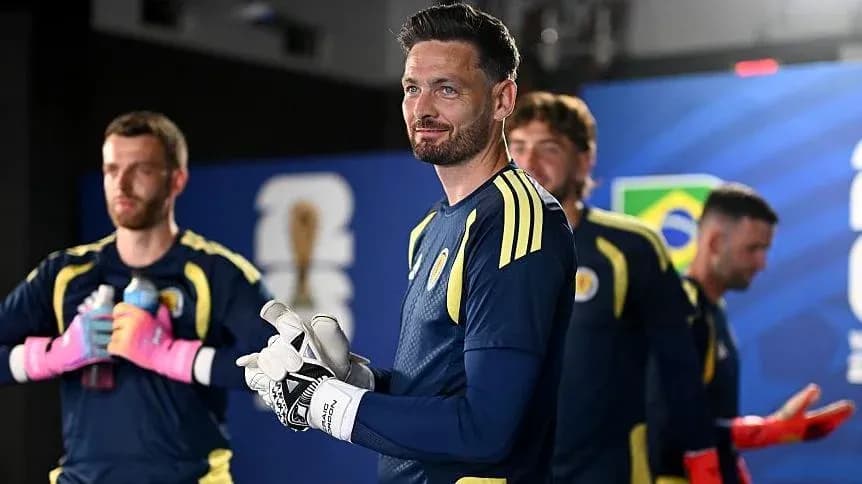
Craig Gordon’s World Cup Farewell: A Career of Defiance
Craig Gordon did not just limp over the finish line of his career. He sprinted back from a place most professionals never return from, then signed off on the biggest stage of all with Scotland at a World Cup.
Four years after a double leg break that would have ended most goalkeepers’ careers, the former Celtic, Hearts and Sunderland No. 1 has called time on his playing days. The scale of that comeback, according to someone who truly understands it, borders on the astonishing.
Rory Loy, the ex-striker turned pundit, knows the injury intimately. He suffered the same double leg break in his early 20s. Even then, with youth on his side, the road back felt brutal.
“I did the same thing, but I did it when I was 20, 23,” Loy said on the BBC’s Scottish Football Podcast, reflecting on Gordon’s journey. At that age, he explained, your body is fresh, your belief unshaken, your motivation almost automatic. You still think you’re indestructible.
Gordon was 39 when his shin snapped.
At that stage of a career, players are usually managing minutes, not learning to walk again. The mindset is different. The margins are thinner. Loy underlined just how savage that reality is.
“The shin bone just snaps basically,” he said, laying it out in blunt terms. From there, it’s not simply a case of waiting for the fracture to knit. Once the bone heals, everything else feels wrong. The way you walk. The way you move. The way your body trusts – or refuses to trust – that leg again.
Loy spoke of needing orthotics in his shoes, forced to adapt to a new version of his own body. Tiny adjustments. Constant compensations. Layer upon layer of physical and psychological recalibration just to feel vaguely normal again, never mind elite.
That is what Gordon faced, only with the added weight of age and expectation. Late 30s. A decorated career already behind him. An easy route out, had he wanted it.
He didn’t.
“For him to go through that type of thing at the age he was at and still have the motivation to come back and play football just sums up the type of mindset he had,” Loy said. It wasn’t just stubbornness. It was a refusal to let an injury write his final chapter.
The reward for that defiance was not a quiet farewell in a half-empty stadium. It was a place at a World Cup with Scotland, a moment generations of players never taste. A goalkeeper who had already scaled the heights with club and country dragged himself back to do it one more time.
Loy was keen to stress that the story is not only about resilience. Strip away the romance of the comeback and you are left with a simple truth: Craig Gordon was still producing at a remarkably high level.
“The level of goalkeeping and saves he had was incredible,” he said.
That is how a career should end. Not remembered for the break, but for the saves that came after it.
Related News
Ilia Topuria Accuses Justin Gaethje After UFC Defeat
Tyson Fury vs Anthony Joshua Fight Date and Venue Confirmed
Switzerland Calls Up In-Form Sion Striker Winsley Boteli for Nations League
Bournemouth Secures Historic 2-1 Win Over Real Sociedad in Spain
Portugal Announces Squad for 2026 UEFA Nations League; Cristiano Ronaldo Expected to Play
Raphinha Channels Ronaldo Nazario as Barcelona's Leading Striker After Position Change