
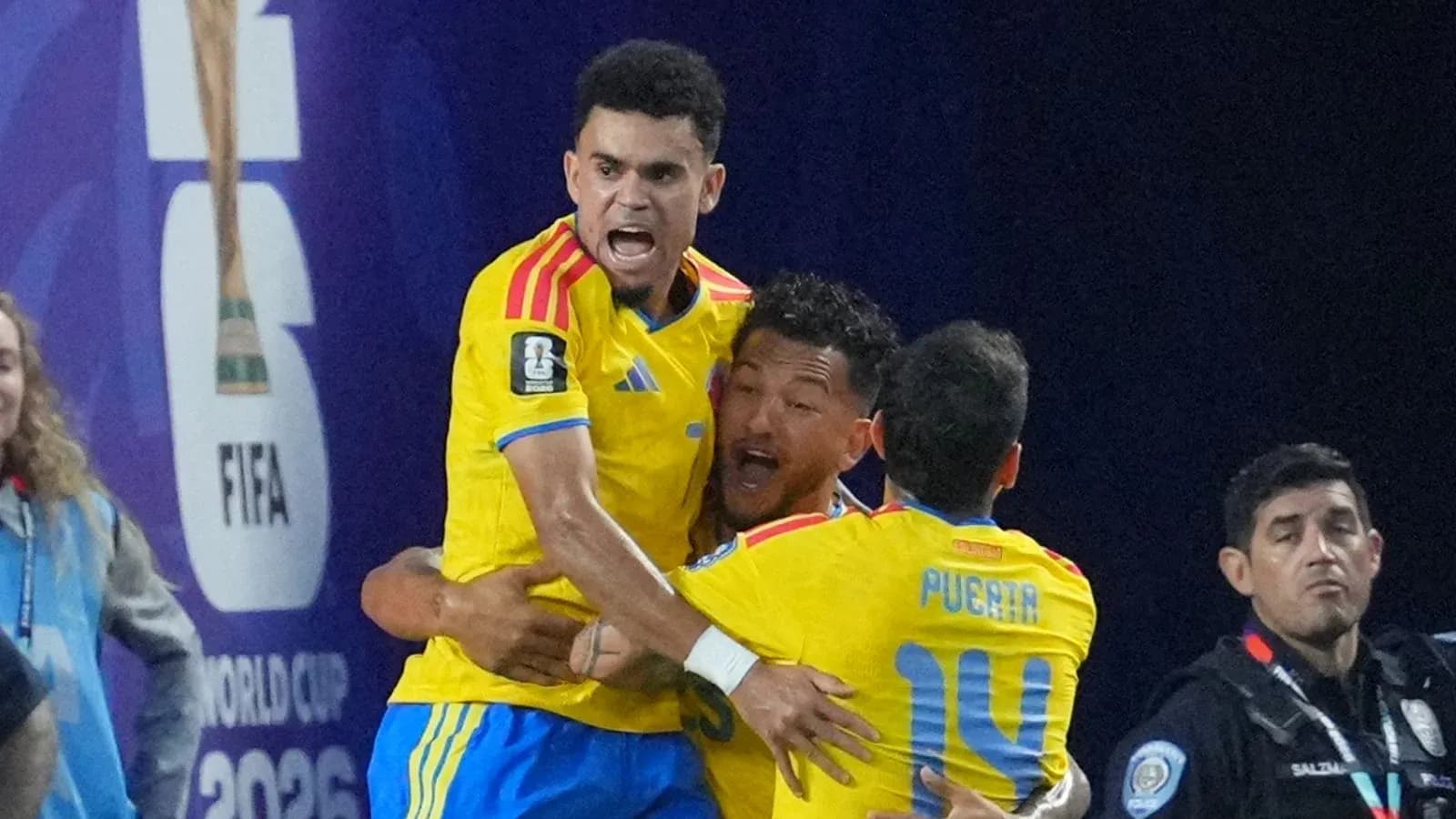
Colombia Dominates Ghana 1-0 in World Cup Showdown
Colombia’s 1-0 win over Ghana at Arrowhead Stadium in this World Cup Round of 32 tie was a textbook example of territorial dominance and structural control. Nestor Lorenzo’s side imposed a 4-3-3 that turned into a high-possession, chance-creating machine, generating 20 shots, 12 from inside the box, and an xG of 2.18. Ghana, set up by Carlos Queiroz in a 4-1-4-1, were largely pinned back, limited to eight attempts with no shots on goal and an xG of just 0.26. The single goal from Jhon Arias early on proved enough, with Colombia’s compact back four and midfield press ensuring Camilo Vargas (Colombia) did not need to make a single save.
The scoring pattern underlined Colombia’s early control. On 14', Jhon Arias timed his forward run from midfield perfectly, finishing a move assisted by substitute Luis Javier Suárez after an early attacking reshuffle. That goal, Colombia’s only strike, aligned with the 1-0 full-time score and their superior shot volume. Later, at 56', a potential second from Luis Díaz was checked and disallowed by VAR for offside, an important moment tactically as it would have rewarded Colombia’s repeated attempts to get Díaz attacking the space behind Ghana’s full-backs.
Discipline
Discipline was significant but manageable. The card ledger read: Colombia 2 yellows, Ghana 3 yellows, total 5. Chronologically, the bookings were:
- 12' Jhon Arias (Colombia) — Tripping
- 49' Caleb Yirenkyi (Ghana) — Holding
- 66' Abdul Fatawu Issahaku (Ghana) — Unsportsmanlike conduct
- 76' Alidu Seidu (Ghana) — Tripping
- 78' Richard Ríos (Colombia) — Tripping
These incidents punctuated phases where Colombia’s midfield aggression and Ghana’s attempts to disrupt transitions spilled into tactical fouling, but without altering the match’s overall control pattern.
Structural Dominance
Structurally, Colombia’s 4-3-3 was the platform for their dominance. The back four of Daniel Muñoz, Davinson Sánchez, Jhon Lucumí, and Johan Mojica stayed relatively high, compressing the pitch and allowing the midfield trio to press with confidence. Gustavo Puerta and Jefferson Lerma provided the double screen and distribution base, while Arias, nominally a midfielder, repeatedly broke lines to join the front three, as seen on the decisive 14' goal.
The early substitution at 8' — Jhon Córdoba (OUT) for Luis Javier Suárez (IN) — shifted the nature of Colombia’s front line. Suárez’s mobility and willingness to drift wide created better channels for James Rodríguez and Luis Díaz to receive between lines. That adjustment paid off immediately with Suárez assisting Arias for the opener. James, operating as the advanced playmaker, linked midfield and attack, while Díaz’s 1v1 threat on the left forced Ghana’s right side deeper, which in turn opened central lanes for late midfield runs.
Defensive Structure
Out of possession, Colombia’s pressing structure was clear: the front three curved their runs to screen passes into Thomas Partey, while the midfield three stepped aggressively onto Ghana’s advanced quartet. The outcome is visible in Ghana’s attacking data: only two shots inside the box, five blocked shots, and crucially, zero shots on target. Colombia’s block and line management were so effective that Vargas (Colombia) recorded 0 goalkeeper saves, with his main role reduced to sweeping and recycling possession.
Ghana’s 4-1-4-1, with Partey as the single pivot and Jordan Ayew leading the line, was designed for compactness and counter-attacks. However, with just 39% possession and 376 total passes, they struggled to progress the ball cleanly. Partey often found himself outnumbered against Colombia’s three central midfielders, forcing Ghana to go long or wide earlier than ideal. The early substitution at right-back — Marvin Senaya (OUT) for Alidu Seidu (IN) on 13' — hinted at a tactical or physical concern and slightly improved defensive duels on that flank, but it did not change the territorial imbalance.
Second Half Adjustments
The second-half changes from Queiroz were clearly aimed at injecting pace and directness. At 62', Iñaki Williams (OUT) made way for Abdul Fatawu Issahaku (IN), and Kwasi Sibo (OUT) for Elisha Owusu (IN), rebalancing the midfield with fresher legs and more vertical running. Later, at 79', Jordan Ayew (OUT) for Ernest Nuamah (IN) and Caleb Yirenkyi (OUT) for Prince Kwabena Adu (IN) were attempts to stretch Colombia’s back line. Yet Colombia’s compact 4-5-1 defensive shape in the closing stages, with substitutions such as Jhon Arias (OUT) for Juan Fernando Quintero (IN) on 73' and James Rodríguez (OUT) for Richard Ríos (IN) at 46', maintained control of central zones and game tempo.
Goalkeeper Performance
Lawrence Ati Zigi (Ghana) was a central figure in keeping the scoreline respectable. Ghana’s statistics credit him with 7 goalkeeper saves and 1.92 goals prevented, a reflection of Colombia’s eight shots on target and the high-quality chances created, especially from inside the box. His interventions, including several stops from close range, ensured the contest remained alive despite Ghana’s limited attacking output. On the other side, Colombia’s defensive unit, supported by the midfield press, effectively protected Vargas (Colombia), whose goals prevented figure of 1.92 underscores how well Ghana’s few efforts were contained before they could test him.
Statistical Overview
The statistical verdict reinforces the eye test. Colombia’s 61% possession and 586 total passes, with 532 accurate at 91%, speak to sustained control and technical superiority. Ghana’s 376 passes at 83% accuracy highlight more rushed, pressured distribution, often under Colombia’s press. The shot profile is even more telling: Colombia 20 total shots, 8 on goal, 12 inside the box, versus Ghana’s 8 attempts with none on target and only 2 from dangerous central areas. Colombia also forced more defensive actions from Ghana, reflected in five blocked Colombian shots.
Discipline-wise, Colombia committed 14 fouls to Ghana’s 10, consistent with their proactive pressing and higher defensive line, while Ghana’s three yellow cards — including one for Unsportsmanlike conduct — showed the strain of repeated defensive work and transitional defending. Corner kicks (3-2 in Colombia’s favor) and offsides (2-0, both against Colombia) further underline who was pushing the defensive line and who was retreating.
In xG terms, 2.18 for Colombia against 0.26 for Ghana quantifies the gulf in chance quality. That Colombia scored only once owed much to Ati Zigi (Ghana) and some wasteful finishing, rather than any structural issue in their chance creation. Conversely, Ghana’s inability to generate even a single shot on target in 90 minutes of knockout football points to Colombia’s excellent defensive organization and the effectiveness of Lorenzo’s 4-3-3 both with and without the ball.
Related News
Thomas Tuchel Reflects on England's 10-Man World Cup Triumph and a Surprising Regret

Robert Moreno Takes Over as Interim South Korea Coach After World Cup Setback
Jude Bellingham Returns to Form with Real Madrid After World Cup Success
Chloe Kelly, Beth Mead & 13 Lionesses Who Must Shine in the Upcoming WSL Season for England’s 2027 World Cup Bid
Barcelona Cancels World Cup Tribute Amid Political Tensions
Messi Breaks Record for Most Penalties Taken and Missed in FIFA World Cup History