
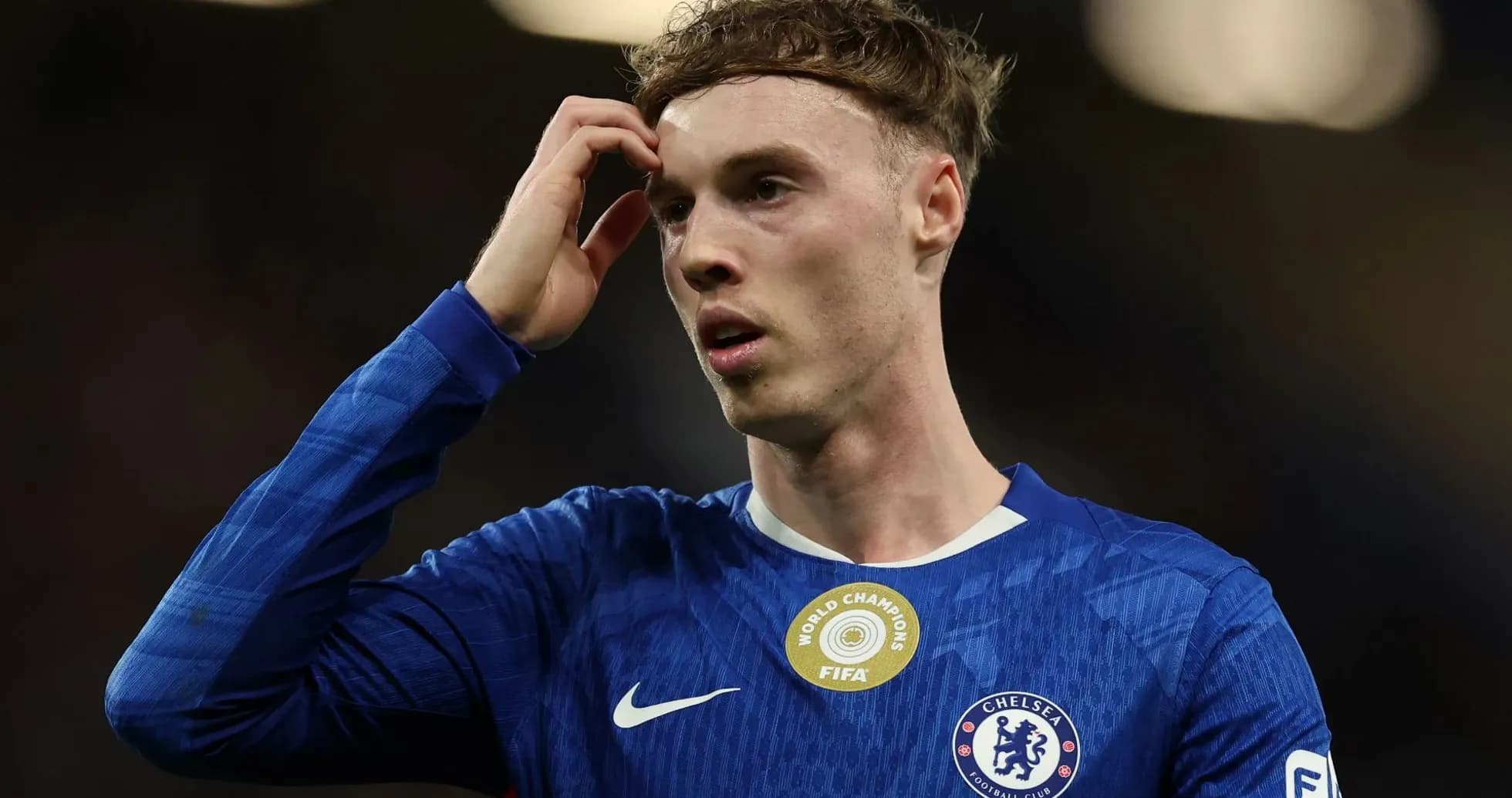
Cole Palmer's Challenge at Chelsea: Sustaining Greatness
Cole Palmer arrived at Chelsea like a bolt from a clear sky. A young forward Manchester City were prepared to let go, suddenly dictating games at Stamford Bridge and forcing even Pep Guardiola to glance back over his shoulder at what he’d allowed to slip away.
The rise was fast. Maybe too fast.
Now, as Palmer prepares for life under new Chelsea boss Xabi Alonso, there is a different kind of spotlight on him. The question is no longer whether he can dazzle for a few months. It’s whether he can sustain it, bend seasons to his will, and turn promise into permanence.
Frank Leboeuf has seen this story before. The former Chelsea defender, speaking to GOAL courtesy of Betinia NJ, cut through the hype with the bluntness of someone who has lived at the top level and knows how quickly it can disappear.
He pointed to what he calls the “dictator of emergency” – that rush to anoint a new star the moment a young player explodes. Palmer was the perfect case study: unwanted by Guardiola, signed by Chelsea, then suddenly the centre of everything.
“Coming from nowhere, that was crazy,” Leboeuf said. Palmer’s impact stunned the league, but the Frenchman’s bar for greatness is much higher than one electric campaign. For him, true status is forged over years, not months.
You don’t become a great footballer, he argued, on the back of a single breakout season. You do it by repeating that level again and again. He name-checked the standard-bearers: Cristiano Ronaldo and Lionel Messi, players who have stacked elite seasons on top of each other for well over a decade. Seventeen seasons at the summit. That, in Leboeuf’s eyes, is the territory where the word “legend” starts to make sense.
Even Kylian Mbappe, already a World Cup winner and global superstar, sits in that waiting room. “We are still waiting for [Kylian] Mbappe at the end of his career to make sure we can name him as a legend,” Leboeuf noted. The message was clear: if Mbappe still has to finish the journey, Palmer is only just stepping onto the road.
Leboeuf drew a parallel with international football to underline the point. The first cap, he said, can feel like a coronation. In reality, it’s just an invitation. “In France, you need 10 caps to be named international,” he explained, because only then have you shown you can stay at that level, not just reach it once.
Palmer’s problem, in Leboeuf’s view, is not talent. That part is beyond dispute. “You cannot deny it, every time he touches the ball, something happens, or something can happen,” he said. The issue lies in everything wrapped around that talent: consistency, positioning, fitness, and mentality.
Leboeuf pointed to the tactical choices made around Palmer, especially being used on the right flank, a role that doesn’t naturally suit him. Add in injuries and the constant churn of ideas and systems at Chelsea, and the rhythm of his game broke. The spark flickered instead of burning.
The missed World Cup squad cut even deeper. For a player who had rocketed into the conversation as one of England’s brightest attacking options, being left at home felt like a jolt. Leboeuf didn’t dress it up. For him, that omission was a “big slap in the face”.
Yet in elite sport, the slap can be a turning point.
Leboeuf believes that moment should drag Palmer back to the basics that first put him on the map: work, humility, and a relentless edge. “He has to go back to work with humility,” he insisted, framing the World Cup snub not as a dead end, but as a trigger for a reaction.
Now comes the real examination. Under Alonso, Chelsea will demand more than flashes. Palmer has already proved he can shock people. The next step is proving he can no longer surprise anyone—because performances of that level have become his norm.
Related News
Raphinha’s Hat-Trick Powers Barcelona to 7-2 Victory Over Racing Santander
Carabao Cup Fourth Round Draw: Liverpool Set to Clash with Chelsea, Arsenal to Face Fleetwood Town
Key Football Matches to Watch in Azerbaijan This Autumn
Raphinha's Hat-Trick Drives Barcelona to 7-2 Triumph Over Racing Santander
Hansi Flick Leads Barcelona to Record-Breaking Seven Wins in a Row
Gavi Reflects on Injury Return as Barcelona Dominate Racing Santander 7-2