
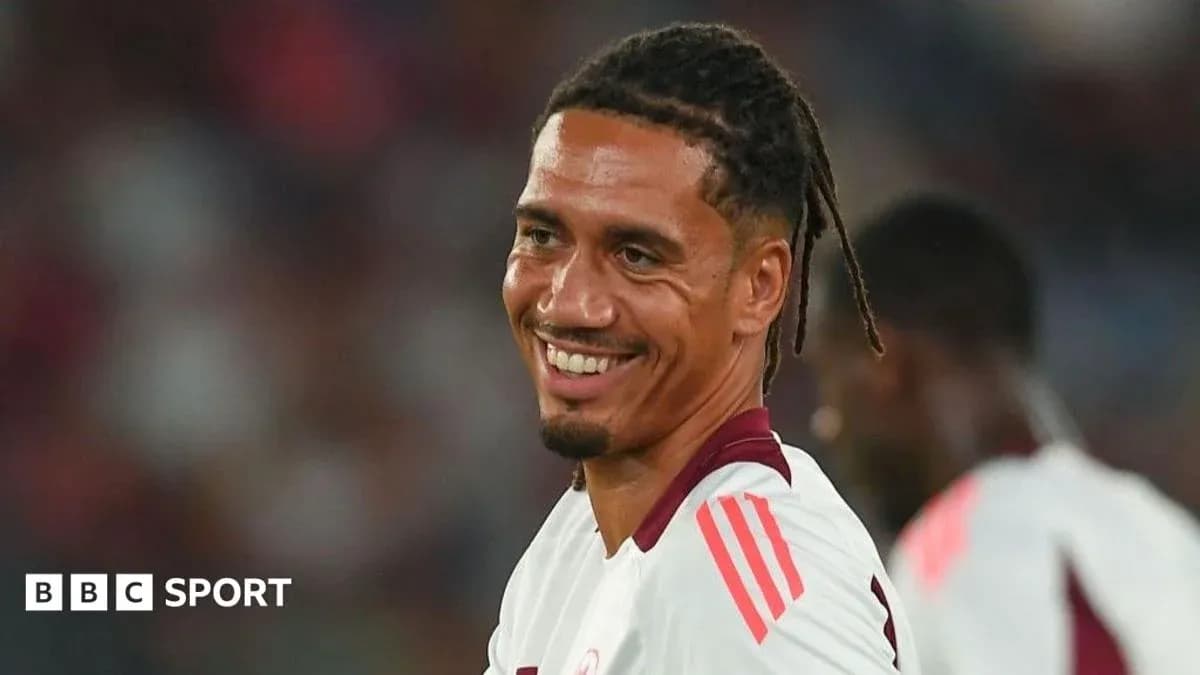
Chris Smalling: From Non-League to Elite Football
Chris Smalling never really fit the template.
You hear it in the first answer of a 45‑minute conversation. The language is calm, measured, but the story behind it is anything but ordinary: from non-league Maidstone to a Champions League final in three years; 580 club appearances across three countries; titles with Manchester United and Roma; 31 England caps; seasons under Sir Alex Ferguson and Jose Mourinho.
Now, at 36, he is back in the north west of England, not to wind down, but to work out what comes next.
A body built for longevity
Smalling talks like someone who has spent years studying his own body as closely as any opponent.
"I know my body now better than when I was 26 and that's shown in the games I'm playing," he says. The line lands with the certainty of a veteran who has survived the churn of elite football and come out the other side still wanting more.
He remembers Ferguson bringing in yoga sessions for Ryan Giggs and others. Back then, it felt like a curiosity. Now, it feels like a roadmap.
"When you get beyond 30, each year is precious in terms of enjoying playing and being passionate about football," he says. Training, he points out, is the easy part. It’s the hours around it that separate the ones who last from the ones who fade.
"The longevity and recovery starts very early in terms of what I'm eating and doing between sessions, even down to my supplements now."
Pre-seasons are no longer just about running and ball work. Clubs run blood tests, issue recommendations. Smalling decided that wasn’t enough. He went deeper.
"I went one step further and kind of had genetics testing, which goes deep into everything. A lot of my supplements were changed because of that."
The result? Last season, he played every game for Al-Fayha in the Saudi Pro League. For a 36-year-old centre-back, that is a statistic that carries weight. He is proud of it. It is also why he is clear: his career is not over.
From lecture halls to Fulham’s first team
Wind back 18 years and none of this was on the horizon. Not even close.
"It wasn't even plan D," he recalls.
He was playing for Maidstone, looking at universities, preparing to study financial economics. A‑levels done, life mapped out. He even searched for non-league clubs near Leicester so he could keep playing while studying.
Then, very late in the summer, the door opened.
"It was very late in the summer when the opportunity came around. I knew it was a slim chance even to be offered but I needed to do everything I could."
The offer came from Fulham. Roy Hodgson watched a single practice game, pulled him aside, and offered a contract.
"It wasn't even a full week," Smalling says. "I didn't have any time to get my head around it. I was just in total shock."
That sense of being swept along by events would return soon enough.
A knock on the hotel door
On 17 January 2010, Fulham travelled to Blackburn for a Premier League game. Smalling, then 20, did not get on the pitch in the 2-0 defeat. The most important moment of his weekend happened the night before.
"There had been a lot of talk about other clubs but not Manchester United," he says.
On the team coach, Hodgson pulled him aside again. Fulham had accepted a bid. Sir Alex Ferguson would be at the hotel in 45 minutes.
Smalling called his mum. Then he sat alone in his room, running through possible questions, trying to imagine what a conversation with Ferguson would feel like.
"Literally, we were there for about at least a couple of hours. He was so calming and reassuring."
Smalling admits he doubted it. United were stacked with centre-backs. He wanted to develop. Where did he fit?
"He told me I would get a chance and he believed in me.
"To be able to share the dressing room and the pitch and have conversations with him, is just incredible."
That, he says, is where the truly great managers separate themselves: in the personal detail, the human connection.
Mourinho, trust and a broken toe
From the outside, his relationship with Jose Mourinho is often reduced to one flashpoint: the public criticism in November 2016, when the Portuguese questioned Smalling’s readiness to play through injury.
Smalling does not see it that way.
"For United or Roma, Jose picked me for most games because we had a good relationship and he trusted me."
He talks about belief, about how Ferguson and Mourinho could look senior players in the eye and convince them something was possible.
"It's very easy to influence younger players but the beauty of Sir Alex and Jose is that they were able to create that belief in senior players. A lot of managers can give good team talks but if you look at some eye-to-eye, see the passion and real belief that 'it's going to happen' senior players follow and the rest lock in. That's the beauty of top-class manager."
Then comes the detail that underlines the point.
"In that situation, I was having injections in broken toe because he had created that mentality in me that I could do anything, even if, maybe, I shouldn't. I had reached the limit of the amount [of injections] I could have, had to stop in a warm-up and he was disappointed.
"It gave me even more belief because it was easy to choose another centre-back but he wanted me."
The relationship survived. It grew. Smalling still messages Mourinho. When the coach took over at Real Madrid this summer, the defender sent him a good-luck note.
Beyond the touchline
Many ex-players talk about coaching badges and dugouts. Smalling doesn’t.
"I don't think it will be my route," he says. "I'm quite comfortable with the next stage."
He is already building it. One project, in partnership with the Global Institute of Sport, is an education programme for young players. Three or four similar initiatives sit alongside it, ready to expand when his playing days finally end.
"Once my football career comes to an end, I can put more time to them but at the minute it's all focused on playing because I have that passion and drive and physically my stats are good."
Any club signing him now will be getting more than a centre-back.
At Al-Fayha, he pushed for improvements off the pitch, making sure the gym met the standards an elite professional needs. At previous clubs, he has tried to leave a mark beyond matchdays. He is proud that he is remembered well, on and off the field.
Turning down university, in hindsight, looks like a risk that paid off. But it never felt comfortable at the time.
"It would have been the safer route," he says.
"In that first year, I was not earning a lot of money. I was playing for the reserves and the 19th man for the first team, travelling around but not quite on the bench. There was no guarantee I was going to earn more money."
Then came United. A four-year contract. After the first year, a new one. Another a year later. Another 18 months after that.
"There was always this carrot. I never took anything for granted."
He still doesn’t. A 36-year-old free agent, back in the north west, training, planning, waiting. The body is looked after, the mind is clear, the next project already sketched out.
All that’s missing is the name of the next club willing to bet that Chris Smalling’s story still has a few chapters left.
Related News
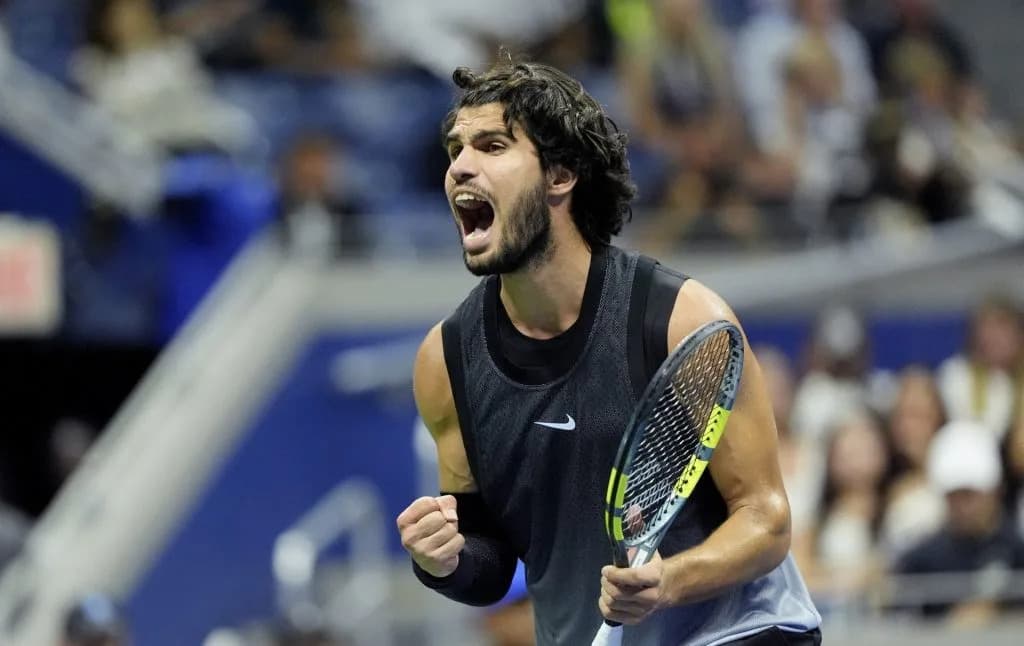
Carlos Alcaraz Urges Tennis Organizers to Stop Matches Finishing in the Early Morning
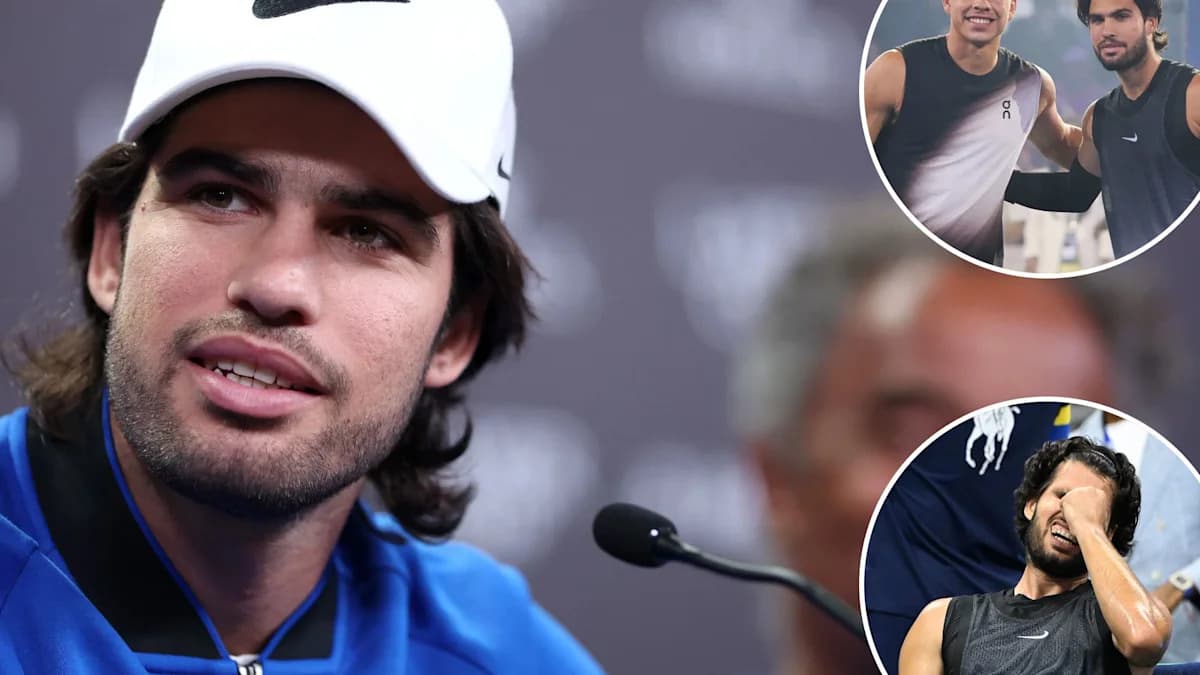
Carlos Alcaraz Frustrated by 3:30 a.m. US Open Finish: 'Too Much'
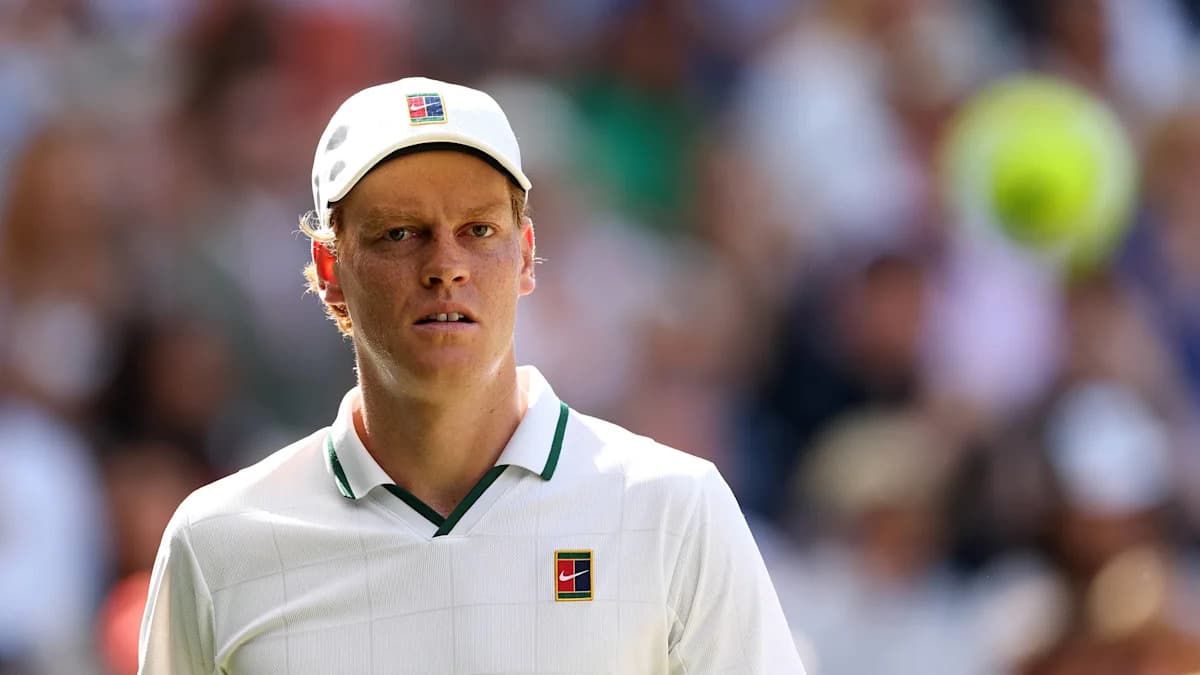
Jannik Sinner Set for ATP 500 Return in Beijing with Novak Djokovic Also Competing
Meet Iva Jovic: The Rising American Tennis Talent
Flavio Cobolli Shares Insights on Training with Jannik Sinner Ahead of His Tennis Return
Till vs Romero: Fight Details, Undercard, and Viewing Info for This Weekend