
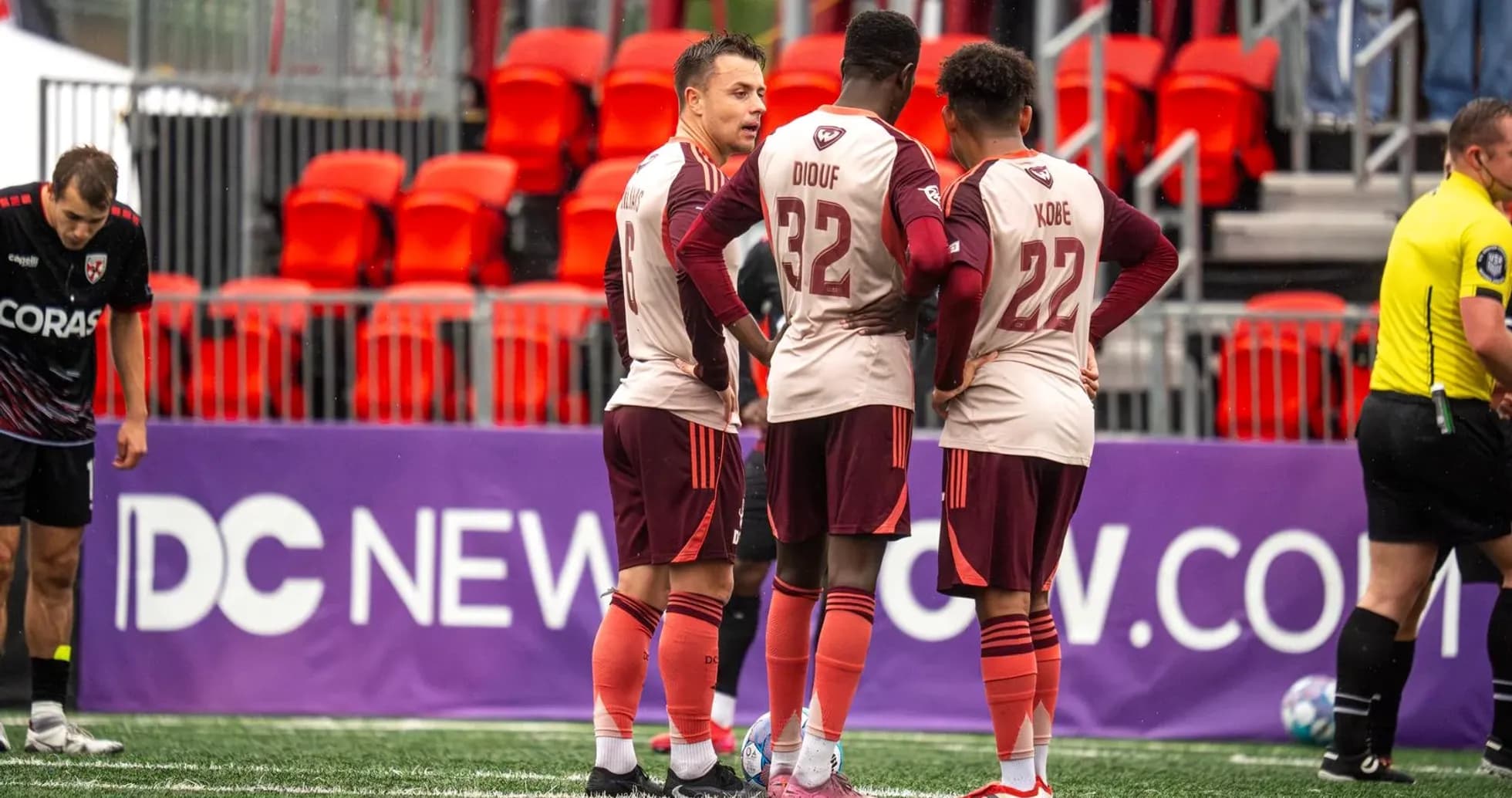
Charleston Battery Dominates at Home Against Detroit City
Under the lights at Patriots Point Soccer Complex, Charleston Battery leaned into their seasonal identity: ruthless at home, fragile elsewhere, but increasingly a side that smells blood when opponents travel. This USL Championship Group Stage meeting with Detroit City finished 2–0, a scoreline that echoed the underlying trajectories of both clubs.
Following this result, Charleston’s home aura hardens into something close to a fortress. Heading into this game, they had played 5 league matches at home, winning 4 and drawing 1, scoring 12 and conceding just 4. That meant a home average of 2.4 goals scored and 0.8 conceded, the statistical imprint of a side that attacks with freedom and defends with structure in front of their own support. Overall, they had 14 goals for and 13 against across 10 matches, a goal difference of 1 that spoke to a more turbulent existence on their travels, but at Patriots Point they looked like a playoff-bred unit already.
Detroit City arrived with a split personality of their own. Heading into this game, they sat 3rd in the USL 1 group with 17 points from 11 matches, built almost entirely on perfection at home: 5 wins from 5, 9 scored and only 2 conceded. On their travels, though, they were winless: 0 wins, 2 draws, 4 defeats, with just 3 goals scored and 8 conceded. Their away average of 0.5 goals for and 1.3 against framed this fixture as a collision between one of the league’s most dominant home attacks and one of its most timid away offenses.
The 2–0 scoreline, with Charleston two up by half-time, felt less like an upset and more like the logical extension of those numbers: a home side that expects to dominate early, and an away side that rarely lands a punch on the road.
Tactical voids and discipline
With no official absences listed, both Ben Pirmann and Danny Dichio were free to lean into their preferred personnel profiles, even if the formations were not explicitly recorded. The narrative of the match, though, hinted at two very different emotional states.
Charleston’s season-long card map shows a team that lives on the edge in the middle and late phases of each half. Their yellow cards peak at 31–45 minutes and 76–90 minutes, each window accounting for 25.00% of their cautions. That pattern fits a side that accelerates intensity as halves close, pressing high and contesting second balls aggressively. It also helps explain how they were able to build a 2–0 half-time lead here: their willingness to play on the front foot in the final 15 minutes of the first period has been a defining trait.
Detroit, by contrast, wear their stress in the third quarter of games. Their yellows cluster between 61–75 minutes, where 35.29% of their cautions arrive, and they have already seen a red card in the 16–30-minute window this season. That profile suggests a team that can be rattled once the match settles into its physical grind, and that occasionally loses control when chasing the game early. In a fixture where they fell behind and never scored, that emotional volatility translated into a lack of composure in key duels rather than the kind of controlled aggression needed to claw their way back.
Key matchups
Without individual scoring data, the “hunter” for Charleston is better understood as a collective front line. The starting trio of J. Kelly, M. Berry and the wide influence of L. Blackstock and C. Swan embodied the numbers: a home attack averaging 2.4 goals per game heading into this match. Their job was to stretch a Detroit defense that, away from home, had already conceded 8 goals in 6 matches.
The duel was less about one striker versus one center-back and more about relentless waves against a structurally sound but travel-shy unit. G. Smith and J. Akpunonu, starting in the back line, provided the platform: by defending high and stepping into midfield when needed, they allowed Charleston to compress the pitch, pinning Detroit’s midfielders like R. Williams and M. Rodriguez deeper than they would have liked.
Detroit’s “shield” had been formidable at home, conceding only 2 goals in 5 matches, but that solidity hasn’t translated onto their travels. The 2–0 here fits their away-season pattern: when forced to defend for long spells, they struggle to protect their box consistently, and their inability to threaten at the other end (0.5 away goals on average heading into this game) means every concession feels decisive.
The engine room
The central battle revolved around Charleston’s pairing of E. Ycaza and K. Pakhomov against Detroit’s axis of R. Williams and K. Hernandez-Foster. Ycaza, wearing 8, was the nominal connector, tasked with linking the back line to the forward unit, while Pakhomov’s 88 hinted at a more industrious, screening role. Together, they mirrored Charleston’s overall balance: a side that, heading into this match, averaged 1.4 goals scored and 1.3 conceded per game, living on fine margins but generally tilting them in their favor at home.
Detroit’s midfield, on the other hand, had to solve two problems at once: protect a back four that had been porous away and supply an attack that rarely scores on the road. R. Williams, in particular, was asked to be both enforcer and distributor. But with Detroit failing to score and conceding twice before the break, it was clear Charleston’s engine room had won the territorial and emotional battle, forcing Detroit to play long and disconnected into A. Dalou and D. Smith.
Statistical prognosis
Following this result, the numbers around both teams harden into trend rather than noise. Charleston remain a home juggernaut: 4 wins and 1 draw heading into this game, now reinforced by another clean sheet and another multi-goal performance. Their defensive record at Patriots Point—4 goals conceded in 5 home matches before this fixture—was already elite; a 2–0 here only underlines their capacity to control games without needing to chase.
Detroit’s away story is equally consistent, and equally troubling. Winless on their travels heading into this match, with only 3 away goals scored and 8 conceded, they again failed to find the net and again conceded multiple times. Even without explicit xG data, the pattern is clear: Charleston’s high home scoring average and Detroit’s low away output pointed strongly toward a home win with a likely clean sheet. The final score simply confirmed what the season’s underlying numbers had been whispering all along.
In playoff terms, both remain in the promotion conversation—Detroit 3rd, Charleston 4th heading into this round—but the psychological gap feels larger than the table suggests. Charleston look like a side built for knockout football at home, capable of suffocating visitors and striking early. Detroit, for all their excellence in Detroit, still need to solve the riddle of their travels. Until they do, nights like this one at Patriots Point will continue to feel less like isolated setbacks and more like the inevitable outcome of their statistical DNA.
Related News
San Antonio Triumphs Over Colorado Springs in USL Championship Clash
Charleston Battery's Dominance Over Loudoun United: A Tactical Analysis
Orange County SC Triumphs 4-2 Over Miami FC in USL Showdown
Colorado Springs vs San Antonio Match Preview
Colorado Springs vs San Antonio: USL Championship Clash Preview

Miami FC vs Orange County SC Match Preview