
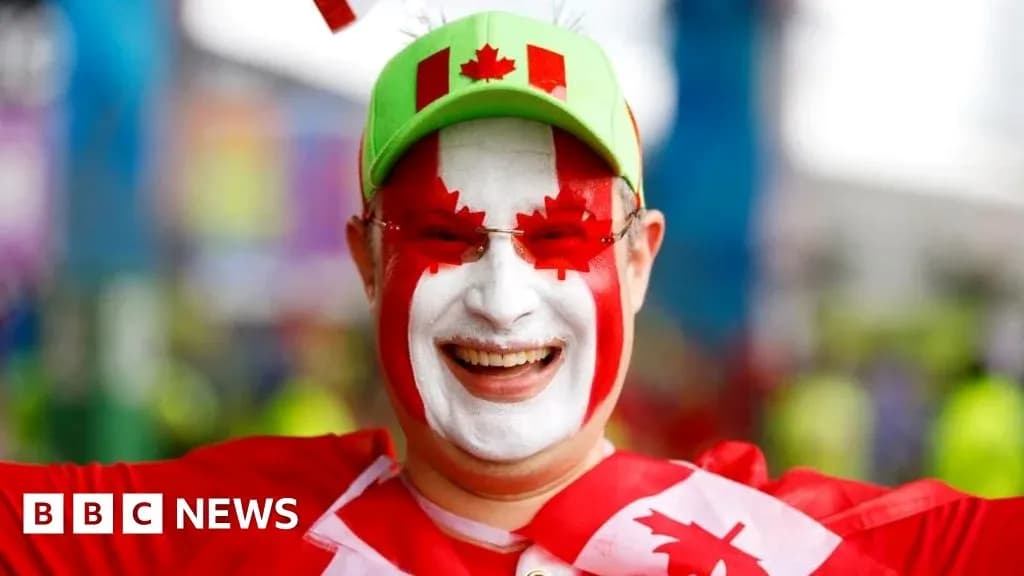
Canada's Unforgettable World Cup Journey: A New Era for Football
For weeks, Canada lived a double life at this World Cup. On the one hand, it was the “forgotten host”, overshadowed by the might of the United States and the tradition of Mexico. On the other, for the men’s national team and its supporters, this was the summer everything changed.
Jesse Marsch’s side tore up the script. Brash, front-foot, unapologetic. Canada didn’t just show up; it broke new ground, marching all the way to the round of 16 – the furthest the men’s team has ever gone on this stage – before finally bowing out to Morocco.
First World Cup point. First World Cup win. First knockout victory. A lifetime of milestones crammed into one month.
“They shocked everyone,” fan Matt Lorincz said in Calgary. He was right.
A Hockey Country Falls for Football
In Canada, football is the sport most people play, but not the one that usually owns the conversation. That space has long belonged to the NHL, to baseball nights and NBA double-headers. Soccer has often lived in the margins, loud at the grassroots, quieter at the cash register.
This tournament forced its way into the centre of the room.
“Most people you talk to watch, like, hockey or other sports, right?” Lorincz said. “There’s not a lot of – or as many – soccer fans in Canada. So hopefully there may be a few more of those.”
For a few weeks in June and July, the country leaned into the World Cup spotlight it shared with the US and Mexico. The label of “forgotten host” didn’t fit the streets of Toronto or Vancouver.
In Toronto, matches spilled out of bars and onto pavements. The soundtracks were commentary feeds and impromptu chants. Fans marched in colour through downtown, snaking their way to Toronto Stadium, drums and flags cutting through the city’s glass-and-steel skyline.
On the west coast, Vancouver got its own statement night. Canada 6, Qatar 0. A demolition job that sent a roar rolling across the Pacific air. Only one note of anguish: star midfielder Ismaël Koné leaving on a stretcher, his leg broken after a heavy challenge. The scoreline glittered; the sight of Koné in agony did not.
The final act of Canada’s hosting duties came on Tuesday in Vancouver, where Switzerland beat Colombia in the round of 16. The stadium lights dimmed on the country’s role as stage, but not on its new sense of possibility.
Carney in the Dressing Room, a Nation in the Spotlight
Prime Minister Mark Carney has never hidden his love of sport, or his collection of jerseys. At this World Cup, he did something more than pose for photos. He became the only leader among the three host nations to attend games in person, and he embraced the chance to present Canada to the world.
After that 6-0 rout of Qatar, Carney walked into the Vancouver dressing room and addressed a team still buzzing from the win, still shaken by Koné’s injury.
“You showed a level of character that some people never achieve in their life,” he told them. “And you showed it when a good part of the country and the world is watching.”
The message was clear: this wasn’t just about a scoreline. It was about timing, about who was watching, about what Canada looked like under the brightest lights in sport.
Sports minister Adam van Koeverden framed it as a coming-of-age moment. Canada, he said, had been “growing up a little bit as a middle power,” and hosting the world’s biggest annual sporting event had been “a sincere privilege that we have not taken lightly.”
The original World Cup bid sold a romantic vision: one continent, three countries. A truly united North American stage. John Kristick, the former executive director of the United Bid Committee and now with Playfly Sports Consulting, believes the reality drifted from that ideal.
He felt the tournament had gone well but said the unity of the bid had been diluted. For him, Canada and Mexico struggled to cut through the noise as hosts while the US soaked up much of the limelight, helped by the political theatre of the Trump era and by hosting the bulk of the fixtures.
Yet inside Canada’s borders, there was no confusion about its role.
“Every Canadian knows Canada is hosting it,” Kristick said, “and I think there’s been a great deal of national pride.”
Toronto and Vancouver staged 13 of the tournament’s 104 matches. Not the majority, but enough to leave a mark.
Packed Bars, Busy Kitchens, and a Big Bill
World Cups don’t just test defences and midfields. They test city budgets, restaurant stockrooms, hotel capacity, and public patience.
In British Columbia, Ian Tostenson, head of the province’s Restaurant and Foodservices Association, watched the impact from the front line of hospitality. Being in a host city, he said, was like a crash course in the sheer “enormity of the World Cup”.
The pull of the tournament was unmistakable. People came for the matches and stayed for everything around them. Tostenson reported alcohol sales up about 5% on last year. More importantly, he said, it “raised the spirits of the entire province,” and for four weeks, “the whole conversation had been about soccer.”
Canada’s wider economy has been slogging through choppy waters, but the World Cup offered a reminder: if you give people a reason to go out, they will. “You learn that if you give people a real reason to spend their money and give them value, they’ll spend it,” Tostenson said.
The price of that lesson was steep. Taxpayers put up an estimated C$1.1bn to get Canada World Cup-ready. Toronto alone is projected to have spent around C$380m.
Not everyone sees that as money well spent. City councillor Josh Matlow argued the figures simply don’t add up against a backdrop of strained municipal finances.
“I don’t think that hosting the games made the city’s situation any better,” he said.
Van Koeverden pushed back, calling the spending “prudent” and insisting the money flowed back into the economy. His picture of 2026 is simple: “Full stadiums, full parks, full restaurants, and full hotels is a nice problem to have.”
A ‘Forgotten’ Host That Won Over Its Guests
If Canada sometimes disappeared from global headlines, it did not disappear from the memories of those who made the trip.
Portugal manager Roberto Martinez praised Toronto’s compact, improvised stage. The city’s stadium, the smallest of the World Cup venues and boosted by temporary seating, reminded him of “old-fashioned Premier League grounds.” After Portugal’s win over Croatia, he called the overall atmosphere “an incredible spectacle for football.”
For visiting supporters, the experience was more than just 90 minutes and a final whistle. Norwegian fan Gudmund Agotnes took in three matches in Toronto and admitted he felt “lucky with the draw.” He liked the vantage point: a “bird’s eye view” of the pitch and, beyond it, the city’s skyline. Football framed by skyscrapers.
Record Audiences for Les Rouges
Inside Canadian living rooms, the numbers told their own story.
Fifa announced that more than a million fans attended the opening 16 matches across the three host nations. The tournament was on pace to surpass the all-time cumulative attendance record of 3.5 million set in 1994 by the end of the group stage, a feat helped by this year’s expanded format.
On television, Canada’s date with Morocco on 4 July became the biggest non-final World Cup broadcast in the country’s history. Host broadcaster Bell Media said viewership peaked at 11.7 million unique Canadian viewers.
For a nation raised on hockey, that is a seismic shift. The NHL’s season opener last October drew 9.8 million Canadians overall. The World Cup eclipsed it.
Bell Media reported that round-of-32 matches averaged 1.9 million Canadian viewers. Hockey Night in Canada, the country’s Saturday-night institution, typically averages about 1.2 million per broadcast. For once, the ball outdrew the puck.
From Grassroots Passion to National Ambition
Canada is not a blank slate in football terms. It has a history, a culture, and a footprint.
The Vancouver Whitecaps have roots stretching back to 1973. Toronto FC joined the professional landscape 32 years later. Both compete in MLS and have helped cultivate a fanbase that sings, travels, and lives the sport.
The challenge has always been turning that recreational passion into sustained elite performance, especially on the men’s side. The women’s national team, ranked ninth in the world by Fifa, has long carried the competitive flag. The men, until now, have struggled to match that standard.
This World Cup has changed the financial picture. Canada Soccer, the sport’s national governing body, launched a fundraiser before the tournament with a C$25m target. It hit that figure months ahead of schedule, riding the wave of national enthusiasm.
Money alone doesn’t win matches, but it builds pitches, hires coaches, funds camps, and keeps players in the system longer. The foundations are shifting.
For the supporters, the calculations are simpler. For fans of Les Rouges, this was about feeling part of something bigger than a scoreline.
“It brought a lot of people together in a very kind of segregated world that we’re living in,” said Zeileen Reardon, watching the Morocco match from a bar in Calgary. “So, I think it actually showed the world that we can come together, even for a game.”
Canada arrived at this World Cup as the quiet partner in a three-nation bid. It leaves it with a men’s team that has rewritten its own ceiling, a fanbase that has tasted the thrill of relevance, and a question that will echo long after the final whistle: was this just a moment, or the start of a new era for Canadian football?
Related News

Ilia Topuria Accuses Justin Gaethje After UFC Defeat

Tyson Fury vs Anthony Joshua Fight Date and Venue Confirmed

Switzerland Calls Up In-Form Sion Striker Winsley Boteli for Nations League

Bournemouth Secures Historic 2-1 Win Over Real Sociedad in Spain
Portugal Announces Squad for 2026 UEFA Nations League; Cristiano Ronaldo Expected to Play

Raphinha Channels Ronaldo Nazario as Barcelona's Leading Striker After Position Change