
Canada’s Historic World Cup Win Marred by Koné Injury
Canada finally had its World Cup moment. A 6-0 win, a hat trick from Jonathan David, a statement performance in Group B. And yet, inside BC Place in Vancouver on June 18, 2026, the night will be remembered for the sound of a leg breaking.
A historic win, a harrowing scene
Midway through the second half, with Canada cruising against a Qatar side already reduced to 10 men, the stadium fell silent.
Ismaël Koné took a pass and turned. Qatar midfielder Assim Madibo came through him from behind. The 24-year-old crumpled, clutching his left leg, his face twisted in pain as teammates sprinted toward him, frantically waving to the bench.
Canada captain Stephen Eustáquio reached him almost immediately. One look was enough.
“I saw his leg. I saw that something wasn't right,” he said later, the words landing as heavily as the tackle itself.
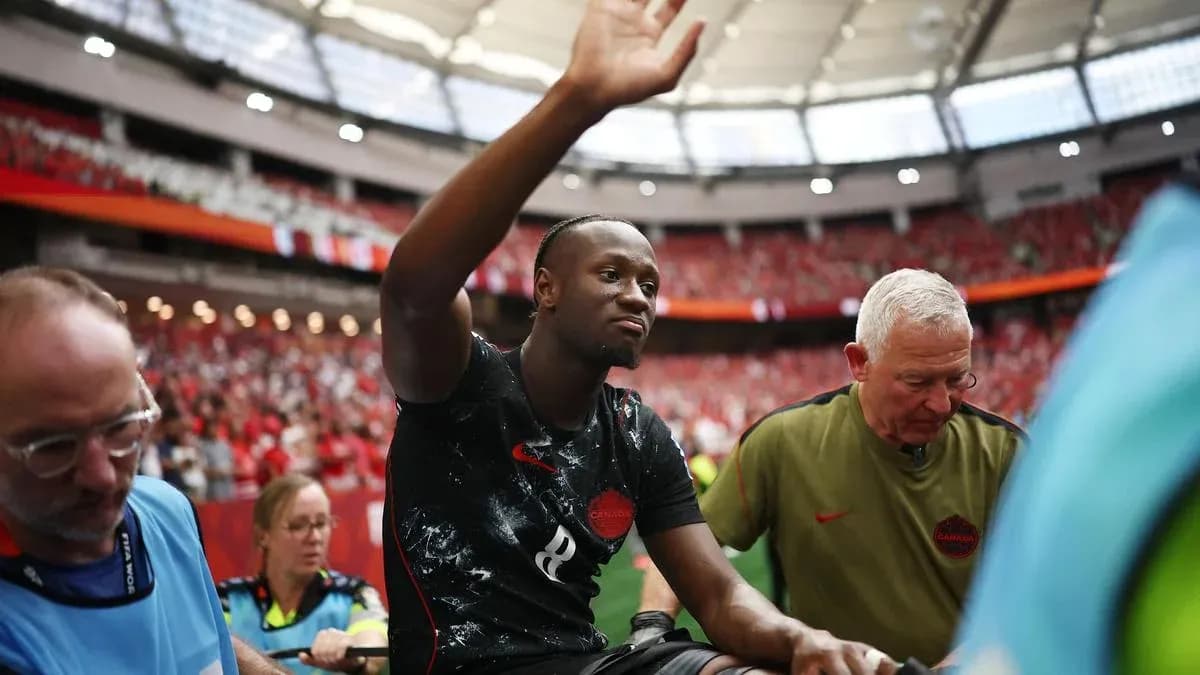
Koné lay on the turf, shielded by a ring of red shirts as medical staff rushed on. Players turned away. Some stared at the grass. Others looked toward the stands, stunned. The images that followed left little doubt: his lower left leg appeared visibly broken.
Madibo saw red for the challenge, leaving Qatar down to nine men after Homam Ahmed had already been sent off in the first half. Madibo would later offer a personal apology to Koné, according to Canada coach Jesse Marsch, but the damage was done.
From the Canadian bench, Marsch had no escape from the brutality of the moment.
He said the incident unfolded right in front of him, close enough that you could hear the “bones snap." Koné was eventually stretchered off, the crowd applauding through the shock, and taken straight to a local hospital, where he was prepared for surgery with family at his side.
Canada responds through the pain
For a few minutes, Canada looked dazed. A landmark night had been hijacked by horror. The players knew it.
“Everybody was crushed when it happened, but we had to find a way to stay focused, we knew that Ismaël wanted us to finish the job," Marsch said. "There's a lot of thoughts that go through our heads right now, we're all thinking about him, but we're all very proud of what we are.”
The response came quickly.
Less than 10 minutes after Koné left the field, his replacement, Nathan Saliba, stepped into the spotlight. He arrived in the box, finished Canada’s fourth goal, then made straight for the touchline, lifting Koné’s jersey high in an emotional tribute that said more than any speech could.
The pressure that had been building on Qatar finally broke. With nine men, they simply could not live with Canada’s pace and movement. David, already on the scoresheet, kept punishing them, completing a hat trick on a night that should have belonged to him.
Instead, his post-match words circled back to the tackle that changed everything.
“If there's a play where you cannot win the ball, there's no point,” David said. “It's just to hurt people.”
A night of firsts, and a brutal cost
The 6-0 scoreline underlined Canada’s dominance and delivered the country’s first-ever World Cup victory. It should have been a pure celebration of a team coming of age on the biggest stage.
Instead, every conversation carried the same shadow: Koné.
The full extent of his injury has not yet been disclosed, but the visual evidence was grim, the reaction from players even more so. For a squad that leans heavily on his energy and creativity between the lines, the loss is as emotional as it is tactical.
“We're going to miss (Koné),” Eustáquio admitted. “He has that X factor that our team really needs.”
Canada left the pitch with three points, six goals, and history made. They also left knowing their World Cup journey now runs parallel to Koné’s fight to recover.
Related News

Raphinha’s Hat-Trick Powers Barcelona to 7-2 Victory Over Racing Santander
Carabao Cup Fourth Round Draw: Liverpool Set to Clash with Chelsea, Arsenal to Face Fleetwood Town
Key Football Matches to Watch in Azerbaijan This Autumn
Raphinha's Hat-Trick Drives Barcelona to 7-2 Triumph Over Racing Santander
Hansi Flick Leads Barcelona to Record-Breaking Seven Wins in a Row
Gavi Reflects on Injury Return as Barcelona Dominate Racing Santander 7-2