
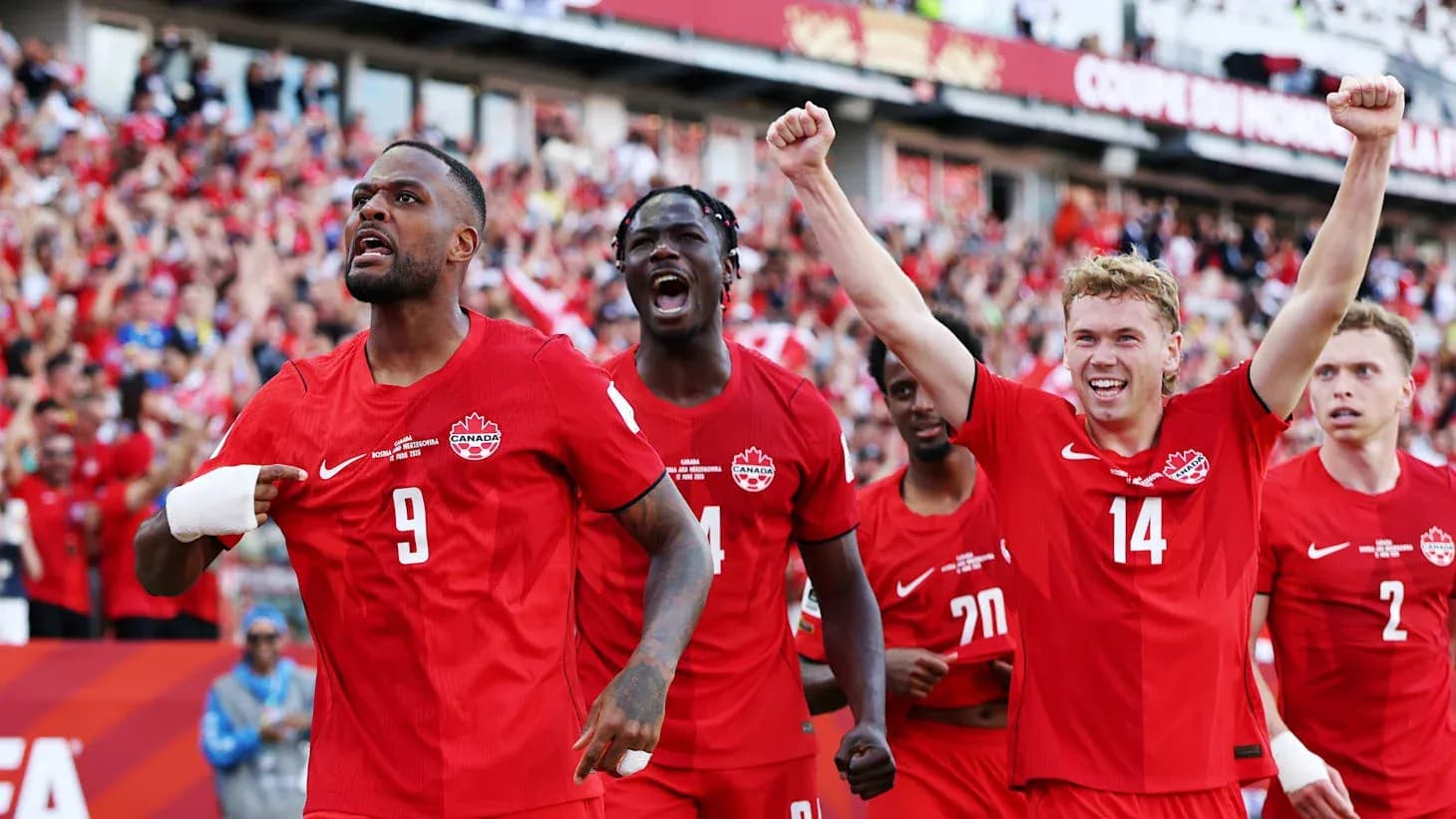
Canada and Bosnia & Herzegovina Share Points in World Cup Opener
Under the Toronto floodlights at BMO Field, Canada’s World Cup return began with a 1–1 draw against Bosnia & Herzegovina, a result that leaves Group B delicately poised. Following this result, both sides sit on 1 point, Canada in 2nd and Bosnia & Herzegovina in 4th, each with a goal difference of 0 after identical tallies of 1 goal scored and 1 conceded overall. The numbers are modest, but the tactical stories underneath are already sharply drawn.
I. The Big Picture: Two 4-4-2s, Two Identities
Both coaches leaned into a classic 4-4-2, but the shapes carried very different intentions.
Jesse Marsch’s Canada were front‑foot and vertical. With M. Crepeau behind a back four of A. Johnston, L. De Fougerolles, D. Cornelius and R. Laryea, the structure was built to spring quickly into wide overloads. The midfield band of T. Buchanan, I. Kone, S. Eustaquio and L. Millar was less about static lines and more about waves: Buchanan and Millar high and wide, Kone and Eustaquio shuttling to keep the ball moving into the half‑spaces. Up front, J. David and T. Oluwaseyi offered contrasting profiles – David dropping between the lines, Oluwaseyi threatening depth.
Sergej Barbarez mirrored the 4-4-2 on paper, but Bosnia & Herzegovina were more controlled and defensive in their interpretation. N. Vasilj marshalled a back line of A. Dedic, N. Katic, T. Muharemovic and S. Kolasinac that was rugged, compact and happy to absorb. Ahead of them, E. Bajraktarevic, B. Tahirovic, I. Basic and A. Memic formed a narrow, industrious midfield four, tasked with closing central lanes and funnelling Canada outside. Up front, E. Demirovic and J. Lukic were asked to be both first defenders and direct outlets.
The result was a contest of volume versus precision. Canada, at home, showed why their goals-for average stands at 1.0 at home and 1.0 overall, matching an identical 1.0 goals-against average. Bosnia & Herzegovina, on their travels, mirror that same statistical symmetry: 1.0 goals scored away, 1.0 conceded away, 1.0 for and against overall. One game in, both are balanced, neither yet capable of tilting the numbers decisively.
II. Tactical Voids and Discipline: Edges in the Margins
There were no listed absentees in the data, which meant both squads could lean on their core leaders. The “voids” were more tactical than personnel-based.
For Canada, the early issue was central progression. With Bosnia & Herzegovina collapsing their midfield four tightly around Tahirovic and Basic, Eustaquio often found himself receiving under pressure with limited vertical options. That forced Canada into a slightly predictable rhythm: switch wide, attack down the flanks, recycle. It kept them safe – they have yet to fail to score overall and have yet to keep a clean sheet – but it also kept Bosnia & Herzegovina comfortable in their low block.
Discipline, however, is already emerging as a theme. Canada’s yellow-card distribution shows a split personality: 50.00% of their bookings have come in the opening 0–15 minutes, and 50.00% between 46–60 minutes. That points to two emotional spikes – the adrenaline of the start and the volatility straight after half-time. A. Johnston and L. De Fougerolles both feature among the early yellow-carded defenders; their aggression on the front foot is a weapon, but it also risks destabilising the back line if game states become more desperate later in the group.
Bosnia & Herzegovina’s card map is more stretched and, crucially, more late-game. Their yellows are spread 31–45 (33.33%), 46–60 (33.33%) and 91–105 (33.33%). This hints at a side that increasingly leans into the dark arts as matches tighten. J. Lukic, N. Katic and E. Demirovic all sit among the early disciplinary leaders, combining combative edge with high duel volume. It is sustainable over 90 minutes, but in a tournament context, repeated late‑game fouling may yet prove costly.
III. Key Matchups: Hunter vs Shield, Engine Room vs Enforcer
The “Hunter vs Shield” duel is already framed by the top-scorer charts. For Canada, C. Larin came off the bench to score their goal; in total this campaign he has 1 goal from 1 appearance, with 1 shot, 1 on target and a 7.7 rating. He is Canada’s most efficient finisher so far, and his presence off the bench changed the dynamic, adding penalty-box gravity that Bosnia & Herzegovina’s centre-backs had to respect.
Opposite him, the “Shield” is a collective more than an individual, but N. Katic stands out. Across his 90 minutes, he has 5 tackles, 2 blocked shots and 3 interceptions, underlining a defender who not only wins duels (24 total, 15 won) but also reads danger early. When Larin is on the pitch, the battle between his penalty-box instincts and Katic’s anticipation will define Canada’s late-game threat.
Bosnia & Herzegovina’s “Hunter” is J. Lukic, who has already found the net once. His 3 shots (2 on target), 13 duels (10 won) and a yellow card tell the story of a centre-forward who mixes physicality with penalty-area sharpness. Canada’s answer lies in their young axis of De Fougerolles and Cornelius. De Fougerolles, in particular, has been heavily involved: 50 passes at 80% accuracy, 3 tackles and 22 duels (10 won). He is still learning international tempo, and Lukic will keep probing that inexperience with clever movements across the channels.
In the “Engine Room”, Canada’s creativity is increasingly channelled through P. David. In total this campaign he has 1 assist, 1 key pass and 3 total passes completed in just 29 minutes, plus 10 duels contested. He represents a different kind of forward: a connector between midfield and attack. For Bosnia & Herzegovina, the counterweight is S. Kolasinac, who has quietly become one of the tournament’s most complete left-backs so far. He has 21 passes at 71% accuracy, 3 tackles, and crucially, he has already provided 1 assist while blocking 2 shots. Kolasinac is both an outlet and an enforcer on that flank; how Canada use David and Buchanan in his zone will shape their attacking ceiling.
IV. Statistical Prognosis: Margins, xG Echoes and What Comes Next
We do not have explicit xG numbers, but the patterns are clear. Both sides have scored exactly 1 goal and conceded 1 overall, with identical average goals for and against of 1.0. Neither has kept a clean sheet, neither has failed to score, and neither has taken or missed a penalty. This symmetry suggests that, in underlying chance terms, they are operating in the same band: matches decided by single moments rather than sustained dominance.
Canada’s card timing – front-loaded in the first and early second half – hints at a team that can be dragged into frenetic phases, particularly if chasing a game. Bosnia & Herzegovina’s late and spread bookings indicate a willingness to manage tempo with fouls, especially as pressure rises. In a group that will likely be decided by fine margins, those disciplinary patterns could tilt the balance of Expected Goals in critical windows: free-kicks conceded, counters stopped, transitions slowed.
Following this result, Canada look marginally better placed: they hold the higher rank (2nd) and have the psychological benefit of rescuing a point at home. Their offensive ceiling appears higher, especially with Larin and P. David offering impact from the bench. Bosnia & Herzegovina, however, possess the sturdier defensive core, anchored by Katic and Kolasinac, and a centre-forward in Lukic who has already shown he can turn half-chances into goals.
The prognosis is of two squads whose statistical profiles echo each other, but whose tactical identities diverge. Canada will try to stretch matches, increase shot volume and trust their forwards to convert. Bosnia & Herzegovina will continue to compress space, lean on their defensive leaders and wait for their “Hunter” to strike. In a group where every Expected Goal will matter, this opening 1–1 has set the stage for a campaign defined not by chaos, but by the ruthless exploitation of small, carefully engineered advantages.
Related News
Thomas Tuchel Reflects on England's 10-Man World Cup Triumph and a Surprising Regret

Robert Moreno Takes Over as Interim South Korea Coach After World Cup Setback

Jude Bellingham Returns to Form with Real Madrid After World Cup Success

Chloe Kelly, Beth Mead & 13 Lionesses Who Must Shine in the Upcoming WSL Season for England’s 2027 World Cup Bid

Barcelona Cancels World Cup Tribute Amid Political Tensions
Messi Breaks Record for Most Penalties Taken and Missed in FIFA World Cup History