
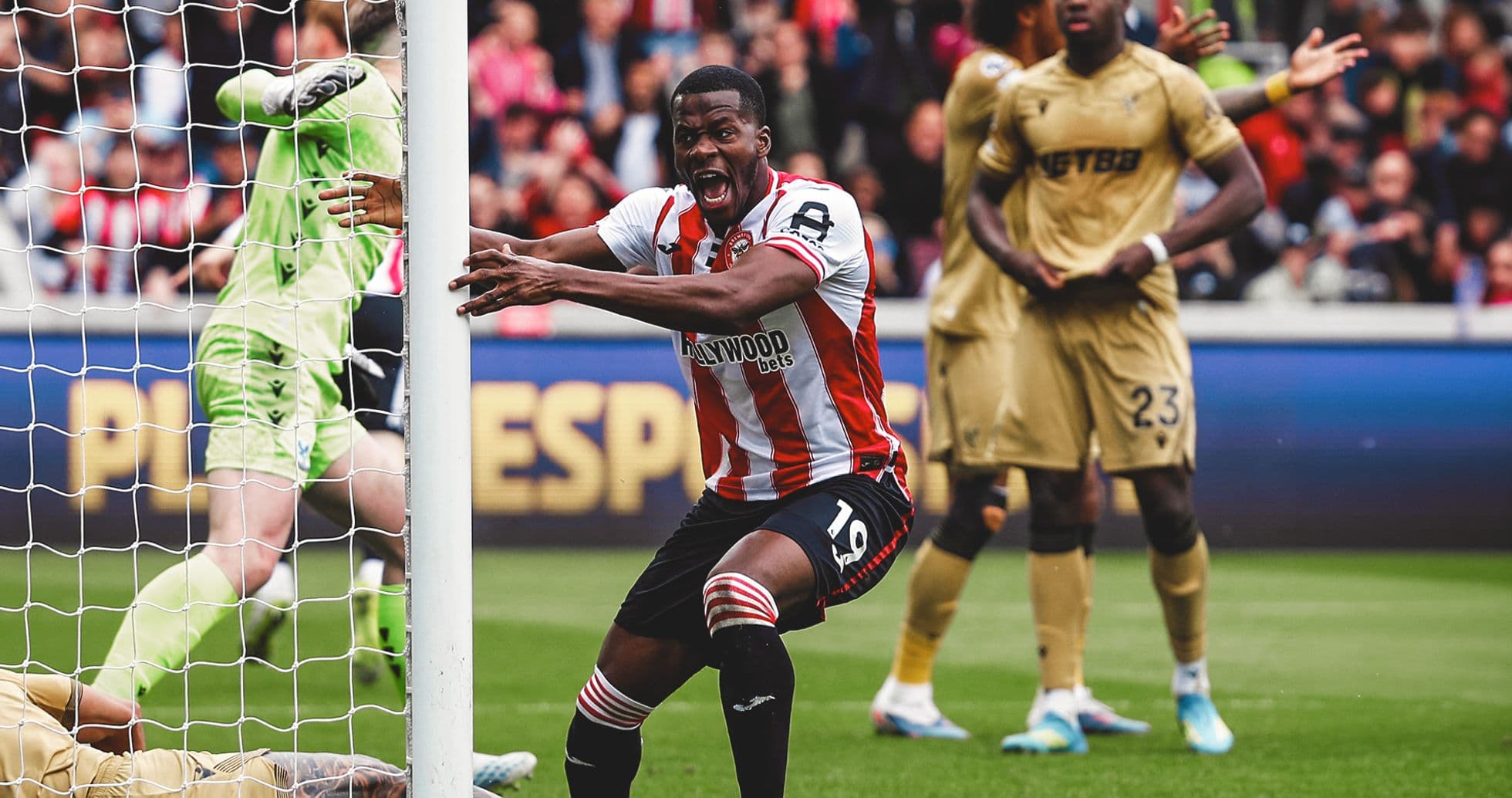
Brentford vs Crystal Palace: Tactical Insights and Match Analysis
The late-season light slanted low over the Brentford Community Stadium as a 2-2 draw settled into the scoreboard, a result that said as much about both sides’ seasons as it did about this single afternoon. Following this result, Brentford remain the more upwardly mobile project – 8th in the Premier League with 52 points and a goal difference of 3 (54 goals for, 51 against in total) – but Crystal Palace’s stubbornness on their travels again showed why they have stayed clear of real danger, sitting 15th with 45 points despite a total goal difference of -9 (40 scored, 49 conceded overall).
I. The Big Picture – Two Systems, One Shared Instinct to Counter
The tactical shapes told their own story. Keith Andrews stayed loyal to Brentford’s season-long blueprint, rolling out the familiar 4-2-3-1 that has underpinned 28 of their league lineups. In front of C. Kelleher, the back four of M. Kayode, K. Ajer, N. Collins and the repurposed full-back K. Lewis-Potter provided a blend of height, aggression and improvised width. Ahead of them, the double pivot of Y. Yarmolyuk and V. Janelt formed the structural spine, freeing a creative line of three – D. Ouattara, M. Jensen and M. Damsgaard – to orbit around the central reference point, I. Thiago.
Crystal Palace, by contrast, leaned into Oliver Glasner’s now-set identity: a 3-4-2-1 that has been their starting shape in 32 league matches. D. Henderson anchored a back three of J. Canvot, M. Lacroix and C. Riad, with the wing-backs D. Munoz and T. Mitchell stretching the pitch. Inside, A. Wharton and D. Kamada formed a technical, mobile axis, while the front trio of I. Sarr, Y. Pino and J. S. Larsen offered pace, movement and vertical threat.
Both sides came into this fixture with attacking profiles that promised goals without ever guaranteeing control. Heading into this game, Brentford were averaging 1.5 goals for in total (1.7 at home) and conceding 1.4 overall, while Palace’s more conservative edge – 1.1 goals for and 1.3 against in total – was offset by a quietly dangerous away record of 7 wins and 22 goals scored on their travels.
II. Tactical Voids – Who Was Missing, and What That Changed
The absentees shaped the tone. Brentford were without F. Carvalho and A. Milambo (both knee injuries) and R. Henry (muscle injury), stripping Andrews of some rotational creativity between the lines and a natural left-back. That absence partly explains Lewis-Potter’s deployment in the back four: an attacking full-back solution that adds thrust but can leave transition spaces behind.
Crystal Palace’s missing trio – C. Doucoure (knee), E. Nketiah (thigh) and B. Sosa (injury) – removed a key ball-winner, a penalty-box finisher and a natural left-sided carrier from Glasner’s options. Without Doucoure, Wharton and Kamada had to juggle build-up and protection; without Nketiah, the onus on J. S. Larsen and the bench option of J. Mateta to finish moves only intensified.
Disciplinary tendencies added another layer. Brentford’s yellow-card distribution this season has skewed heavily towards the final quarter: 27.27% of their bookings arrive between 76-90 minutes, with another 22.73% from 61-75. Palace, too, see a spike late in halves – 18.42% of their yellows between 31-45 and another 18.42% from 76-90. This match, with its late-equaliser feel, fit that pattern of emotional, stretched football as legs tired and duels sharpened.
III. Key Matchups – Hunter vs Shield, Engine Room vs Engine Room
The headline duel was always going to be “Hunter vs Shield”: Igor Thiago against M. Lacroix and the Palace back line.
Thiago’s season has been outstanding. With 22 goals in total and 1 assist across 37 league appearances, he has been Brentford’s cutting edge and their constant out-ball. He had taken 66 shots in total, 43 on target, and his penalty record – 8 scored, 1 missed – underlined both his reliability and the fact that Brentford are not perfect from the spot; that lone miss hangs over any future high-pressure penalty.
Lacroix, meanwhile, has been one of Palace’s defensive pillars. Across 35 appearances, he has combined 60 tackles, 18 blocked shots and 45 interceptions with 1,656 total passes at 88% accuracy. He is not just a stopper but a first passer, tasked with stepping out of the back three to meet forwards like Thiago early, before they can turn and run.
In this game, that duel was about territory as much as contact. Brentford’s home profile – 33 goals for and 21 against at home, with a total of 5 clean sheets – suggests a side that is comfortable playing high and accepting risk. Palace, who have conceded 28 goals away but also kept 5 clean sheets on their travels, are used to absorbing pressure in a mid-to-low block and then springing through Sarr and Pino.
Behind them, the “Engine Room” battle pitted Brentford’s Yarmolyuk–Janelt axis against Wharton–Kamada. Yarmolyuk’s role as a connector and presser allowed Janelt to step into more advanced pockets, while Jensen and Damsgaard drifted inside to overload central spaces. For Palace, Wharton’s composure under pressure was vital in beating Brentford’s first wave, and Kamada’s ability to receive between the lines helped link to Sarr and Pino.
IV. Statistical Prognosis – A Draw That Fits the Numbers
Strip away the noise and the 2-2 scoreline feels almost mathematically preordained. Heading into this game, Brentford’s total average of 1.5 goals scored and 1.4 conceded suggested a match hovering around three goals. Palace’s away averages of 1.2 scored and 1.5 conceded pointed in the same direction. Combine those tendencies and a high-scoring draw sits squarely within the expected goals envelope.
Brentford’s season-long narrative at home – 8 wins, 8 draws, 3 losses from 19 matches – paints a picture of a side that often dominates territory but does not always close the door. Palace’s away story – 7 wins, 3 draws, 9 defeats – is that of a team who can hurt you if you overcommit, but who will also give you chances.
In that context, the way this game stretched late on was no accident. Both teams are statistically more combustible in the final phases: Brentford’s late yellow surge (27.27% of bookings between 76-90) hints at fatigue and aggressive pressing, while Palace’s spread of cards across 31-45, 46-60 and 76-90 shows a side that continues to contest duels deep into each half.
Following this result, Brentford remain in the European conversation, their attacking structure and the ruthless presence of Igor Thiago giving them a clear identity. Palace, meanwhile, leave London with a point that aligns with their season-long habit of staying just the right side of chaos away from home. On an afternoon where the numbers and the narrative intertwined, 2-2 felt less like a surprise and more like the inevitable outcome of two flawed, ambitious sides leaning fully into who they are.
Related News

Brighton vs Arsenal Predicted Lineups: Team News and Match Insights

Manchester City vs Sunderland Predicted Lineups: Team News and Match Analysis

Bournemouth vs Liverpool Prediction: Key Stats and Betting Tips

Tottenham vs Aston Villa Predicted Lineups: Team News for Premier League Clash
Brighton vs Arsenal: Premier League Clash Preview

Manchester City vs Sunderland: Premier League Clash Preview