
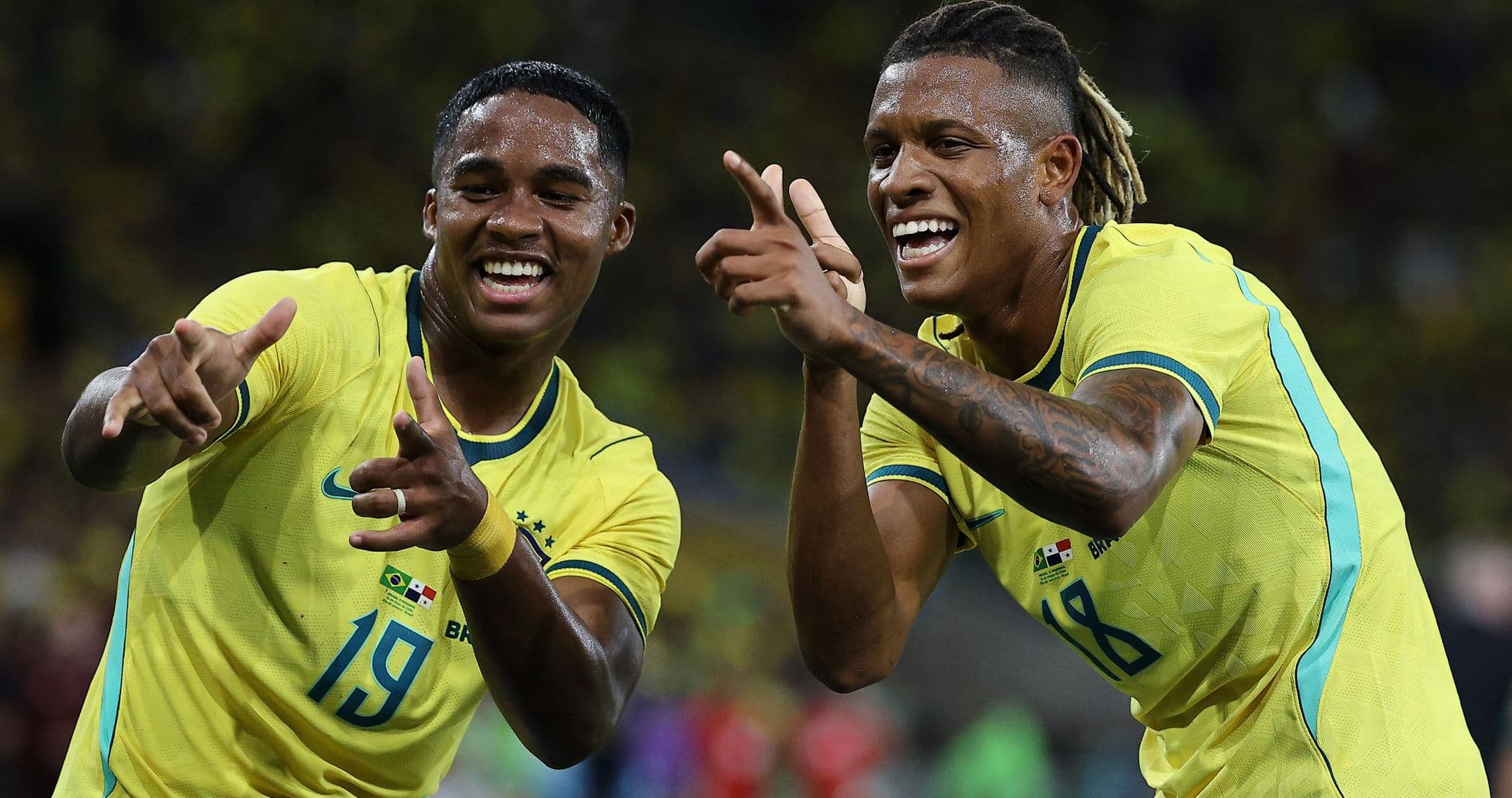
Brazil and Morocco Share Points in Tactical World Cup Opener
MetLife Stadium in East Rutherford hosted a meeting that felt less like an opening group fixture and more like a tactical summit between two footballing cultures. Brazil and Morocco walked away with a 1-1 draw, but beneath the shared point lay two very different statements of intent in this World Cup 2026 Group Stage opener.
I. The Big Picture – Two contenders, one stalemate
Following this result, both Brazil and Morocco sit on 1 point, each with a goal difference of 0 after scoring 1 and conceding 1 in total this campaign. Brazil’s draw comes from their single home fixture so far: 1.0 goals scored and 1.0 conceded at home on average. Morocco’s point arrives from their lone outing on their travels, where they also average 1.0 goals for and 1.0 against away.
Both coaches leaned into a mirrored 4-2-3-1, but the shapes carried different personalities. Carlo Ancelotti’s Brazil were built around a fluid, high-skill attacking three of Raphinha, Lucas Paqueta and Vinicius Junior behind I. Thiago, with Casemiro and Bruno Guimaraes forming the double pivot. Mohamed Ouahbi’s Morocco mirrored the structure but not the rhythm: a compact back four led by A. Hakimi and N. Mazraoui, a hard-working midfield axis of N. El Aynaoui and A. Bouaddi, and a creative band of B. Diaz, A. Ounahi and B. El Khannouss supporting I. Saibari.
II. Tactical Voids and Discipline – Brazil’s edge of chaos
If there was a fault line in Brazil’s performance, it ran right through their aggression. Heading into this game, Brazil’s season card map already hinted at a pattern: 2 yellow cards, all in the 31-45 minute window, meaning 100.00% of their cautions came just before half-time. That spike materialised again in personnel terms. Ibañez and Casemiro, both starting the match, are already prominent in the disciplinary charts. Each has 1 yellow card in this World Cup and both rank near the top for cards, underlining how Ancelotti’s side walks a fine line between control and chaos in central areas.
Casemiro’s 45 minutes were a study in that balance: 18 passes at 94% accuracy, 1 tackle, 1 block, 1 interception and 1 foul committed – influence with a risk of overstepping. Ibañez, with 8 duels and 2 fouls committed in his 45 minutes, also lived on that edge. For a Brazil side that has yet to keep a clean sheet in total (0 clean sheets from 1 match, 1.0 goals conceded at home), this disciplinary temperature is both a weapon and a warning.
Morocco, by contrast, come out of this opener with a clean disciplinary slate. Heading into this game, their yellow and red card distributions are empty across all time ranges. That restraint underpins their compactness: they concede 1.0 goals on average away but do so without resorting to cynical fouling or heavy bookings. It is a foundation Ouahbi will trust as the group tightens.
III. Key Matchups – Hunter vs Shield, Engine Room vs Engine Room
Hunter vs Shield
For Brazil, the most obvious “hunter” is Vinicius Junior. Heading into this game, he stands among the competition’s top scorers with 1 goal from 1 appearance, 1 shot on target and a rating of 8. His 30 passes at 86% accuracy and 2 key passes reveal a player who is not just a finisher but a creator from that left-sided starting position. Surrounded by Raphinha and Paqueta, and with I. Thiago ahead of him, Vinicius is the tip of a multi-layered threat.
Morocco’s shield against that danger is structured rather than star-driven. Their defensive record so far – 1.0 goals conceded on their travels, 0 clean sheets in total – suggests resilience but not invulnerability. The back four of A. Hakimi, I. Diop, C. Riad and N. Mazraoui is technically secure and mobile, but the real test is their coordination against 1v1 specialists like Vinicius and Raphinha. B. El Khannouss, nominally a midfielder, also becomes part of that shield, dropping in to help Morocco compress Brazil’s wide spaces.
On the other side, Morocco’s “hunter” is I. Saibari. With 1 goal from 1 appearance, a 7.7 rating, 1 shot on target and 24 passes at 91% accuracy, he profiles as a modern forward who links and finishes rather than simply lurks in the box. His duels (7 total, 3 won) show a willingness to battle between the lines. That puts him directly into the orbit of Marquinhos and Gabriel, Brazil’s central defensive pairing. For a Brazil side that has conceded exactly 1 goal in total this campaign, the question is whether their back line can handle a forward who drifts and combines rather than just runs in behind.
Engine Room – Playmakers vs Enforcers
The midfield duel was and will remain the tactical heart of this matchup. For Brazil, Bruno Guimaraes is the metronome. Heading into this game, he leads their assist charts with 1 assist, 38 passes at 89% accuracy, 1 key pass and 2 tackles plus 1 blocked shot. He is both organiser and first presser, the player who must knit Casemiro’s ball-winning to the creativity of Paqueta and the front line.
Morocco’s answer is more collective. N. El Aynaoui and A. Bouaddi form the screen, while B. Diaz is the creative hinge. Diaz already sits among the top assist providers with 1 assist, 19 passes at 100% accuracy, 2 key passes and 3 successful dribbles out of 3 attempts. His ability to receive under pressure and release Saibari or Ounahi threatens to turn Brazil’s aggressive midfield into a liability if Casemiro and Bruno are dragged into wide or high pressing traps.
IV. Statistical Prognosis – Margins, xG shadows and what comes next
Even without explicit xG numbers, the statistical outline of both teams suggests a finely balanced contest going forward. Each side averages 1.0 goals scored and 1.0 conceded in total this campaign; neither has yet failed to score, and neither has kept a clean sheet. That symmetry points toward matches decided by details: the timing of cards, the precision of one through ball, the success of one 1v1 in wide areas.
Brazil’s 4-2-3-1 has already been used once this tournament, and the same is true for Morocco. Both are tactically settled; the adjustments now will be in personnel and risk level. Ancelotti may have to consider how long he can keep Casemiro and Ibañez-type profiles on the pitch together without tipping into disciplinary trouble, especially given Brazil’s concentration of yellow cards in the 31-45 minute band. Ouahbi, meanwhile, must decide whether to push B. Diaz and Ounahi higher to exploit Brazil’s aggressive pivots, or to maintain the current balance that has so far yielded 1 point on their travels.
Following this result, the prognosis is of two contenders whose ceilings remain high but unproven. Brazil look like a side whose xG profile will be driven by volume and individual brilliance, particularly from Vinicius Junior and the creative lanes around him. Morocco project as a team whose xG will be more selective, built around well-constructed chances for Saibari and the timing of Diaz’s final ball.
In a group that may be decided on goal difference and small swings in Expected Goals, neither side has yet found separation. What they have found, in this opening chapter at MetLife Stadium, is a mirror: a reminder that their ambitions will be tested not just by opponents, but by their own capacity to control risk, manage discipline and turn structure into ruthlessness.
Related News
Thomas Tuchel Reflects on England's 10-Man World Cup Triumph and a Surprising Regret
Robert Moreno Takes Over as Interim South Korea Coach After World Cup Setback
Jude Bellingham Returns to Form with Real Madrid After World Cup Success

Chloe Kelly, Beth Mead & 13 Lionesses Who Must Shine in the Upcoming WSL Season for England’s 2027 World Cup Bid
Barcelona Cancels World Cup Tribute Amid Political Tensions
Messi Breaks Record for Most Penalties Taken and Missed in FIFA World Cup History