
Brazil vs Morocco: World Cup 2026 Opener Under New Jersey Lights
The World Cup finally crackles into life in East Rutherford on 13 June 2026, and it does so with a fixture that feels bigger than a simple Group C opener. Brazil vs Morocco, under the glare of a global audience at the New York New Jersey Stadium, is a collision of eras, identities and expectations.
Kick-off is set for 22:00 GMT, 18:00 EST. The stakes arrive long before the whistle.
Brazil’s uneasy road to redemption
Brazil come into this tournament with their aura dented and their standards questioned. Their path through CONMEBOL qualifying was bruising, a journey that exposed fragility rather than inevitability.
They lurched through the early rounds, absorbing blows that once felt unthinkable. The 4-1 collapse against Argentina wasn’t just a defeat; it was a public unravelling, the kind of night that forces a federation to rip up plans and start again. By the time the dust settled on that humiliation, Brazil were sliding down the table, their status as South America’s untouchable superpower looking suddenly negotiable.
That is when Carlo Ancelotti walked through the door.
The Italian, one of the most decorated coaches in the sport’s history, inherited a side stuck in fourth place on 21 points and short on conviction. His job was brutal in its simplicity: turn a disjointed collection of stars into a functioning team and get them to North America without breaking the World Cup attendance streak that stretches back to the competition’s birth.
He did just enough. Brazil steadied, not spectacularly, but with the kind of grown-up control that has long been Ancelotti’s calling card. Results in the final qualification windows of 2025 dragged them over the line in fifth, securing automatic passage and preserving that flawless World Cup record. It wasn’t glorious. It was necessary.
Now comes the real test. Ancelotti, Brazil’s first high-profile foreign manager in decades, brings a 4-2-3-1 that snaps into a vertical, space-hunting machine the moment possession is won. Sideways for the sake of safety is out; forward at the first opportunity is in. His midfield double pivot must shield an ambitious back line while feeding a front unit built to sprint into open grass rather than shuffle in front of packed defences.
The pressure is immense. Brazil aren’t just chasing a trophy. They’re chasing validation that this tactical evolution, this bet on a European master to rewire a South American giant, can withstand the brutal reality of a World Cup.
Neymar managed, Vinicius unleashed
The headline in Brazil’s camp is familiar, but the tone is different. Neymar Jr. is here, but he is not the centre of the universe.
After a two-and-a-half-year absence from the World Cup stage, the forward arrives under a cloud of medical caution. A minor muscle edema picked up with Santos has forced Brazil’s staff to treat him on an individual programme. Ancelotti has made it clear: Neymar stays with the squad, but his minutes will be protected, especially in the early stages.
So the keys go to Vinicius Junior.
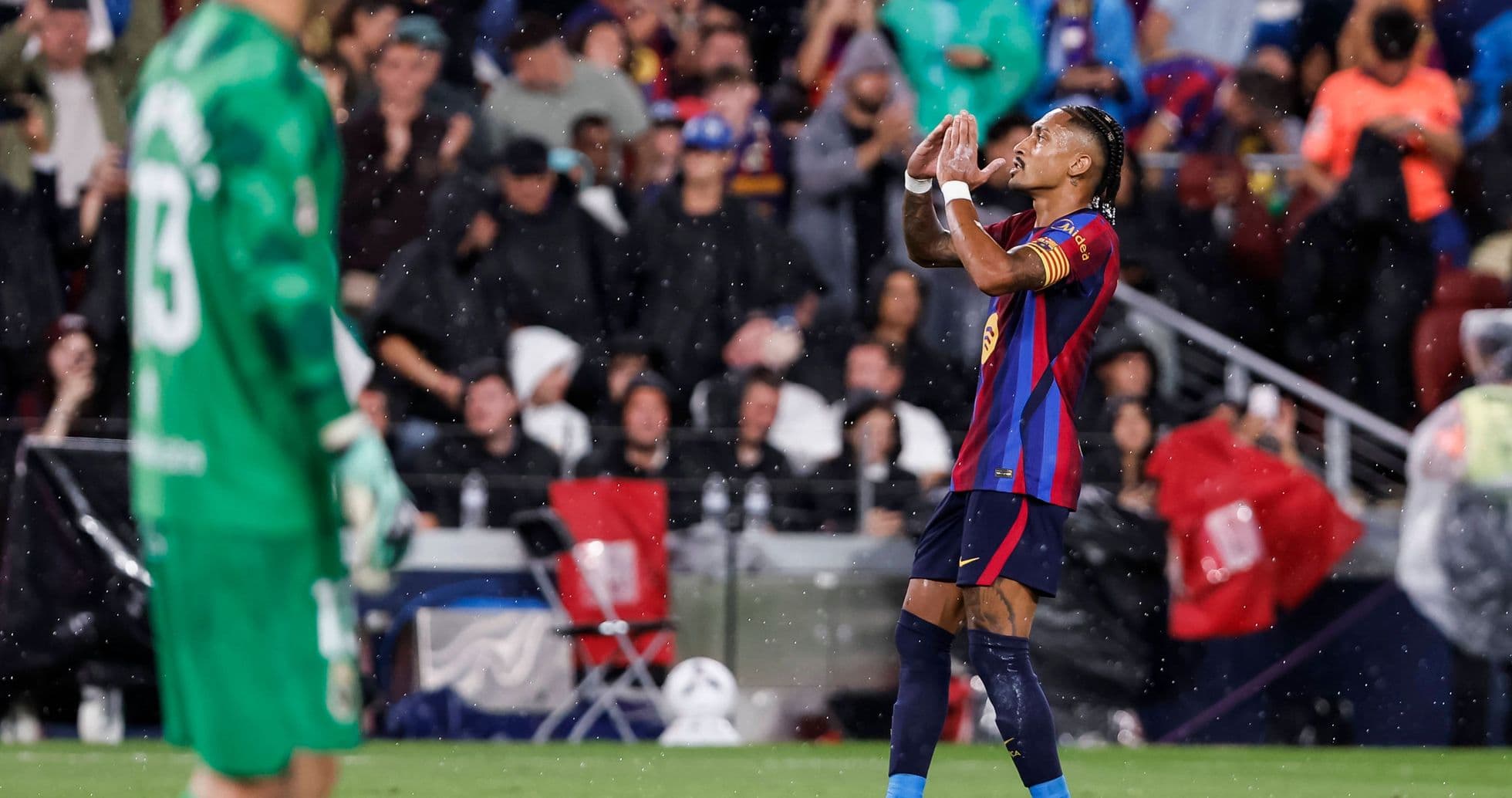
The Real Madrid star walks into this tournament as a Ballon d’Or frontrunner and the face of Brazil’s new attacking order. His mandate is brutal and simple: isolate defenders, attack them, break them. On the opposite flank and drifting inside, Barcelona’s in-form Raphinha becomes the other spearhead, repurposed by Ancelotti as a high, flexible midfielder operating close to the last line to tear open vertical lanes.
Behind them, Marquinhos – fresh from another deep Champions League run – wears the armband and anchors the defence alongside Arsenal’s Gabriel Magalhães. It’s a central pairing built for aerial duels and last-ditch interventions, but also one that will be stretched if Brazil’s full-backs charge forward and leave the back door ajar.
The squad is stacked with European pedigree. Alisson and Ederson in goal. Casemiro, Bruno Guimarães and Lucas Paquetá in midfield. Endrick, Gabriel Martinelli, Matheus Cunha and others ready to change the tempo from the bench. On paper, it’s a group that should dominate. On grass, they’ve still got to prove it.
Morocco’s march from statement to standard
Across the halfway line stands a team that no longer sees itself as a plucky outsider.
Morocco arrive in North America on the back of a qualification campaign that felt like a coronation. After their astonishing fourth-place finish at Qatar 2022, they carried that momentum into CAF qualifying and turned Group E into a personal showcase.
Eight games. Eight wins. No blemishes.
Under Walid Regragui, the Atlas Lions blended the compact defensive steel that stunned the world in 2022 with ruthless efficiency down the flanks. They didn’t just qualify; they imposed themselves as Africa’s most formidable outfit, booking their ticket with time to spare and a swagger that echoed far beyond the continent.
Then came the twist. In March 2026, Regragui stepped down, choosing to leave on a high and “allow for the team’s natural evolution.” His departure could have cracked the structure. Instead, it opened the door for a coach perfectly aligned with the next step.
Mohamed Ouahbi, Belgium-born and fresh from guiding Morocco’s U-20s to a global title in 2025, took over three months before the tournament. He inherited not a rebuilding job, but a roaring engine. His task: keep the defensive DNA, add more ambition.
Morocco’s warm-up work suggests he’s on course. A 2-1 win over Kosovo rounded off preparations with no major injury concerns and a starting XI that looks familiar in shape but sharper in intent. The foundations remain recognisable. The ceiling has been raised.
Ouahbi’s fearless blueprint
Ouahbi’s reputation was built on youth, bravery and tactical elasticity. He doesn’t want Morocco to survive games; he wants them to control them.
His preferred style leans into energetic, possession-based football with a clear obsession: the flanks. He loads the wide areas, encourages full-backs and inverted wingers to combine in tight spaces, and uses a tireless three-man midfield to hunt second balls and spring quick vertical moves.
He hasn’t abandoned the low-block resilience that carried Morocco through Qatar. He’s layered on top of it. The team can still sit deep and absorb, but now they’re more comfortable stepping higher, pinning opponents back and slicing through lines with quick, rehearsed patterns.
At the heart of it all remains Achraf Hakimi. The Paris Saint-Germain right-back is the structural pillar of this side, the player who anchors the defensive block and then explodes into attacking lanes. His role is as much about leadership and balance as it is about overlapping runs.
Ouahbi has also dipped into his U-20 success, bringing teenage talents Othmane Maamma and Yassir Zabiri into the senior squad. They’re unlikely to start, but as late-game options they offer precisely what he values: fearless energy, vertical running, and the ability to change the rhythm from the bench.
The rest of the group is seasoned and synchronised. Yassine Bounou in goal. Nayef Aguerd and Chadi Riad at the back. Sofyan Amrabat, Azzedine Ounahi and Bilal El Khannouss in midfield. Ayoub El Kaabi, Brahim Díaz, Abde Ezzalzouli and Soufiane Rahimi in attack. It’s a spine that has already stared down giants and refused to blink.
Group C’s knife-edge
This match doesn’t exist in isolation. Group C is loaded with jeopardy.
Scotland, hardened and tactically stubborn, lurk as tournament heavyweights in their own right. Haiti bring raw energy and the kind of chaos that can shred any complacent favourite. Drop points on matchday one, and the margin for error shrinks to almost nothing.
For Brazil, this opener is about more than three points. It’s about proving that the turbulence of qualifying was a phase, not a symptom. It’s about showing that Ancelotti’s direct, space-attacking model can thrive under the suffocating expectations that come with the yellow shirt.
For Morocco, it’s the first exam of a new era. Can Ouahbi’s more expansive approach hold up against one of the sport’s traditional superpowers? Can they evolve from the darlings of 2022 into a side that expects to go deep every four years?
Under the New Jersey spotlights, those questions won’t stay theoretical for long.
Where the game will be won
Certain duels leap off the page. One in particular feels like box office.
Vinicius Junior vs Achraf Hakimi.
A race, a chess match, and a test of nerve rolled into one. Vinicius will look to drag Hakimi into uncomfortable territory, isolating him in 1v1s, forcing him to turn and chase. Hakimi, one of the few full-backs on the planet with the speed, strength and intelligence to live in that space, will try to time his interventions, pick his moments to surge forward and turn defence into instant attack.
Whoever controls that flank won’t just influence the game; they could tilt the entire group.
Raphinha vs Morocco’s midfield block.
Ancelotti wants Raphinha close to the defensive line, ghosting into pockets where one pass can put him on the half-turn with runners flooding past him. Morocco’s answer lies in the discipline of Sofyan Amrabat and his partners. If they can suffocate those spaces, deny clean receptions and force Raphinha to drift wider and deeper, they blunt a key part of Brazil’s vertical threat.
If they fail, Brazil’s attacks will arrive like waves.
Gabriel Magalhães vs Youssef En-Nesyri.
Inside the box, this is a battle of will. En-Nesyri thrives on crosses, chaos and relentless movement. He doesn’t stop, dragging centre-backs into awkward positions and attacking every delivery as if it’s the last. Gabriel must match that intensity, dominate the aerial duels and keep his line organised on set pieces. One lapse, one misjudged leap, and Morocco will punish it.
The weight of an opener
Openers don’t decide tournaments, but they expose truths.
Brazil stride into East Rutherford carrying history, expectation and the memory of a qualification campaign that shook their self-image. Morocco arrive with the swagger of a team that has already torn up one script and is hungry to write another.
On a pristine pitch in New Jersey, under a sky split by floodlights and noise, one of them will leave with a statement win. The other will walk away knowing that, in a group this unforgiving, the margin for a second mistake might not exist.
Related News
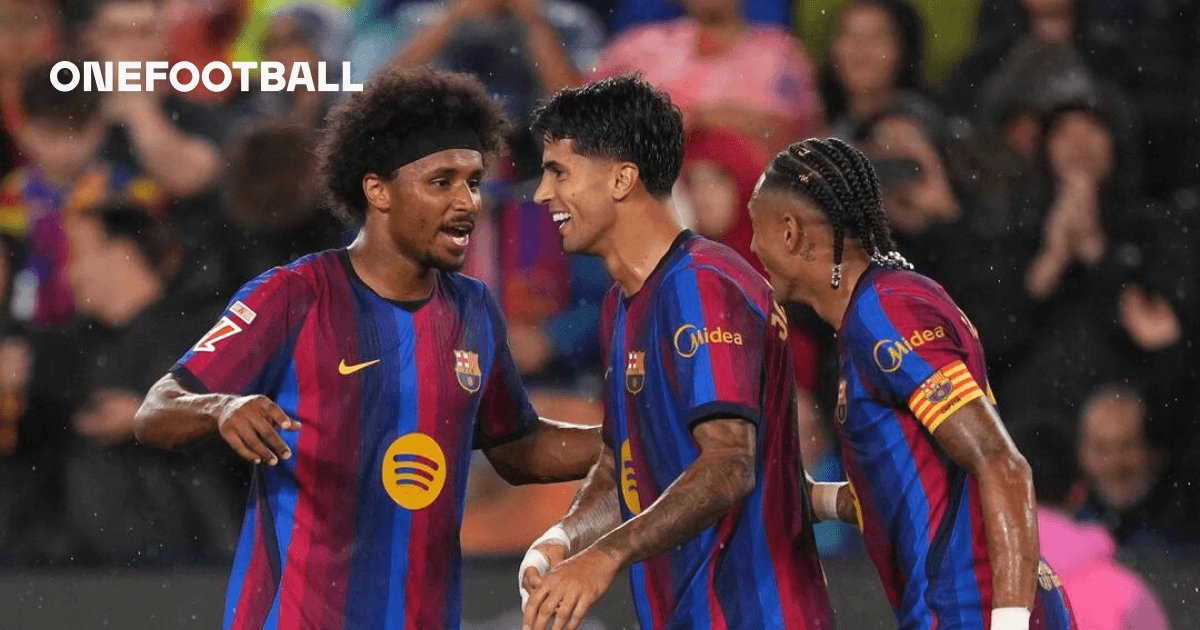
Raphinha’s Hat-Trick Powers Barcelona to 7-2 Victory Over Racing Santander
Carabao Cup Fourth Round Draw: Liverpool Set to Clash with Chelsea, Arsenal to Face Fleetwood Town
Key Football Matches to Watch in Azerbaijan This Autumn
Raphinha's Hat-Trick Drives Barcelona to 7-2 Triumph Over Racing Santander
Hansi Flick Leads Barcelona to Record-Breaking Seven Wins in a Row
Gavi Reflects on Injury Return as Barcelona Dominate Racing Santander 7-2