
Boavista: The Fallen Foe of Celtic's European Nights
Boavista are gone. Not relegated, not restructured, not rebranded. Extinct.
A court order delivered on 16 July 2026 told the Porto club to cease all activities by the end of the month and hand over its premises, the final act in a long, messy financial collapse. A club founded in 1903, a champion of Portugal in 2001, wiped off the professional map by debts it could no longer outrun.
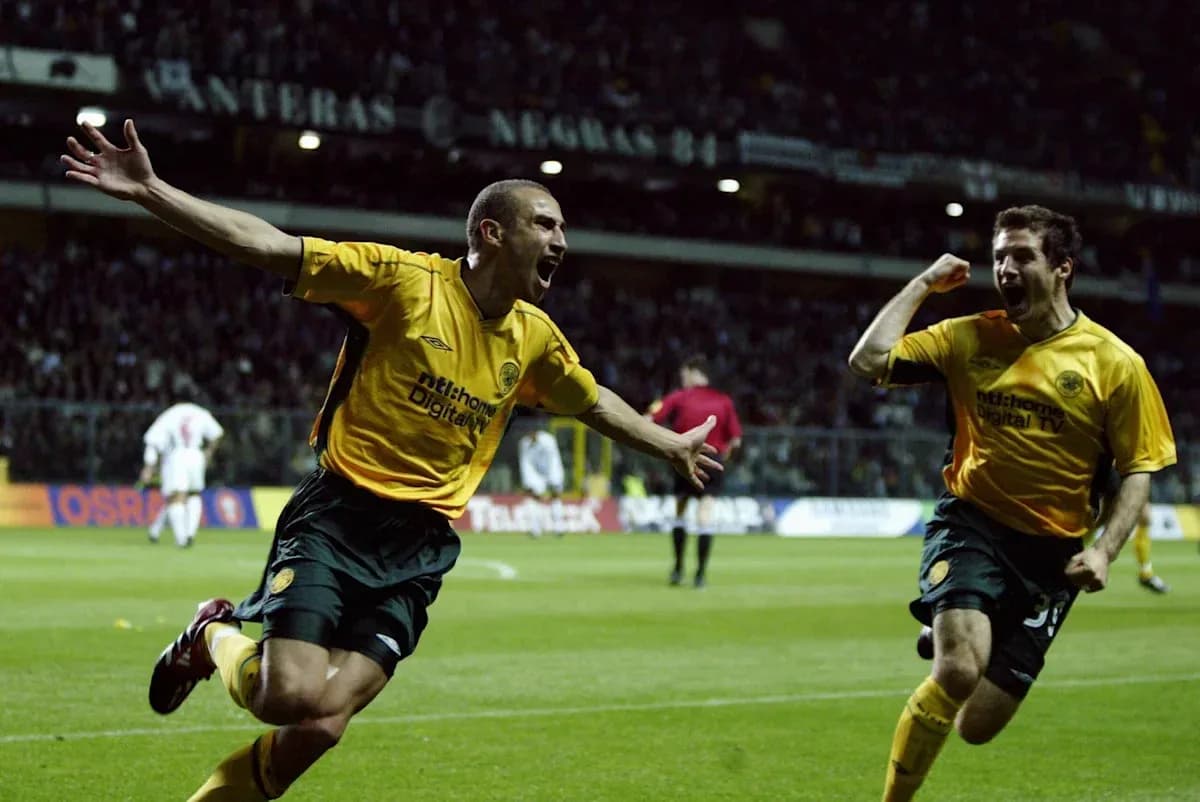
For Celtic supporters, the name Boavista stirs something very different from balance sheets and courtrooms. It carries the echo of European nights, of packed stands and frayed nerves, of Henrik Larsson dragging a club towards Seville.
The first meetings: hoops, history and new numbers
Celtic’s story with Boavista began in the Cup Winners’ Cup in 1975. On paper, it was a tight tie. On the park, it became a small but significant piece of Celtic folklore.
The first leg in Porto finished 0-0, a typically cagey European away performance of the era. The real drama unfolded a fortnight later at Celtic Park. Under the lights, in those famous hoops, Celtic found their stride and won 3-1 on the night and on aggregate.
Kenny Dalglish scored. Shuggie Edvaldsson scored. Dixie Deans scored. Three names that still roll easily off the tongue in the East End.
That match carried another quiet landmark. It was the first time Celtic had worn squad numbers on the back of their hooped jerseys at home. A small detail, but one that underlined how the club was edging into a new era while still leaning on familiar heroes.
Larsson, Boavista and the road to Seville
For most Celtic fans of a certain age, though, Boavista means one thing: the 2003 UEFA Cup semi-final.
The tie began at Celtic Park on 10 April 2003. It was tense, frustrating, and, at times, exasperating. Boavista, streetwise and compact, nicked an away goal and left Glasgow with a 1-1 draw. Henrik Larsson, inevitably, had provided Celtic’s equaliser, but the away-goals rule hung over the return leg like a storm cloud.
In Porto, at the Bessa Stadium on 24 April, the stakes could hardly have been higher. This was Celtic, one step from a European final for the first time in a generation, up against a side built on stubborn defending and tactical fouls.
The game was tight. Nerve-shredding. Every half-chance felt like it might define a decade. Then Larsson struck again. One goal, 1-0 on the night, 2-1 on aggregate, and Celtic were through to face Boavista’s city rivals, Porto, in the final.
The images from that evening in Porto are etched into Celtic history: Martin O’Neill embracing Larsson at full-time, players and supporters roaring into the night, a club rediscovering its European soul. The less said about the final in Seville, the article hints, the better. But without Boavista, Celtic never get there at all.
A champion outside the “big three”
Boavista were never just a footnote in Celtic’s story. In Portugal, they were a genuine disruptor.
Founded in 1903, they grew into one of the country’s most awkward opponents, a club that refused to accept its place beneath the giants of Benfica, Porto and Sporting. Their greatest achievement came in 2001, when they won the Primeira Liga. To this day, they remain the only team outside that traditional “big three” to be crowned champions of Portugal.
Nine major honours followed over the decades. They built a reputation as a hard-edged, competitive side, tough to beat at home and rarely intimidated on their travels. For years, they were a fixture in the top flight and regulars in European competition.
The fall from that height was long and ugly.
From transfer bans to oblivion
Boavista’s financial problems did not arrive overnight. They built slowly, season after season, as debts piled up and solutions never quite materialised. The last two years simply accelerated the inevitable.
The club were hit with a ban on signing players across five transfer windows. When that restriction finally lifted, Boavista tried to act like the old Boavista for one last day. In February 2025, they signed nine players in a single day, a desperate attempt to rebuild a squad on the fly.
It didn’t work.
In the 2024/25 season, Boavista sank. On the final day, they were thrashed 4–1 away to Arouca, finishing bottom and relegated. Around 2,000 travelling fans watched their team collapse and some invaded the pitch, a raw, emotional reaction to seeing their club fall through the trapdoor.
The punishment kept coming. The Portuguese league authority barred Boavista from playing in Liga Portugal 2. Oliveirense, who had been relegated, received a reprieve in their place.
Boavista tried to find a way back. The club were refused registration in 2025 for both the third-tier and the fourth-tier Campeonato de Portugal. A change of company followed, and with it a strange compromise: the “new” entity would start in the Liga Pro, the elite league of the Porto Football Association.
At the same time, the club itself entered a team in the fourth division of the district leagues. Supporters rallied around it, trying to keep the badge alive on any pitch that would have them.
Reality bit hard. The club-run team began losing matches by default, simply not turning up for games. By the end of October, they withdrew from competition altogether.
Then came the final blow. On 16 July 2026, a court ordered Boavista to shut down all activity by 31 July and surrender its facilities. The insolvency process, dragged out over years, ended with the starkest of conclusions: unpaid debts, failed restructuring attempts, no way back.
Boavista, the club that once stood between Celtic and Seville, now exists only in memory and record books.
A rival remembered
Strip away the legal language and it comes down to something brutally simple: Boavista failed to pay what they owed, and the game moved on without them.
For Celtic fans, the name will always trigger flashes of Dalglish and Deans in ’75, Larsson in ’03, and those anxious, gripping European nights when the black-and-white of Boavista stood in the way of something bigger.
They were never a glamour opponent. They were something better: a proper European test. Awkward. Organised. Dangerous.
Now they are a warning. A reminder of how quickly a champion can slide from title parades to court orders, from lifting trophies to locking gates.
In Portugal, someone will almost certainly try to revive the name one day, to bolt “FC” or “1911” or “SAD” onto a crest and claim continuity. But the Boavista that faced Celtic, that won the league in 2001, that fought its way to European semi-finals, has been forced off the stage.
The next time Celtic fans talk about those nights in Porto, they’ll be remembering a club that no longer exists.
Related News

Ilia Topuria Accuses Justin Gaethje After UFC Defeat

Tyson Fury vs Anthony Joshua Fight Date and Venue Confirmed
Switzerland Calls Up In-Form Sion Striker Winsley Boteli for Nations League
Bournemouth Secures Historic 2-1 Win Over Real Sociedad in Spain
Portugal Announces Squad for 2026 UEFA Nations League; Cristiano Ronaldo Expected to Play

Raphinha Channels Ronaldo Nazario as Barcelona's Leading Striker After Position Change