
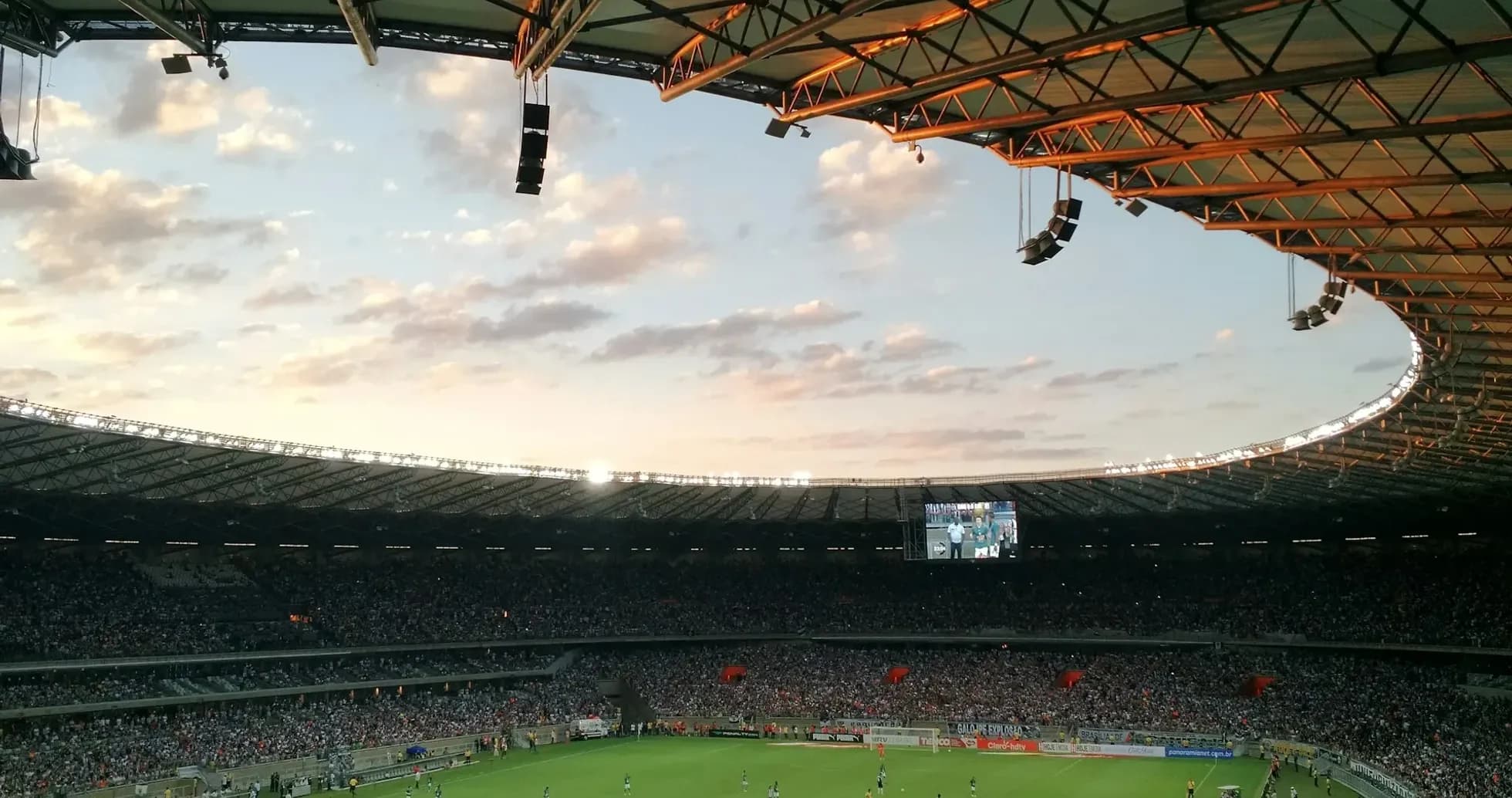
Belgium and Egypt Draw in Tactical World Cup Clash
Belgium and Egypt opened their World Cup Group Stage campaigns at Lumen Field with a 1-1 draw that reflected a finely balanced tactical contest: Belgium’s territorial and passing control against Egypt’s compact block and direct threat in transition. The numbers underline that equilibrium. Belgium finished with 54% possession, 452 passes and 15 total shots; Egypt replied with 46% possession, 397 passes and 14 shots. Both sides produced 3 shots on goal each, and the xG values were almost level (Belgium 1.32, Egypt 1.07), mirroring a game where structure and discipline largely cancelled out individual quality.
I. Executive Summary
Belgium, under Rudi Garcia, leaned on a technical midfield of Youri Tielemans and Kevin De Bruyne to dictate tempo, flanked by Timothy Castagne and Leandro Trossard providing width from deeper starting positions. Egypt, coached by Hossam Hassan, set up in a compact mid-to-low block with Mohamed Salah and Emam Ashour as the main outlets between the lines and Omar Marmoush leading the line. The match narrative swung from Egypt’s early control and incisive combinations to Belgium’s second-half territorial siege, culminating in a levelling own goal that owed as much to sustained pressure as to defensive misfortune.
II. Scoring Sequence & Disciplinary Log
Discipline was established early. At 13', Marwan Attia (Egypt) received a yellow card — Foul — signalling Egypt’s readiness to break up Belgium’s midfield rhythm. One minute later, at 14', Timothy Castagne (Belgium) was also booked — Foul — as Belgium’s back line struggled to contain Egypt’s early vertical surges.
Egypt’s opening goal came at 19'. Emam Ashour (Egypt) finished a well-constructed move, assisted by Mohamed Salah, to put Egypt 0-1 up. Tactically, it was emblematic: Salah drifting into a playmaking pocket, drawing Belgian attention, and releasing Ashour into the space Belgium’s advanced midfield left unprotected.
The next disciplinary moment arrived at 34', when left-back Ahmed Fatouh (Egypt) was shown a yellow card — Foul — as Belgium increasingly targeted the wide channels and forced Egypt’s full-backs into aggressive interventions.
Belgium’s equaliser came at 66', and it was the direct consequence of sustained pressure. A driven phase of Belgian attacking ended with Mohamed Hany (Egypt) diverting the ball into his own net, an own goal credited to Belgium to make it 1-1. The goal reflected Belgium’s insistence on loading the box and forcing hurried Egyptian clearances, rather than a cleanly constructed chance.
Belgium’s second yellow card arrived at 75', when Maxim De Cuyper (Belgium) was booked — Foul — after coming on and aggressively contesting duels down the left flank. That completed the card tally: Belgium 2 yellow cards, Egypt 2 yellow cards, total 4, all for Foul.
III. Tactical Breakdown & Personnel
Belgium’s approach was built around controlled possession and structural width. With no explicit formation listed, the roles suggest a back four of Thomas Meunier, Nathan Ngoy, Brandon Mechele and Timothy Castagne, with Amadou Onana initially anchoring midfield behind Tielemans, De Bruyne, Trossard and Jérémy Doku supporting Charles De Ketelaere. The 54% possession and 452 passes, with 388 accurate (86%), show Belgium’s commitment to building through the thirds rather than going direct to De Ketelaere.
In the first half, that structure produced territory but not enough incision. Belgium managed 9 shots inside the box overall, but only 3 on goal, a sign that Egypt’s last-line defending and block timing were effective. Egypt’s 8 blocked shots underline how often their defenders got bodies in the way as Belgium tried to work shooting positions from the edge or half-spaces.
Egypt’s plan was clearer: compress central zones, concede some possession, and spring quickly through Salah, Ashour and Marmoush. Their 46% possession and 397 passes (322 accurate, 81%) reflect a more direct, vertical usage of the ball. They still generated 10 shots inside the box from only 14 total attempts, highlighting the quality of their entries when they did break through Belgium’s lines. The Salah-to-Ashour combination for the opener typified this: a quick progression into the right half-space, a diagonal run from Ashour, and a finish before Belgium could reset their block.
Goalkeeper usage and defensive organisation were conservative on both sides. Thibaut Courtois (Belgium) faced 3 shots on goal and made 2 saves, conceding once. Belgium’s goals prevented value of -0.42 suggests he marginally underperformed relative to shot quality, but the sample was small, and Egypt rarely forced him into repeated high-difficulty interventions thanks to Belgium’s general control of territory.
At the other end, Mostafa Shobeir (Egypt) made 3 saves from Belgium’s 3 shots on goal, conceding only via the own goal from Mohamed Hany. Egypt’s goals prevented metric, also at -0.42, is tied to the defensive unit more than Shobeir’s individual work; the own goal itself is not a goalkeeper error but a product of pressure and miscommunication in the back line.
Rudi Garcia’s in-game adjustments aimed to tilt the match further into Belgium’s favour. At 56', Maxim De Cuyper (IN) came on for Amadou Onana (OUT), effectively pushing Belgium into a more aggressive, left-leaning structure, with De Cuyper offering overlapping width and freeing Trossard and De Bruyne to occupy more central pockets. Simultaneously, Nicolas Raskin (IN) replaced Timothy Castagne (OUT), refreshing energy in midfield and adjusting the balance between control and counter-pressing.
At 66', immediately after the own goal, Romelu Lukaku (IN) came on for Charles De Ketelaere (OUT), adding a more direct reference point in the box. This substitution aligned with Belgium’s pattern of crossing and cut-backs, seeking to convert territorial dominance into clearer chances, even if it did not produce a second goal.
Late changes further emphasised control rather than chaos. At 86', Hans Vanaken (IN) replaced Kevin De Bruyne (OUT), and Matías Fernández-Pardo (IN) came on for Jérémy Doku (OUT), signalling a shift towards game management and maintaining structural stability rather than all-out assault.
Hossam Hassan’s changes were primarily defensive and energy-based. At 71', Rami Rabia (IN) replaced Emam Ashour (OUT), sacrificing an attacking midfielder for a defender to reinforce the back line after the equaliser. At 76', Hamza Abdelkarim (IN) for Mohamed Salah (OUT) and Zizo (IN) for Mostafa Ziko (OUT) reconfigured Egypt’s front line to prioritise fresh legs and pressing over elite ball-carrying. In the final minutes, Ibrahim Adel (IN) for Hamdy Fathy (OUT) and Karim Hafez (IN) for Ahmed Fatouh (OUT) at 89' further refreshed the defensive unit and wide cover as Egypt sought to close out the draw.
IV. The Statistical Verdict
The data confirms how finely poised this match was. Belgium’s 15 total shots to Egypt’s 14, and identical 3 shots on goal each, reflect parity in chance creation once adjusted for style. Belgium’s edge in possession (54%) and passing volume (452 passes, 388 accurate, 86%) shows they controlled the rhythm, but Egypt’s 10 shots inside the box to Belgium’s 9 underline that the African side generated slightly more dangerous box entries per attack.
Defensively, Belgium’s 5 blocked shots versus Egypt’s 8 highlights Egypt’s deeper, more reactive block, often defending their own area. Fouls were perfectly balanced at 15-15, and the card count (Belgium 2 yellow, Egypt 2 yellow, total 4) reinforces that this was a physically competitive but controlled contest rather than a chaotic one.
xG offers the clearest synthesis: Belgium 1.32, Egypt 1.07. Belgium marginally edged chance quality, but not by enough to claim they clearly deserved more than a point. With both goalkeepers — Thibaut Courtois (Belgium) and Mostafa Shobeir (Egypt) — facing only 3 shots on goal each, the draw at Lumen Field accurately reflects two well-organised teams whose tactical plans largely neutralised one another.
Related News
Thomas Tuchel Reflects on England's 10-Man World Cup Triumph and a Surprising Regret
Robert Moreno Takes Over as Interim South Korea Coach After World Cup Setback
Jude Bellingham Returns to Form with Real Madrid After World Cup Success
Chloe Kelly, Beth Mead & 13 Lionesses Who Must Shine in the Upcoming WSL Season for England’s 2027 World Cup Bid
Barcelona Cancels World Cup Tribute Amid Political Tensions
Messi Breaks Record for Most Penalties Taken and Missed in FIFA World Cup History