

Baum's Journey: From Tanzania to Bundesliga Star
She was four when her life took its first sharp turn.
Born in Tanzania to a German father and a Tanzanian mother, Baum left East Africa for northern Germany with a ball already at her feet and a brother at her side. Dennis was the one she played with in the street, the one who helped ignite the obsession. He never got to see where it would take her. He died in a car accident at 17.
His name is still there every time she plays – on her boots, on the tape around her wrist, alongside a quote that keeps him close. The ritual is simple, but for Baum it is non-negotiable. The game is their link.
From the only girl to HSV prodigy
Once in Germany, Baum joined local side MTV Ahrensbok, the first stop on a route that would quickly make it clear she was different. At TSV Pansdorf she was the only girl, yet the ball kept finding her feet and defenders kept finding problems they couldn’t solve.
Hamburg noticed. The club shared her registration with Pansdorf before taking her fully into their youth academy. By August 2022, and still just 15, she had a first-team contract with HSV, signed through to 2025. It was a statement both of faith and of timing: Hamburg were trying to climb back to the Frauen-Bundesliga; Baum was the kind of talent that could drag them there.
She did exactly that.
In her first season, HSV earned promotion to the second tier. Soon after, they were back in the top flight for the first time since 2012, with Baum a key figure in that rise. She helped push Hamburg into the DFB-Pokal semi-finals in the same campaign they clinched promotion to the Bundesliga, a remarkable double step for a club rebuilding its identity.
When her contract expired, she walked away on a free transfer, leaving behind a club she had helped haul upwards and a league that had just had a glimpse of what might be coming.
Racing through the age groups
Her club ascent ran parallel with a rapid climb through Germany’s youth national teams. Baum played for the Under-16s at 14, then the U17s at 15. At 17, she featured in all five matches as Germany reached the quarter-finals of the U20 World Cup.
Now 19, she has been a regular presence with the U23s. The pattern is clear: wherever she plays, she tends to arrive early.
That trend made her one of the most sought-after young forwards in Europe last summer. Bayern Munich, her childhood club, tracked her, according to kicker. Others circled too. Baum chose RB Leipzig, talking about the need for “a fresh start” after four years in Hamburg and pointing to Leipzig’s ambition.
It was a calculated choice. Leipzig, promoted to the Bundesliga only in 2023, are still carving out their place in the top division rather than operating as an established superpower. That status offered something the giants could not guarantee: minutes.
She grabbed them. Only three players in the Leipzig squad played more league minutes than Baum last season.
A first Bundesliga season that changed everything
With that platform, she exploded. Six goals, two assists, 23 league starts. Joint-top scorer for Leipzig in a side that finished 10th in a 14-team Bundesliga.
Those numbers tell part of the story. The rest is in the way she plays.
Baum is relentlessly direct. She wants to face defenders, not drift around them. Give her grass and a one-on-one and she will drive, feint, cut inside, or burn down the line. Her pace stretches teams, her close control unsettles full-backs, and her comfort with both feet makes her impossible to read. Turn one way, she goes the other.
She finished last season joint-seventh in the league for chances created, doing that in a team that spent long spells without the ball and finished in the bottom half. It speaks to her decision-making in the final third, already sharp for a player with just one top-flight season behind her.
The goals are not just tap-ins either. Baum strikes the ball viciously from range, especially with her left. She times her runs well, reading the game to arrive late into scoring positions rather than waiting for it to come to her. Out of possession, she works. She presses hard, chases lost causes and injects energy into the front line.
Marwin Bolz, her coach at Hamburg, once described her as “determined to improve,” talking not only about technical growth but also physical and mental development. That drive is visible in how she plays – and in how she responds when things don’t quite click.
Raw edges, real upside
For all the excitement, Baum is still 19. The rough edges are there, as they should be.
Her pressing, while enthusiastic, can be over-eager. She sometimes jumps at triggers that aren’t there, leaving space behind or pressing alone when the team shape demands patience. That nuance will come with coaching and experience.
On the ball, the same instinct that makes her so dangerous can also be a double-edged sword. She loves to attack space immediately, to go forward at speed. Learning when to slow a move down, recycle possession, or help construct a more measured build-up is the next step. She has the passing range to do it; she just needs to pick her moments more consistently, especially if she lands at a club that dominates territory and possession.
There are spells when she drifts out of games, too. That’s common for young wide forwards, particularly in sides that spend long periods defending. As she adjusts to the physicality and tempo of elite football, those quiet patches should shrink. One season of Bundesliga football is not much of a sample size, but it is enough to see the outline of a top-level attacker.
Echoes of Kerolin and Paralluelo
Watch Baum closely and certain comparisons start to surface.
Her close control, her tricks in tight spaces and her eagerness to attack defenders recall Kerolin, the Manchester City star. Like the Brazilian, Baum can operate across the front line and carries the ball with intent, always looking to break a line or create a chance rather than simply keep possession. With her slightly taller frame, she has the potential to become even more physically imposing.
Then there is the way she cuts inside and unleashes from distance, which brings to mind Salma Paralluelo. The Barcelona forward showcased that threat in the Champions League final, scoring a stunning third goal before adding a fourth. Baum is starting to lean on that same pattern – driving in off the flank and striking from range – though she remains more of a classic winger than Paralluelo, who has often been deployed as a centre-forward.
These are reference points, not finished products. They underline the type of player Baum can become if her development stays on track.
Arsenal lead a heavyweight queue
All of that has led to the inevitable: a transfer scramble.
Bayern are back at the table. Barcelona, reigning European champions and a team Baum has openly said she loves watching, are interested. Lyon, still one of the great powerhouses despite their defeat to Barca in last month’s Champions League final, are in the conversation. Manchester United and London City are watching too, potentially able to offer more immediate guaranteed minutes.
Yet, according to Bild, Arsenal currently sit in pole position.
The Gunners have undergone a significant reshaping of their squad, with several departures in recent weeks. Among them is Beth Mead, who has joined Manchester City, leaving head coach Renee Slegers short of options out wide. Baum fits the profile Slegers appears to want: fast, direct, versatile, and relentless in transition.
Tactically, the fit makes sense. Slegers rotates her wingers heavily, both from game to game and within matches, often switching wide players around the hour mark. For a 19-year-old still adjusting to the demands of top-level football, that kind of managed exposure to the Women’s Super League could be ideal. Baum would not be asked to carry the attack from day one, but she would have real opportunities to influence games.
There had been doubts in recent years about Arsenal as a destination for young talent. Players like Kathrine Kuhl, Rosa Kafaji and Gio Queiroz struggled to carve out meaningful roles. Yet Smilla Holmberg’s progress this season hints at a shift under Slegers, who only took the job permanently in January last year. The environment appears more receptive now to nurturing, not just stockpiling, prospects.
Still, nothing is signed. Barcelona, Lyon and Bayern can all point to strong records in developing young players. Manchester United and London City can sell the promise of being central figures rather than part of a deep rotation.
The choice is Baum’s – and her inner circle’s – to make.
A talent in no hurry to be a star
For all the noise around her, Baum’s own words cut through with a different tone. “My goal isn’t to be a star, I mainly want to be happy with what I do,” she told Die Welt earlier this year. In the same interview, she pushed away talk of the next senior World Cup as a target, instead circling the home European Championship in 2029 as a more realistic, meaningful aim.
It is long-term thinking in a short-term market. That, combined with her talent and mentality, is what makes her so intriguing.
One season in the Bundesliga has been enough to send Europe’s elite into a quiet tug-of-war. The next contract she signs will shape the next five years of her career.
The question now is simple: which badge will be on the shirt above the wrist tape that still bears her brother’s name?
Related News

Raphinha’s Hat-Trick Powers Barcelona to 7-2 Victory Over Racing Santander

Carabao Cup Fourth Round Draw: Liverpool Set to Clash with Chelsea, Arsenal to Face Fleetwood Town

Key Football Matches to Watch in Azerbaijan This Autumn
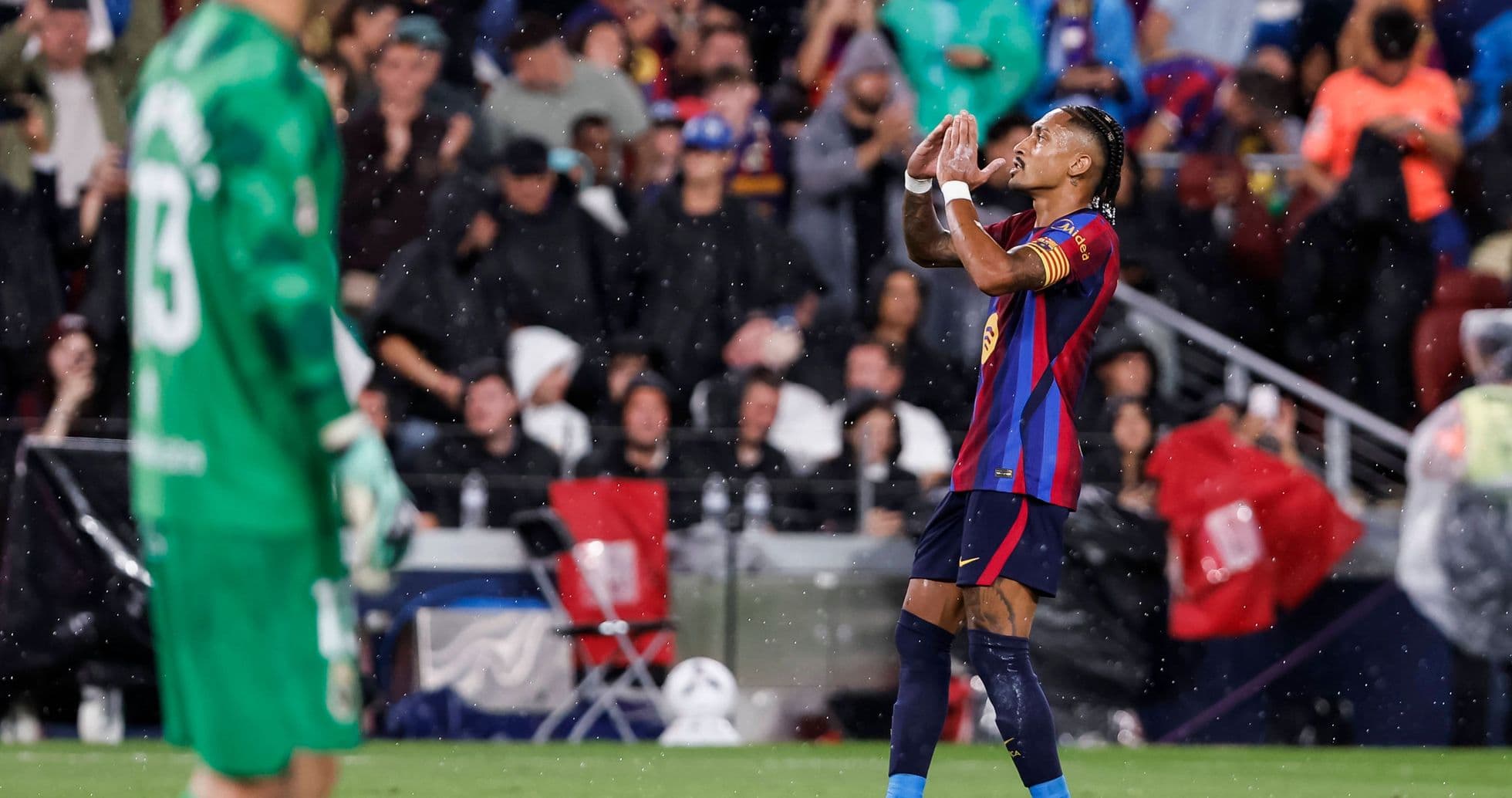
Raphinha's Hat-Trick Drives Barcelona to 7-2 Triumph Over Racing Santander
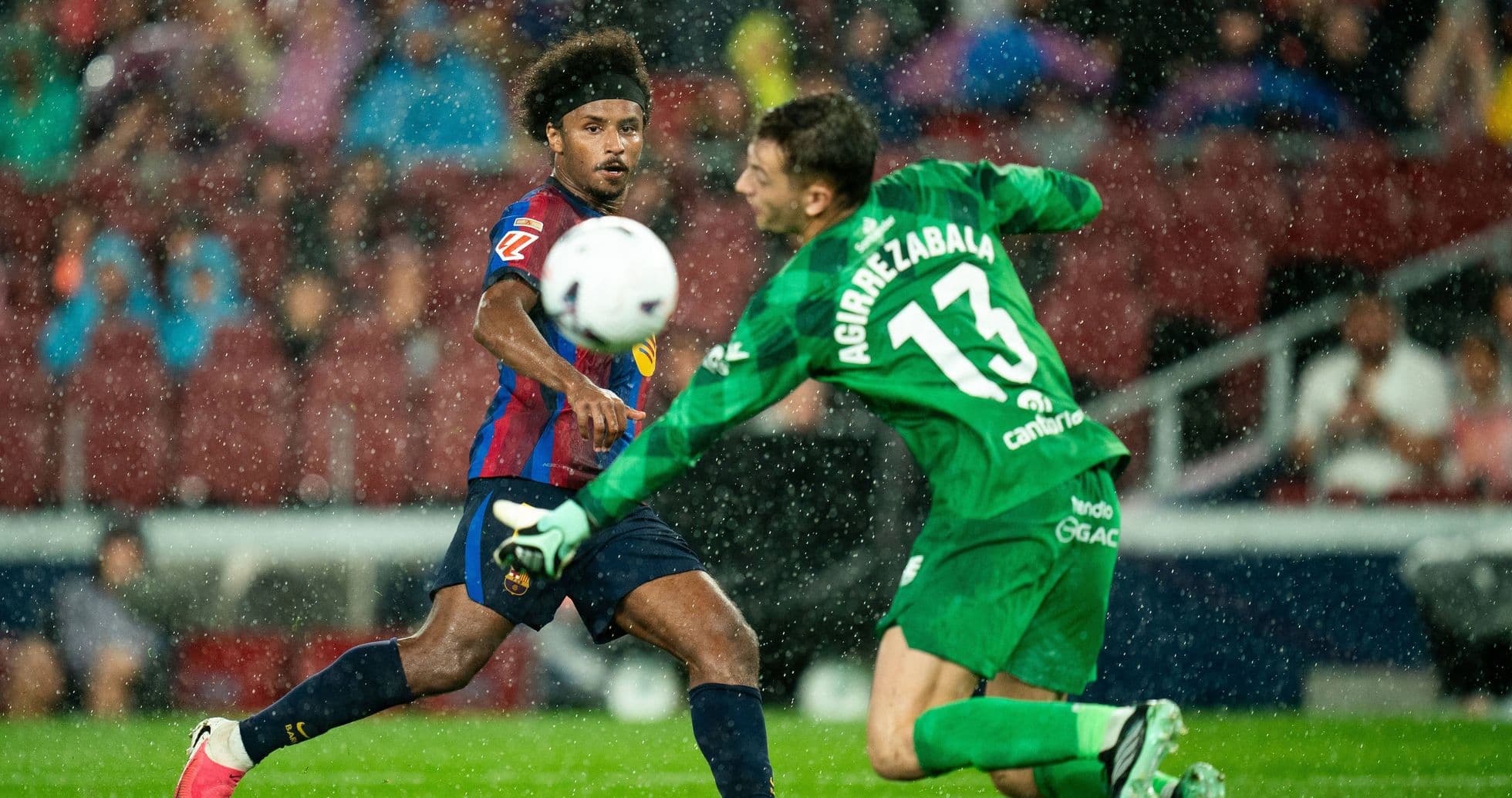
Hansi Flick Leads Barcelona to Record-Breaking Seven Wins in a Row

Gavi Reflects on Injury Return as Barcelona Dominate Racing Santander 7-2