
Barcelona's Tactical Masterclass: 2-0 Victory Over Real Madrid
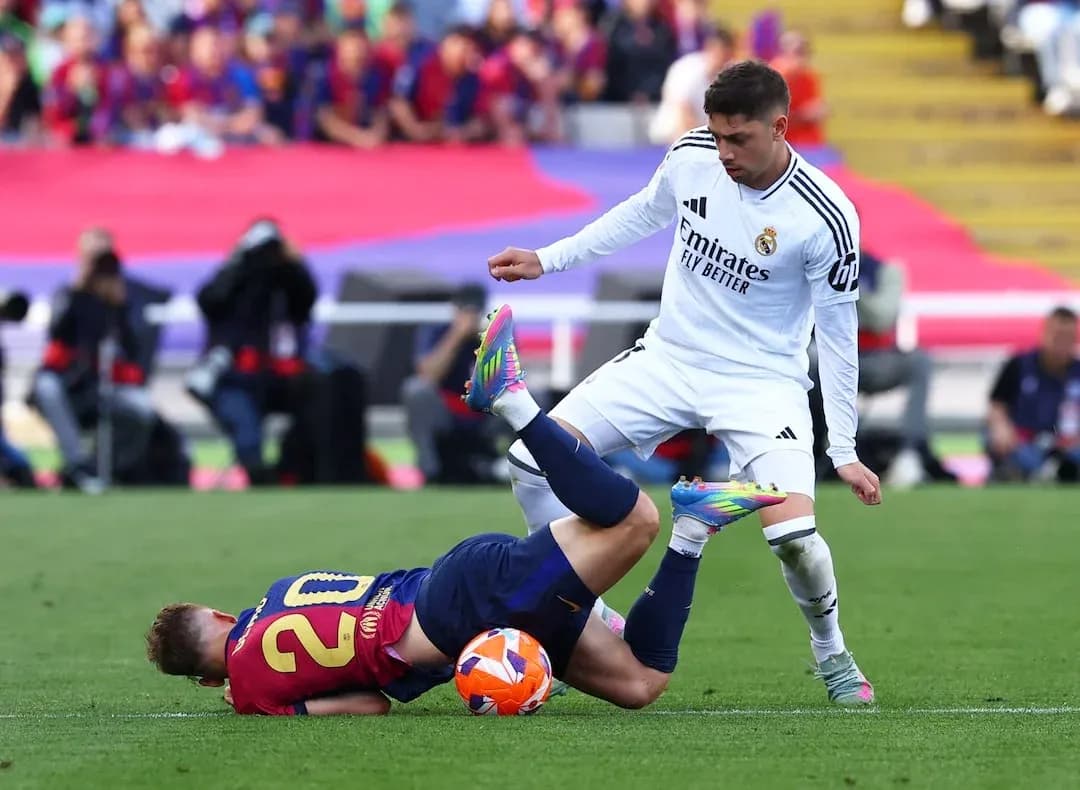
Barcelona’s 2-0 win over Real Madrid at Camp Nou in La Liga’s Regular Season - 35 was defined by an explosive opening quarter of an hour and then a controlled, risk-managed defensive display. Hansi Flick’s side, in a 4-2-3-1, built a decisive early advantage through Marcus Rashford and Ferran Torres, then used structure and possession (57%) to suffocate Madrid’s response. Alvaro Arbeloa also set his team up in a 4-2-3-1, but Real Madrid’s attacking play remained fragmented, generating just one shot on target across 90 minutes despite 8 total attempts and a marginally competitive xG of 0.79. Barcelona’s blend of vertical threat and compactness without the ball underpinned a mature clásico performance.
The scoring sequence was brutally efficient. At 9', Marcus Rashford struck the opener for Barcelona, capitalising on early territorial dominance. Real Madrid never reset before the second blow: at 18', Ferran Torres doubled the lead, finishing a move assisted by Dani Olmo. From that point, the scoreboard – Barcelona 2-0 Real Madrid – never changed, with the hosts reaching half-time already two goals clear and in full control of the rhythm.
Discipline
Discipline followed the data’s chronology and added a layer of tension rather than changing the tactical story. The card log is:
- 40' Eduardo Camavinga (Real Madrid) — Foul
- 52' Dani Olmo (Barcelona) — Argument
- 52' Raúl Asencio (Real Madrid) — Foul
- 55' Jude Bellingham (Real Madrid) — Unallowed field entering
- 81' Raphinha (Barcelona) — Argument
- 81' Trent Alexander-Arnold (Real Madrid) — Argument
That yields Barcelona: 2, Real Madrid: 4, Total: 6 yellow cards. Noticeably, Madrid’s bookings were split between tactical fouls and emotional flashpoints, while Barcelona’s were purely for “Argument”, reflecting irritation in game management phases rather than structural desperation.
Substitutions
Substitutions were used by both coaches to adjust profiles rather than systems. At 64', Frenkie de Jong (IN) came on for Dani Olmo (OUT), and Raphinha (IN) came on for Marcus Rashford (OUT), allowing Barcelona to refresh their midfield control and right-sided transition threat. At 70', Thiago Pitarch (IN) replaced Eduardo Camavinga (OUT), a like-for-like midfield change for Madrid aiming to inject energy. On 77', Robert Lewandowski (IN) came on for Ferran Torres (OUT), and Marc Bernal (IN) replaced Gavi (OUT), giving Barcelona a more classic reference nine and fresh legs in the double pivot. At 79', Franco Mastantuono (IN) came on for Brahim Díaz (OUT), and César Palacios (IN) for Gonzalo García (OUT), as Arbeloa searched for more creativity and penetration between the lines. Finally, at 88', Alejandro Balde (IN) came on for Fermín López (OUT), a defensive-minded switch to lock down the left flank.
Tactical Overview
Tactically, Flick’s 4-2-3-1 was built around a high technical floor in the first phase and aggressive occupation of the half-spaces. Joan García, with just 1 save required, operated mostly as a distributor behind a back four of João Cancelo, Gerard Martín, Pau Cubarsí, and Eric García. Their job was less about emergency defending and more about controlling depth and preventing Vinicius Júnior and Gonzalo García from receiving cleanly between or behind lines. Real Madrid managed 8 total shots, but only 1 on target, a direct reflection of Barcelona’s ability to force low-quality attempts or block central lanes.
The double pivot of Pablo Gavi and Pedri anchored Barcelona’s structure. Gavi provided defensive bite and counter-pressing, while Pedri dictated tempo and connected into the advanced trio. Ahead of them, Fermín López and Dani Olmo occupied the half-spaces, with Rashford nominally wide but constantly attacking the channel between full-back and centre-back. Rashford’s early goal at 9' came from precisely this verticality: Barcelona’s midfield drew Madrid’s double pivot narrow, leaving space for Rashford to attack in transition and punish the back line.
On the opposite side, Arbeloa’s 4-2-3-1 with Aurélien Tchouaméni and Eduardo Camavinga as the double pivot struggled to progress cleanly under Barcelona’s press. With 394 total passes and 342 accurate (87%), Madrid were tidy but not incisive. Jude Bellingham, nominally the central attacking midfielder, was frequently forced to drop deep to receive, disconnecting him from the final third. Vinicius Júnior’s influence was limited by Barcelona’s compactness and the disciplined positioning of Cancelo and the near-side centre-back.
Thibaut Courtois had a much busier evening than Joan García: 5 saves underline Barcelona’s capacity to create clear chances despite “only” 10 total shots and 7 on target. The hosts’ xG of 0.99 reflects that their finishing efficiency, especially in the first 20 minutes, outpaced the underlying chance volume. Real Madrid’s xG of 0.79 suggests they did manufacture some potentially dangerous situations but failed to convert them into genuine on-target threats.
In possession, Barcelona completed 527 passes, 484 accurate (92%), illustrating a high Overall Form in ball circulation and a strong Defensive Index through control via possession. Madrid’s 43% of the ball and lower passing volume meant long spells without threatening Barcelona’s block. The foul count – 18 by Barcelona, 9 by Madrid – shows Flick’s side were willing to disrupt counters and accept tactical infringements, especially once two goals ahead.
The negative “goals prevented” value of -0.53 for both keepers suggests that, on balance, finishing slightly outperformed shot-stopping on the night. But structurally, Barcelona’s plan made the difference: early vertical aggression, then a controlled medium block, supported by well-timed substitutions to maintain intensity. Real Madrid’s 8 corners and territorial pushes never translated into sustained high-quality chances, leaving Arbeloa’s side tactically second-best in both boxes and on the scoreboard: Barcelona 2-0 Real Madrid.
Related News

LaLiga 2026-27 Season Schedule Released: Kickoff on August 15, Clásico on October 25
Atletico Madrid vs Real Madrid: Head-to-head Stats and Past Meetings
Real Madrid Dominates Rayo Vallecano in La Liga Clash
Atletico Madrid Dominates Real Sociedad 3-0 at Reale Arena
Barcelona Dominates Levante in High-Scoring Clash
Sevilla vs Barcelona Stats: Head-to-Head Record and Past Meetings