
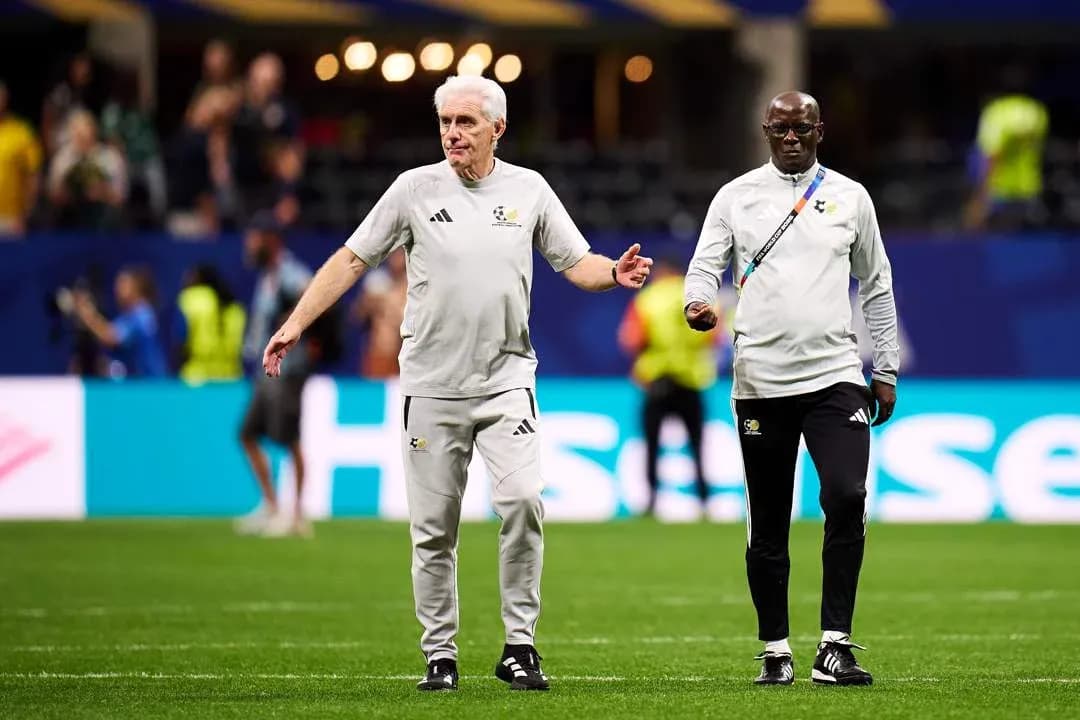
Bafana Bafana's Resilience: A Draw Against Czechia
Hugo Broos left Atlanta with a precious point and a simmering irritation.
His Bafana Bafana side had just dragged themselves back from the brink against Czechia, a late Teboho Mokoena penalty sealing a 1-1 draw that keeps South Africa’s World Cup dream alive. The performance stirred him. The setting did not.
“This is not a football stadium,” the 74-year-old Belgian said of the gleaming Atlanta Stadium, roof shut, air cool, atmosphere – in his view – muted.
A fight under a closed roof
Under the giant lid of the NFL-style arena, Bafana’s campaign flirted with disaster almost from the first whistle.
Czechia struck early, Michal Sadilek pouncing in the sixth minute to tilt the contest sharply in the Europeans’ favour. South Africa, beaten 2-0 by co-hosts Mexico at the Estadio Azteca in their opener, suddenly stared at another bleak night on the biggest stage.
They refused to bow.
Broos’ players grew into the game, pressing higher, biting into tackles, forcing errors. The passes sharpened, the runs became braver. The equaliser, when it came, felt less like a surprise and more like a debt finally paid.
Seven minutes from time, the pressure broke Czech resistance. Pavel Sulc handled inside the area, the referee pointed to the spot, and Mokoena stepped up. His finish was calm, clinical, a cold nerve in a hot moment. South Africa were level, and their World Cup hopes were breathing again.
Broos saw character where, for too long, there had been fragility.
“I’m very proud of my team, and this is the real Bafana Bafana,” he said. “If we can make another performance like today, I think we have a chance to go in the second round.”
Azteca versus Atlanta
If the point revived Bafana’s Group A campaign, it also sharpened Broos’ sense of what football should feel like.
Their opener at the Estadio Azteca had ended in defeat, but the coach had clearly fallen for the old giant in Mexico City – its open sky, its noise, its raw edges. Atlanta left him cold.
“If I can be very honest, this is not a football stadium. It’s a nice stadium, fantastic stadium, everything you want. But only the grass is football. All the rest is not,” he said.
“It’s a covered stadium. I like to play in an open stadium. I don’t feel really the atmosphere in such a stadium. When you compare it with Azteca, for example, that is a football stadium!”
He acknowledged the spectacle for those in the seats – the clear sightlines, the comfort, the modern polish.
“These stadiums are fantastic stadiums for the crowd. I think they see everything in that stadium. There are no places that are covered or whatever. But, again, I rather like a real football stadium.”
For a coach steeped in European football tradition, the roof and the NFL trimmings stripped something essential from the occasion. The game mattered; the setting, he felt, dulled its edge.
Rhythm broken, momentum stalled
The stadium was not his only gripe.
Despite climate-controlled conditions, the match stopped for cooling breaks, a decision that grated on Broos as his team chased the game and then chased a winner.
“I think it’s very, very useful when it’s hot,” he said. “But in other cases, the rhythm of the game is lost.
“When at that moment you are the best team and you dominate, suddenly your domination is blocked for five minutes or I don’t know how long... in that stadium, we don’t need to drink after 20 minutes.”
For a side building pressure, those pauses felt like a release valve for the opposition. South Africa had Czechia pinned for long spells in the second half; the enforced breaks cut into that momentum, broke the flow, and, in Broos’ mind, blunted their advantage.
Destiny in their own hands
The complaints, though, sit alongside a more important reality: Bafana Bafana are still alive.
The draw means South Africa head into their final Group A fixture with their fate under their own control. Next up: South Korea, wounded but dangerous after a narrow 1-0 defeat to Mexico.
Thursday’s clash at Estadio Monterrey in Mexico is now loaded with consequence. For both teams, it is close to must-win territory.
For South Africa, the stakes are historic. This is only their fourth World Cup appearance; they have never escaped the group stage. A victory over the Taegeuk Warriors would significantly strengthen their chances of reaching the Round of 32, whether by finishing in the top two or sneaking through as one of the best third-placed teams.
It would also mark something rare – an away win at a World Cup, far from home, against a seasoned Asian powerhouse.
Broos will carry his frustrations with modern arenas and mid-half drinks into that game, but he will also carry something more valuable: evidence that his team can absorb a punch and swing back.
They walked into Atlanta under a closed roof, fell behind early, and refused to fold. In Monterrey, under open skies, they will try to turn that resilience into history.
Kick-off against South Korea is at 03:00 (SA time) on Thursday, 25 June. The question now is simple: can this “real Bafana Bafana” finally kick down a door that has always stayed shut?
Related News
Raphinha’s Hat-Trick Powers Barcelona to 7-2 Victory Over Racing Santander
Carabao Cup Fourth Round Draw: Liverpool Set to Clash with Chelsea, Arsenal to Face Fleetwood Town
Key Football Matches to Watch in Azerbaijan This Autumn
Raphinha's Hat-Trick Drives Barcelona to 7-2 Triumph Over Racing Santander
Hansi Flick Leads Barcelona to Record-Breaking Seven Wins in a Row
Gavi Reflects on Injury Return as Barcelona Dominate Racing Santander 7-2