
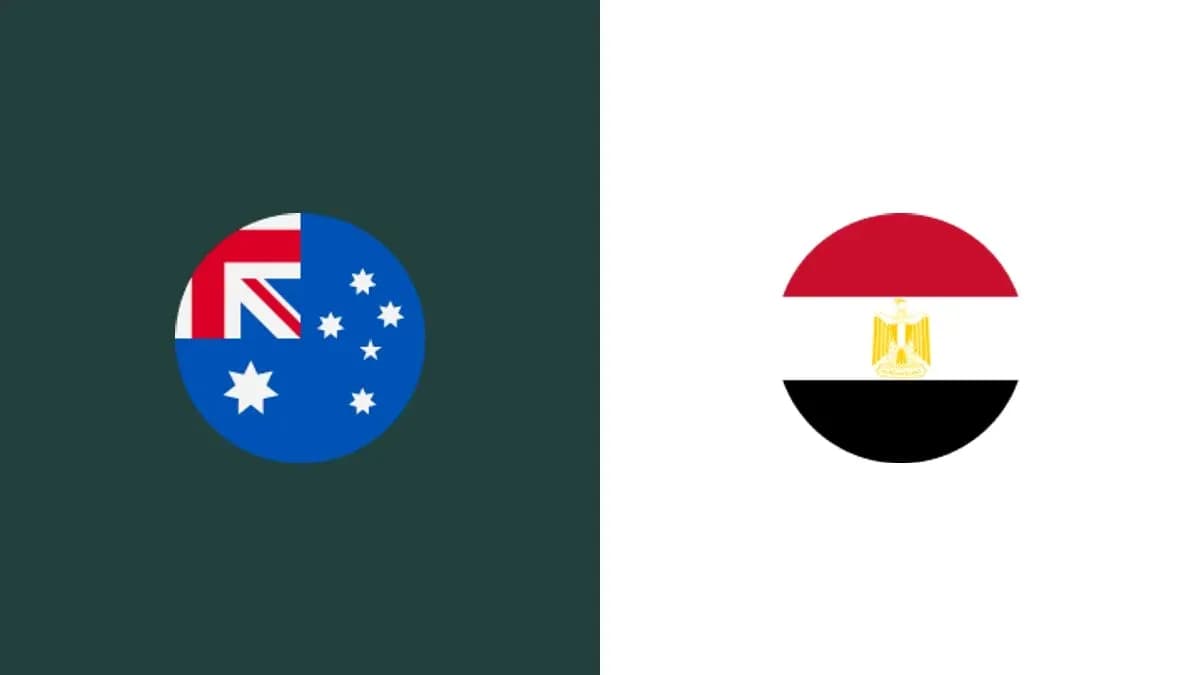
Australia vs Egypt: A Historic World Cup Knockout Clash in Texas
By the time the sun dips over Arlington on 3 July, Dallas Stadium will be holding its breath. One of Australia or Egypt will have stepped into territory neither has properly owned before. The other will be left staring at a familiar ceiling.
Kick-off is set for 18:00 GMT, 14:00 EST. The stakes are far bigger than the clock suggests.
Socceroos chase the win that has always eluded them
Tony Popovic has built a side that looks exactly like the man on the touchline: stubborn, organised, hard to shift. Australia are back in the World Cup knockout rounds in consecutive tournaments, but that long, awkward statistic still hangs over them. They have never won a World Cup match in the single-elimination phase.
This group campaign summed them up. Tight margins, no frills. They lost to hosts United States, dug in for a 0-0 against Paraguay, then did what they had to do with a clinical 2-0 win over Turkey to finish runners-up in Group D. Two goals scored, two conceded across the group stage. Efficient, but hardly explosive.
Popovic has leaned on structure. Whether he rolls out a back three or locks into a more orthodox four, the plan is clear: build a wall around Patrick Beach and let the game grow from there. Harry Souttar, a towering presence, and Alessandro Circati, the young centre-back learning fast under pressure, are central to that idea.
The cost of that resilience has been a blunt edge in the final third. With Mathew Leckie and Jacob Italiano ruled out of the tournament, Australia are short on proven end-product. That shifts the spotlight onto the raw, fearless pace of Nestory Irankunda and the creativity of Cristian Volpato, both asked to turn half-chances into history.
Egypt’s fairytale meets its first real crossroads
Across the halfway line stands a team rewriting its own story. Egypt, under Hossam Hassan, have already achieved what generations before them could not: they have come out of a World Cup group in the modern era.
They did it the hard way in Group G. A composed 1-1 draw with Belgium showed they could live with elite opposition. A 3-1 dismantling of New Zealand delivered their first-ever World Cup win. A grinding 1-1 against Iran sealed second place and underlined their growing maturity.
This is not a one-note, counter-punching African side. Egypt average more than four shots on target per game. They move the ball with purpose, vary their angles of attack and, crucially, believe they can break down organised defences.
Yet everything loops back to one name. Mohamed Salah.
The captain and talisman is nursing a hamstring strain from that draw with Iran. His status is uncertain. Every training session, every medical report, becomes a subplot to the main event. If he plays, how much can he give? If he doesn’t, who carries the weight?
Omar Marmoush has been the answer so far. The Manchester City forward has embraced the role of focal point, drifting into pockets, linking play, and finishing with conviction. Around him, the likes of Ahmed Sayed "Zizo" and Emam Ashour offer movement and invention. With or without Salah, Egypt still carry threat.
Wide overloads vs vertical punches
Strip away the narratives and this tie tilts on one clear tactical fault line: the flanks.
Egypt want chaos on their left. They love to overload that channel, pulling centre-backs into uncomfortable spaces, using Marmoush and overlapping full-backs to create quick, sharp passing triangles. From there, they slip into the box with late runs and cut-backs that punish any lapse in concentration.
Australia want the opposite. Control first, then release. Popovic’s side will likely sit in a compact block, absorb pressure, and wait for the moment Egypt commit one body too many. When that happens, the plan is simple: turn and run.
Irankunda is the key to that. His pace in vertical transition is the weapon Australia will trust. One clearance, one loose ball, and suddenly the teenager is sprinting into the space left behind an adventurous Egyptian back line that has, at times, been caught too high.
For that to work, the Socceroos’ midfield must be ruthless without the ball. Jackson Irvine and Aiden O’Neill will need to close lanes, make fouls in smart areas, and keep Egypt’s tempo from rising into a frenzy.
On the other side, Egypt’s midfield anchors must do the opposite. Their job is to suffocate the counter before it ever reaches Irankunda. Win second balls. Pin Australia back. Keep the game played in the Socceroos’ half, where a low block can eventually crack under the strain of repeated questions.
Concentration, or catastrophe
Matches like this are often decided not by the first hour, but by what’s left in the legs and minds in the final 30 minutes.
Australia know that one misjudged step towards Marmoush, one late reaction to a Salah run from deep, and all the defensive discipline in the world won’t save them. Egypt know that one over-committed attack, one lazy recovery run, and Irankunda will be off, dragging the tie into the kind of broken-field contest that suits Popovic’s men.
The likely lineups underline the contrast.
For Australia:
- Beach;
- Circati, Souttar, Herrington;
- Bos, O'Neill, Irvine, Behich;
- Volpato, Irankunda, Metcalfe.
For Egypt:
- Shobeir;
- Hany, Ibrahim, Rabia, Hafez;
- Ateya, Saber;
- Ziko, Salah, Ashour;
- Marmoush.
Two settled shapes. Two clear ideas. One knockout game that will reward the side who can stick to their identity while still finding something extra when the moment demands it.
Australia arrive with a defensive shell that has carried them this far, desperate to finally smash through that World Cup barrier. Egypt come as unbeaten trailblazers, chasing a deeper run than any Pharaohs side has ever known.
Only one of those stories can grow in Texas. Which history holds its nerve?
Related News
Raphinha’s Hat-Trick Powers Barcelona to 7-2 Victory Over Racing Santander
Carabao Cup Fourth Round Draw: Liverpool Set to Clash with Chelsea, Arsenal to Face Fleetwood Town
Key Football Matches to Watch in Azerbaijan This Autumn
Raphinha's Hat-Trick Drives Barcelona to 7-2 Triumph Over Racing Santander
Hansi Flick Leads Barcelona to Record-Breaking Seven Wins in a Row
Gavi Reflects on Injury Return as Barcelona Dominate Racing Santander 7-2