
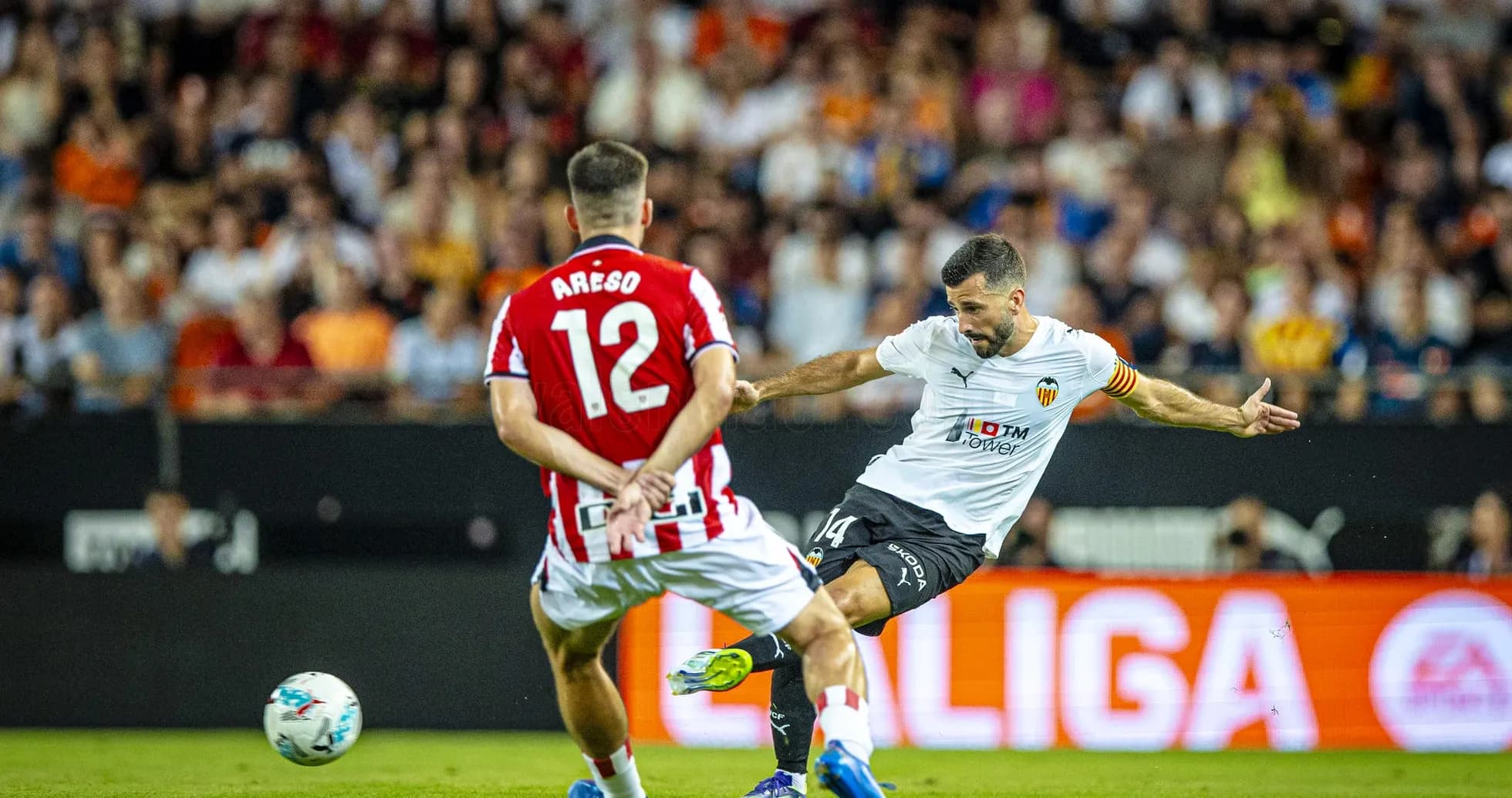
Athletic Club vs Valencia: Tactical Insights from a Narrow Defeat
San Mamés closed its doors on a 0-1 defeat, but the ninety minutes told a much richer story about two mid-table sides locked in very different tactical identities. In La Liga’s Regular Season - 35, Athletic Club and Valencia arrived separated by only two points and three places – Athletic in 9th on 44 points, Valencia 12th with 42 – yet their paths to this narrow away win could hardly have been more contrasting.
Both coaches mirrored each other on the whiteboard with a 4-2-3-1, but the systems had different personalities. Ernesto Valverde leaned into Athletic’s season-long template: a high-energy, wing-driven side that at home has been more assertive than its league position suggests. Heading into this game, Athletic had won 9 of 18 at San Mamés, scoring 21 and conceding 20. The goal difference overall, though, told the deeper truth: -11, with 40 goals for and 51 against across 35 matches, a reminder that their aggression often leaves them exposed.
Carlos Corberan’s Valencia, by contrast, have been a chameleon this season. Overall they sit on 42 points with a goal difference of -12 (38 for, 50 against), but the split between Mestalla and the road is stark. At home they average 1.4 goals for and 1.2 against; on their travels that drops to 0.8 scored and 1.6 conceded. Four away wins from 18 before this trip underline how precious this 0-1 result is: it is not just three points, but a validation of a more controlled, pragmatic away blueprint.
The tactical voids on the teamsheet shaped the evening before a ball was kicked. Athletic were without U. Egiluz (injury), B. Prados Diaz (knee injury), I. Ruiz de Galarreta (personal reasons) and M. Sannadi (coach’s decision). The absence of Ruiz de Galarreta, one of La Liga’s leading yellow-card collectors with 10 bookings, quietly changed the texture of Athletic’s midfield. His 58 tackles, 4 blocked shots and 18 interceptions this season usually give Valverde a combative pivot who can both break lines with 1,117 passes and break rhythm with 48 fouls committed. Without him, the double pivot of M. Jauregizar and A. Rego had to learn the violence of La Liga’s central corridor on the fly.
Valencia’s missing list was longer and more structural: L. Beltran (knee), J. Copete (ankle), M. Diakhaby (muscle), D. Foulquier (knee) and T. Rendall (muscle) all out. That stripped Corberan of rotation options in the back line and defensive midfield, placing heavy responsibility on E. Comert, C. Tarrega and the full-backs. It also meant that José Gayà, already a key red-card reference this season with 1 dismissal and 6 yellows, had to balance his trademark aggression with discipline on the flank.
Both lineups, though, were coherent. For Athletic, Unai Simón behind a back four of A. Gorosabel, Yeray Álvarez, Aymeric Laporte and Yuri Berchiche formed a possession-friendly defensive unit. Ahead of them, Jauregizar and Rego were tasked with knitting play into a creative three of R. Navarro, Oihan Sancet and Nico Williams, all serving Gorka Guruzeta as the lone striker. It was a structure built to maximise width and second-line runs rather than pure penalty-box presence.
Valencia mirrored the shape but not the intent. S. Dimitrievski anchored a back four of Renzo Saravia, Tarrega, Comert and Gayà, with Pepelu and G. Rodriguez forming a screening double pivot. Ahead of them, Diego López and Javi Guerra worked inside channels while Luis Rioja, one of the league’s most productive creators, started from the left behind Hugo Duro.
Rioja’s season provides the clearest lens on Corberan’s Valencia. With 6 assists and 35 key passes from 770 total passes at 79% accuracy, he is the conduit for transition and sustained pressure. His 60 dribble attempts (34 successful) and 28 fouls drawn make him the classic “Hunter” in wide areas – not necessarily the top scorer, but the player who turns territory into danger. Against an Athletic side that concedes 1.1 goals per game at home and 1.5 overall, his role was to exploit the moments when Laporte or Yeray were forced to defend space rather than bodies.
On the other side of that duel stood Athletic’s “Shield” unit. Laporte’s presence alongside Yeray was meant to stabilise a defence that has kept only 4 clean sheets at home and 6 in total. The selection of Berchiche and Gorosabel hinted at an intention to hem Valencia in, trusting the centre-backs to manage Duro’s movement and late runs from Guerra. Yet the season’s numbers suggested a risk: Athletic’s overall defensive average of 1.5 goals conceded per match is the hallmark of a side that can be opened up if the first press is bypassed.
In the engine room, the absence of Ruiz de Galarreta left Sancet as the primary creative brain. He had to drop deeper to link play, which in turn stretched the distance to Guruzeta and occasionally left the striker isolated against Tarrega and Comert. Pepelu and G. Rodriguez, for their part, played the “Enforcers”, tasked with suffocating Sancet’s half-turns and screening passes into Nico Williams. Their job was less about spectacular interventions and more about shaping passing lanes, especially with Valencia’s season-long card profile showing a tendency to pick up yellows late – 23.19% of their cautions arrive between 76-90 minutes, and 20.29% between 46-60. Managing intensity without implosion was essential in a tight away game.
Disciplinary patterns framed the contest’s emotional arc. Athletic’s yellow-card distribution peaks between 61-75 minutes at 22.37%, with another surge between 46-60 at 18.42%. Those windows often coincide with Valverde’s push to tilt the pitch, and they hint at a side that willingly lives on the edge to sustain pressure. Their red-card profile is more alarming: 28.57% of reds between 61-75 and 14.29% between 46-60 and 91-105 respectively, a sign that when the game stretches, so does their composure. Valencia, by contrast, are more disciplined but still vulnerable to flashpoints, with one red in the 16-30 window and another outside normal time ranges.
From a statistical prognosis perspective, this fixture always leaned towards fine margins rather than a shootout. Heading into it, both teams averaged 1.1 goals for per game overall. Athletic’s home attack at 1.2 goals per match versus Valencia’s away defence conceding 1.6 suggested the hosts might generate the better xG profile, especially via crosses to Guruzeta and cut-backs for Sancet. Conversely, Valencia’s away attack at 0.8 goals per game was up against an Athletic home defence conceding 1.1, implying that the visitors would need efficiency rather than volume.
The 0-1 scoreline therefore fits a particular reading: Valencia executed the low-variance plan to perfection. They leaned on Dimitrievski’s command of his area, the compactness of Tarrega and Comert, and the territorial intelligence of Pepelu and Rodriguez to keep the game within a single moment – a set-piece, a counter, a second-ball break. Rioja’s season-long creative profile suggests he was central to that decisive action, whether as provider or as the gravity that freed a teammate.
For Athletic, following this result the story is one of familiar frustration. A team that has failed to score in 12 of 35 league games and relies heavily on wing thrust again found itself blunted when asked to break down a well-drilled block. Their season-long xG trend – implied by 40 goals from 35 matches despite consistent territorial dominance at San Mamés – hints at a finishing and chance-quality problem rather than sheer volume.
In the broader La Liga tapestry, this match crystallises both squads’ identities. Athletic remain the high-energy, high-risk side whose home numbers promise more than their overall goal difference delivers. Valencia, meanwhile, continue to refine an away-day pragmatism in which a single goal, backed by structural discipline and the craft of players like Luis Rioja and José Gayà, can be enough to tilt a tight contest. The table may show only a two-point swing, but tactically, this 0-1 felt like a statement that Corberan’s Valencia can survive – and occasionally thrive – on their travels by embracing the art of winning small.
Related News

LaLiga 2026-27 Season Schedule Released: Kickoff on August 15, Clásico on October 25

Atletico Madrid vs Real Madrid: Head-to-head Stats and Past Meetings
Real Madrid Dominates Rayo Vallecano in La Liga Clash
Atletico Madrid Dominates Real Sociedad 3-0 at Reale Arena

Barcelona Dominates Levante in High-Scoring Clash

Sevilla vs Barcelona Stats: Head-to-Head Record and Past Meetings