
Aston Villa's Transfer Strategy: The Case of Garnacho
Aston Villa know this feeling.
Deadline day. A talented young attacker. A loan with an obligation to buy tucked into the small print. On paper, it all makes sense. On the pitch, it can unravel quickly.
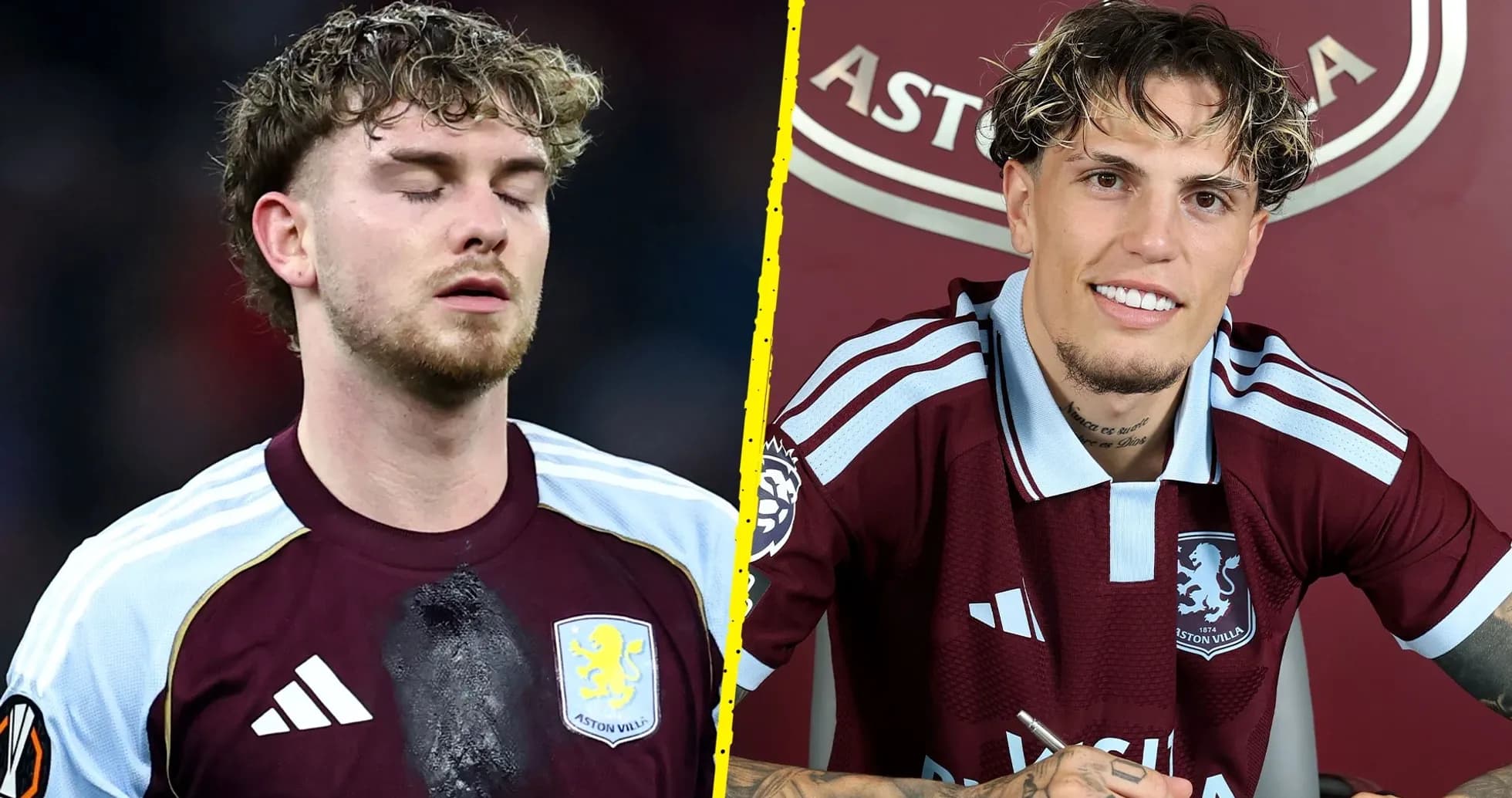
Last summer it was Harvey Elliott. Fresh from being named player of the tournament at the Euro Under-21s, he arrived from Liverpool on a season-long loan with a conditional obligation to buy. Villa needed numbers, Elliott needed a platform. The deal looked tidy for everyone.
Then the clause emerged. Ten appearances, and the move would automatically become permanent for £35million.
Unai Emery never let it get close.
Elliott ended the campaign with just 278 minutes in a Villa shirt. No rhythm, no real chance, and no permanent transfer. A promising England Under-21 star effectively frozen out by the very structure of his contract.
Now Villa are rolling the dice again.
Garnacho arrives, with familiar strings attached
This time the name is Alejandro Garnacho, the Chelsea winger arriving on a season-long loan with a conditional obligation to buy. The exact trigger remains under wraps, but talkSPORT understands it is appearance-based and easily reachable. The total package, loan plus obligation, comes in at around £43m.
The timing is no coincidence. Garnacho’s move was confirmed just two days after Morgan Rogers went the other way to Chelsea for a staggering £117m, a fee that instantly made him the most expensive British player in history.
For Villa, that Rogers sale was a financial thunderbolt. Signed from Middlesbrough in January 2024 for just £8m, he has now delivered an enormous profit and a major cushion in their efforts to stay on the right side of UEFA’s financial regulations.
Two big deals. The same clubs. Days apart. It looks and feels like a swap dressed up as separate transfers. That is exactly the kind of thing UEFA has tried to clamp down on.
The 45-day rule and a clever bit of timing
Under UEFA’s transfer rules, multiple deals completed between the same clubs within a 45-day period are treated as a swap. If that happened here, Villa’s profit on Rogers would effectively be cut to the difference between the £117m fee and whatever they paid for Garnacho.
Villa’s answer? Structure Garnacho’s arrival as a loan now, with the obligation to buy triggered later, outside that 45-day window. Do that, and they can book the full Rogers profit in this accounting period.
On talkSPORT’s Transfer Insiders, reporter Ben Jacobs outlined how the club have exploited what he called a UEFA “loophole”.
He contrasted it with the Elliott situation, where Villa simply chose not to hit the appearance threshold.
“This deal is more about being financially creative under new UEFA FFP rules,” Jacobs said, explaining that UEFA had tried to stop clubs using mirrored deals that both sides could present as clean profit. Under the new approach, if two clubs trade players within 45 days, they must treat the business on a net basis, as if it were a swap.
But Garnacho’s deal has been wrapped differently. One blockbuster sale for £117m. A separate loan coming the other way. The obligation to buy sits in the background, waiting to be triggered when that 45-day danger zone has passed.
“So I sense that Garnacho, Villa and Chelsea all understand that this is a permanent deal wrapped up in a loan with a conditional obligation to buy structure,” Jacobs said.
Why UEFA might still intervene
Villa’s work, though, is not completely bulletproof.
UEFA’s regulations carry a crucial caveat. If the conditions that trigger an obligation are “considered to be virtually certain”, the transfer must be treated as permanent from the outset, not as a loan.
That is where the numbers start to bite again. If UEFA decide Garnacho’s obligation is so easy to activate that it is essentially guaranteed, both clubs would have to book it as a permanent transfer immediately. Villa’s carefully ring-fenced Rogers profit would then be dragged into the same calculation.
To keep Garnacho as a loan in accounting terms, UEFA must be satisfied that “the fulfilment of a condition cannot be assessed with sufficient certainty to trigger the permanent transfer from the inception of the loan.”
In simple terms: if it looks too obvious, it doesn’t fly.
Jackson interest hits a wall
The 45-day rule has another knock-on effect. It could derail Villa’s interest in Chelsea striker Nicolas Jackson.
Chelsea have offered Jackson to Villa, and Emery knows him well from their time together at Villarreal. On the football side, it fits. On the financial side, it’s far more complicated.
Any further mirrored business with Chelsea in this same window risks strengthening UEFA’s case that these are effectively swap-style arrangements dressed up as separate deals. That is a headache Villa can do without after banking such a huge profit on Rogers.
Unless Villa make another major sale to soften the impact of any reclassification, the safer option may be to park any Jackson move until January, once the current window and its 45-day accounting traps are behind them.
So Villa stand in a familiar place, but for very different reasons. Last year, a loan with an obligation backed them into a footballing corner and left a young talent sidelined. This time, the same structure is being used as a financial instrument, a way of stretching UEFA’s rules to their limit.
The question now is not just whether Garnacho can thrive under Emery, but whether UEFA will accept that this is truly a loan in spirit, and not just on paper.
Related News
Ilia Topuria Accuses Justin Gaethje After UFC Defeat

Tyson Fury vs Anthony Joshua Fight Date and Venue Confirmed
Switzerland Calls Up In-Form Sion Striker Winsley Boteli for Nations League
Bournemouth Secures Historic 2-1 Win Over Real Sociedad in Spain

Portugal Announces Squad for 2026 UEFA Nations League; Cristiano Ronaldo Expected to Play

Raphinha Channels Ronaldo Nazario as Barcelona's Leading Striker After Position Change