
AS Roma vs Inter: A Tactical Showdown in Serie A
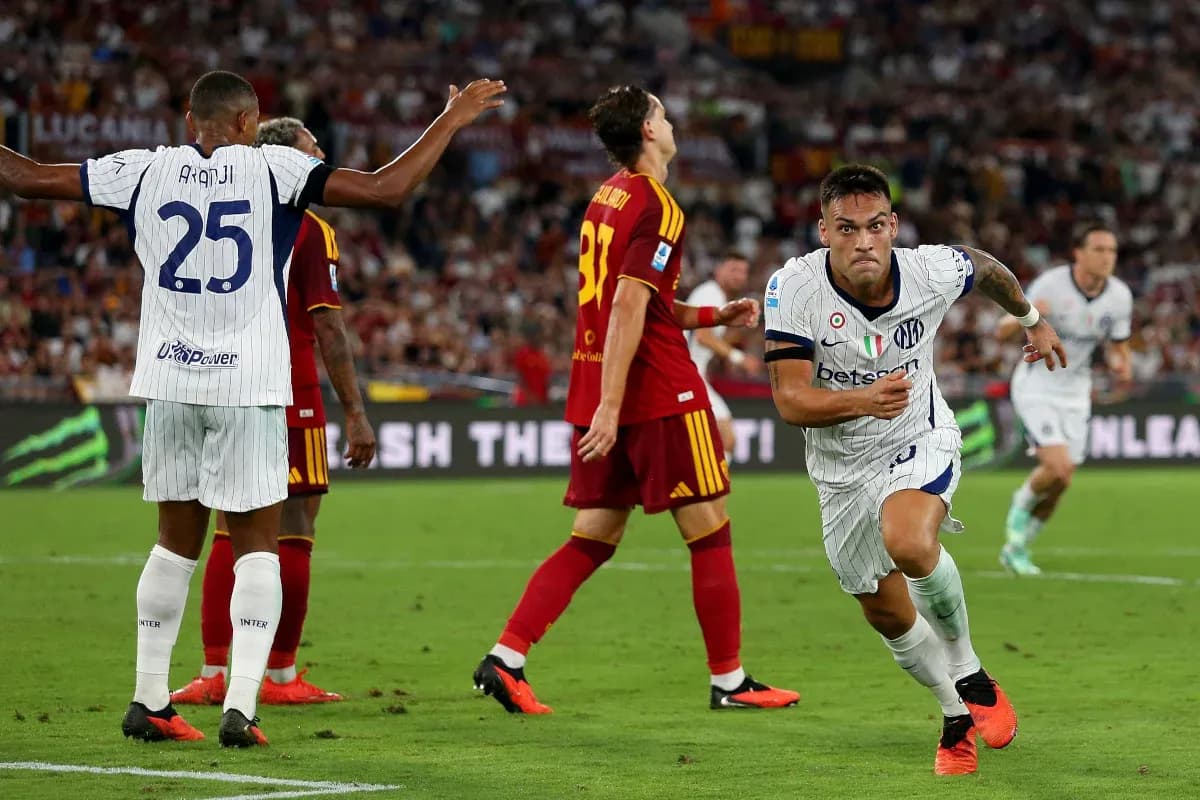
Under the late afternoon light of the Stadio Olimpico, Serie A’s early-season summit meeting delivered a narrative worthy of its billing. AS Roma and Inter, first and second in the table heading into this game, shared a 2–2 draw that felt less like dropped points and more like an opening chapter in a title race that may run all the way into spring.
I. The Big Picture – Two unbeaten giants collide
Heading into this match, both sides had taken 13 points from 5 games, unbeaten and almost mirror images in form: Roma with 4 wins and 1 draw, Inter the same. The table, though, told a subtle story. Roma’s overall goal difference stood at +11, built on 14 goals scored and just 3 conceded. Inter’s was +7, with 15 scored and 8 allowed. Roma were more balanced; Inter were more explosive and more open.
At home, Roma had been ruthless yet controlled: 8 goals scored and 3 conceded across 3 matches, an average of 2.7 goals for and 1.0 against at the Olimpico. Inter, by contrast, had been devastating at San Siro (4.0 goals for per home game, 2.0 against), but on their travels they were more measured: 3 goals scored and 2 conceded in 2 away matches, an away average of 1.5 for and 1.0 against.
The 2–2 scoreline, with Roma racing to a 2–0 half-time lead before Inter clawed it back, perfectly fused those profiles: Roma’s early control, Inter’s capacity to surge, and both teams’ refusal to lose.
II. Tactical Voids – Absences that shaped the chessboard
Both coaches were forced into structural compromises by key absences.
For Roma, M. Bah’s knee injury removed a depth option in wide and defensive zones, but Piero Gasperini Gian stayed loyal to his emerging identity: a 3-4-2-1 that has already been used 4 times this season. M. Svilar anchored a back three of G. Mancini, L. Balerdi and Hermoso, with a midfield band of four – Wesley Franca, B. Cristante, M. Kone and N. Molina – tasked with both stretching Inter’s block and protecting transition lanes. Ahead of them, P. Dybala and M. Soule floated behind D. Malen, the league’s top scorer.
Inter’s injury list cut deeper. H. Calhanoglu’s muscle injury stripped Cristian Chivu of his primary tempo-setter and long-range threat. D. Spence and J. Stones were also out, narrowing options in the defensive and wing-back lines. Chivu responded by leaning into a 3-1-4-2: J. Martinez in goal behind a back three of Y. Bisseck, M. Akanji and A. Bastoni; P. Zielinski as the single pivot; a high-energy line of four – A. Diouf, N. Barella, C. Jones and F. Dimarco – supporting the front pair of L. Martinez and M. Thuram.
Without Calhanoglu, Inter’s build-up became more vertical and direct, leaning on Barella’s dynamism and Diouf’s progressive passing rather than slow orchestration. Roma, by contrast, could funnel everything through Dybala between the lines.
Disciplinary profiles also hovered over the contest. Hermoso and Akanji both came in with 2 yellow cards each this season, aggressive front-foot defenders who step out to engage early. Roma as a team tend to collect their cautions late – 37.50% of their yellows arriving between 61–75 minutes and 25.00% between 76–90 – a sign of a side that defends more desperately as intensity spikes. Inter’s yellows cluster differently: 25.00% in the opening 15 minutes and a striking 50.00% between 46–60, suggesting a team that often tries to reset the tone right after half-time with aggressive pressing.
III. Key Matchups – Hunter vs Shield, Engine Room vs Chaos
The headline duel was always going to be D. Malen versus Inter’s back three. With 6 goals in 5 appearances, 16 shots (10 on target) and a rating of 7.86, Malen arrived as Serie A’s most ruthless finisher. His movement – constantly darting into the channels between centre-backs – forced M. Akanji and A. Bastoni into uncomfortable decisions: step out and leave space behind, or hold the line and let him turn.
Inter’s “shield” was not just the back three but the structure in front of them. P. Zielinski, normally a more advanced midfielder, was repurposed as a deep pivot. His task was to screen passing lanes into Malen and Dybala, but Roma’s 3-4-2-1 cleverly created overloads around him. Dybala, the league’s top creator with 4 assists and 23 key passes, constantly dropped into the half-spaces, dragging one of Inter’s midfielders away and leaving Malen isolated against a single centre-back. The first half’s 2–0 scoreline reflected Roma’s success in that manipulation.
On the other side, L. Martinez and M. Thuram posed a different problem. Lautaro’s 4 goals and 16 shots, combined with Thuram’s blend of 2 goals, 2 assists and 19 duels won, made them a dual “hunter” threat. Their battle with Roma’s back three – particularly Hermoso and Mancini – was pure attrition. Hermoso, who already had 13 tackles and 16 interceptions this season, stepped aggressively into passing lanes; Mancini, with 9 tackles and 8 interceptions, provided the cover. For 45 minutes, Roma’s shield held. In the second half, Inter’s insistence and superior physicality began to crack it.
The engine room duel was equally decisive. B. Cristante and M. Kone had to manage the central chaos against Barella and Diouf. Diouf’s 91% pass accuracy and 13 key passes this season underline his role as Inter’s vertical conduit; Barella’s tireless shuttling allowed Inter to flood the central lane after the break. As Roma’s intensity dipped, Inter’s midfield finally began to pin them back, with Diouf threading passes into the forwards and Dimarco pushing Roma’s wing-backs deep.
IV. Statistical Prognosis – A title-race draw with warning signs
From a statistical and structural lens, this 2–2 feels like a fair equilibrium between Roma’s control and Inter’s volatility. Roma’s overall averages – 2.8 goals scored and 0.6 conceded per game heading into this match – were never likely to be fully sustainable against an attack as potent as Inter’s. Inter, for their part, arrived scoring 3.0 goals per game overall but conceding 1.6; the draw underlined both their firepower and their defensive fragility.
Neither side has taken a penalty this season, and neither has missed one, so set-piece variance did not cloud the picture. Instead, open-play structures decided the flow: Roma’s first-half superiority born of positional play and combinations between Dybala, Soule and Malen; Inter’s second-half resurgence driven by physical dominance, Diouf’s passing and the relentless movement of Lautaro and Thuram.
Tactically, Roma emerge with a slight psychological edge: they proved they can outplay Inter for long stretches and that their 3-4-2-1 is robust at the highest level. Yet the collapse of a 2–0 lead will worry Gasperini, especially given Roma’s pattern of accumulating late cards and fatigue.
Inter, meanwhile, will feel emboldened. Without Calhanoglu and with a reshaped midfield, they still found a way back in the most hostile of environments. If Chivu can tighten the away defensive structure – particularly the space in front of the back three where Dybala thrived – Inter’s blend of power and precision in attack remains terrifying.
As the Olimpico emptied after 90 breathless minutes, nothing was settled. But one thing became clear: this was not a one-off spectacle. It was a tactical prologue to a season-long duel between two squads built, in very different ways, to go the distance.
Related News
Fiorentina vs Napoli: Tactical Insights from Serie A Draw
AS Roma vs Inter: A Tactical Showdown in Serie A
AC Milan vs Lecce Predicted Lineups: Team News and Match Insights
Juventus vs Atalanta Predicted Lineups: Team News and Tactics
Frosinone vs Como Predicted Lineups: Team News for Serie A Clash
Fiorentina vs Napoli Predicted Lineups: Team News and Match Analysis