
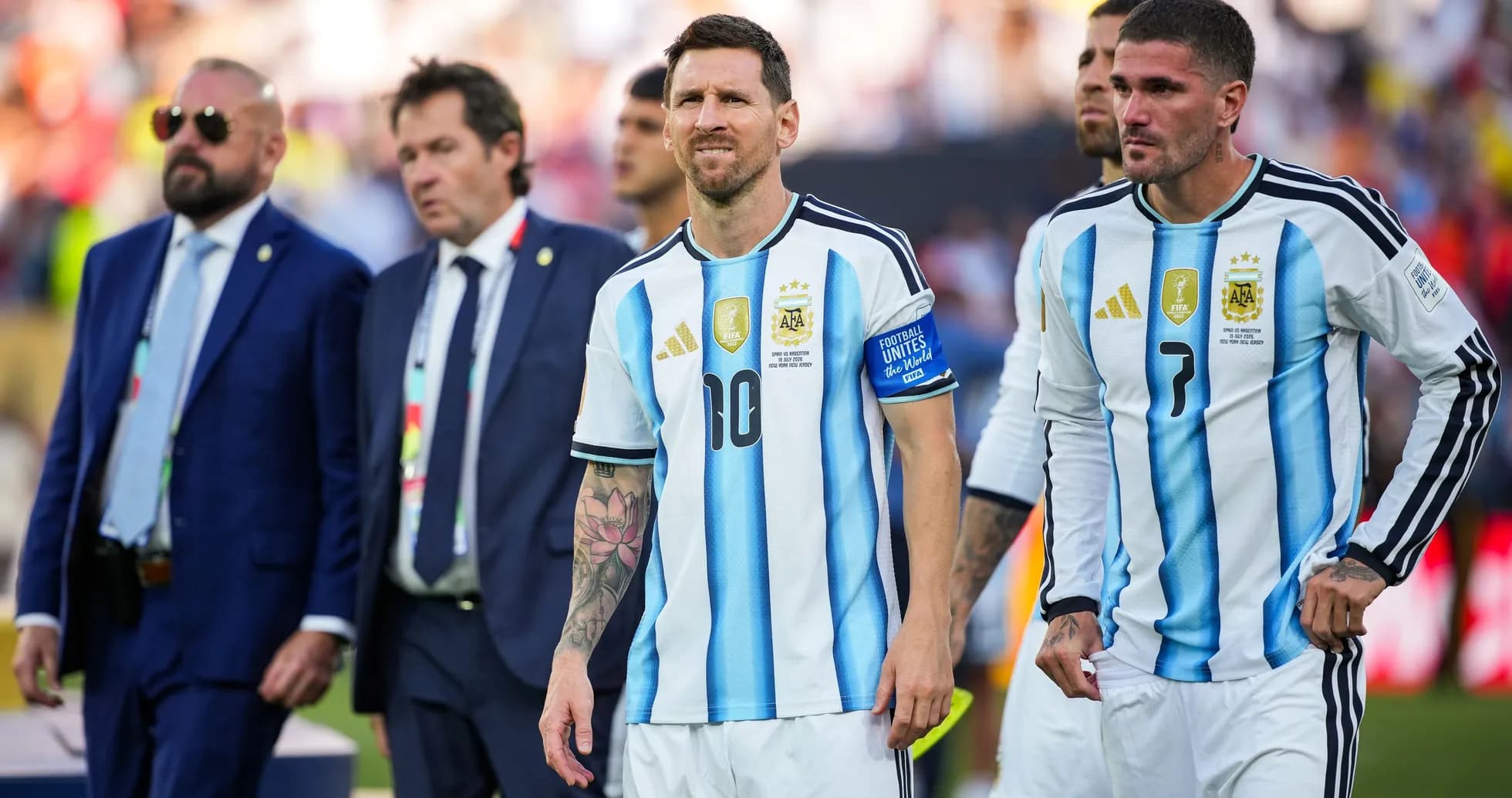
Argentina's National Holiday Controversy After Runners-Up Finish
Argentina flew home without the trophy, yet with a political firestorm in their wake.
A 1-0 extra-time defeat to Spain in New York, sealed by a Ferran Torres strike, ended the Albiceleste’s bid to defend their world crown. They failed to register a single shot on target in the showpiece, a flat, toothless performance on the biggest stage.
And still, the government wants to throw a party.
In a move that stunned even a football-obsessed nation, president Javier Milei announced that the squad would be allowed to choose a national holiday to commemorate their tournament campaign – despite finishing as runners-up. The gesture, framed as a tribute to the team’s effort, immediately split the country.
Milei, who pointedly skipped the final in person because of his superstitions, took to X to set out his plan. He wrote: “Given the concern about the celebrations for the achievement reached by the Argentine National Team, I inform the population that, depending on what the Players and the Technical Staff decide regarding the day to celebrate, it will be declared a national holiday.”
One post. Instant uproar.
On the streets and across social media, confusion turned quickly into anger. Many Argentines questioned how a nation that measures itself by world titles could justify a public holiday for second place. Some even wondered if the announcement was a technical mistake, too surreal to be real policy.
Others focused on the players. After a gruelling tournament and a draining final, large sections of the fanbase argued that Lionel Messi and his team-mates would rather slip quietly back to their clubs than ride through Buenos Aires in an open-top bus to celebrate falling just short.
The debate cut straight to Argentina’s footballing identity: is effort alone enough to be immortalised, or does this shirt only celebrate when it finishes on top of the world?
Milei doubled down. In a separate message, he moved to shield the squad from criticism and frame their campaign as a source of pride. “Thank you so much, players. [We fought] until the end with our boots on. Argentina always at the top,” he posted, leaning on the warrior image that has long defined the national team.
While the political argument rages, Lionel Scaloni and his staff face a colder, more immediate reality.
This campaign looks like the last stand of a golden generation. The coaching team must now accelerate the transition, phasing out a veteran core that has carried the shirt for more than a decade and blooding the next wave of internationals who will inherit the pressure, the expectation, and the scrutiny.
At the heart of it all stands Messi. It is widely expected that this was his sixth and final World Cup, the last chapter of an extraordinary international career. The Inter Miami forward, now 39, has not yet formally announced his retirement from Argentina duty, but every indication points toward a farewell rather than a new beginning.
So Argentina finds itself in a strange place: a nation debating a holiday for a team that fell one step short, a president defending his beaten finalists, and a legendary No. 10 edging toward the exit.
The trophy is gone. The questions about what comes next are only just arriving.
Related News
Ilia Topuria Accuses Justin Gaethje After UFC Defeat
Tyson Fury vs Anthony Joshua Fight Date and Venue Confirmed
Switzerland Calls Up In-Form Sion Striker Winsley Boteli for Nations League
Bournemouth Secures Historic 2-1 Win Over Real Sociedad in Spain
Portugal Announces Squad for 2026 UEFA Nations League; Cristiano Ronaldo Expected to Play
Raphinha Channels Ronaldo Nazario as Barcelona's Leading Striker After Position Change