
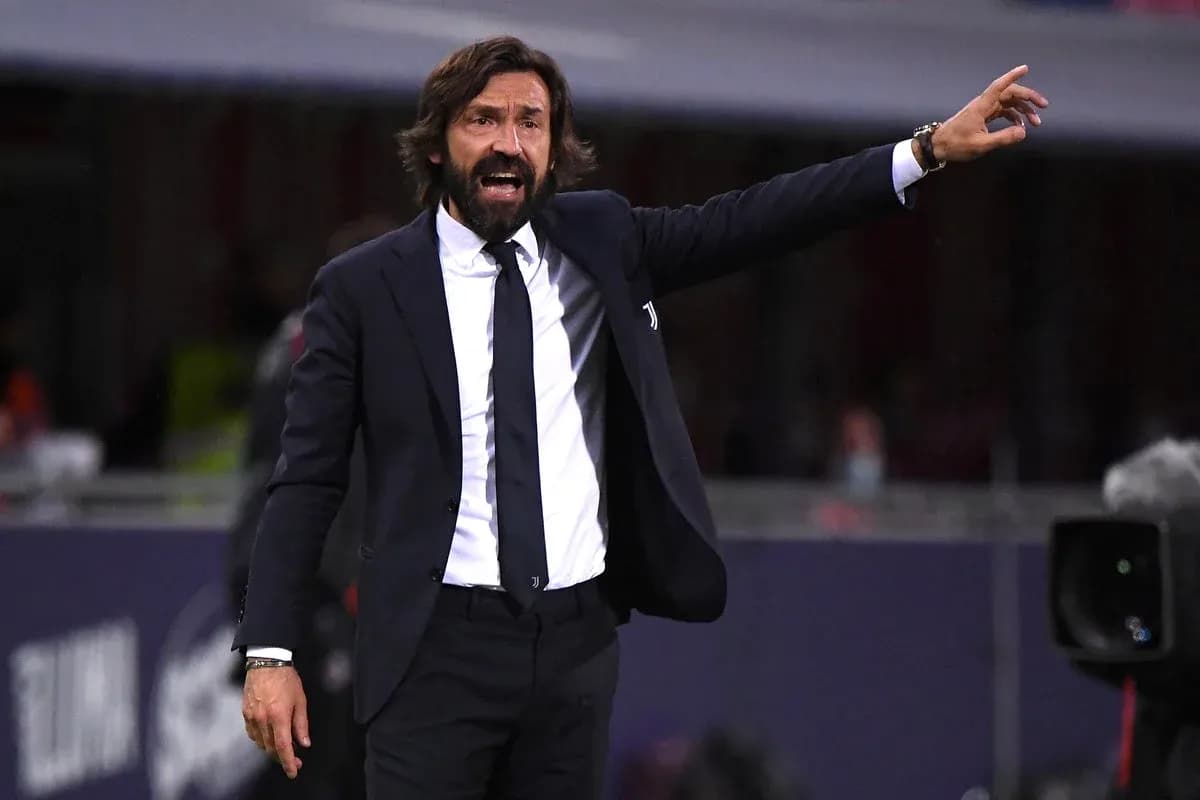
Andrea Pirlo set to lead Italy's national team amid crisis
Italy is preparing to hand the national team to one of its most elegant footballing minds. According to local reports, Andrea Pirlo will be appointed as the new Italy head coach on a four-year deal, a contract designed to carry him through to the 2030 World Cup.
For a country searching for identity and pride, the symbolism is obvious. Pirlo is not just another former international. He is a pillar of the 2006 World Cup-winning side, the metronome who dictated games for Inter Milan, AC Milan and Juventus, and a player whose calm authority came to define an era of Italian midfield play.
Now, in one of the darkest periods in the modern history of the Azzurri, Italy is turning back to a familiar face.
A legend returns to a broken system
Pirlo arrives at a moment of profound introspection for Italian football. The national game is in what many in the country regard as its deepest crisis for decades. Youth development has frayed. The talent pipeline that once produced world-class defenders, scheming playmakers and ruthless forwards almost on command has eroded.
Yet the obsession has not dimmed. Football still dominates Italian life, conversation and identity. That contrast – passion untouched, production line damaged – is what Pirlo walks into.
His appointment is being framed as the first move in a wider reconstruction. Not just about tactics or team selection, but about rebuilding a youth and talent pathway system that has sagged under years of neglect.
From maestro on the pitch to man in the dugout
Pirlo’s playing career is beyond dispute. His coaching journey is still being written.
He has already sat in some demanding dugouts. Juventus handed him the reins early in his managerial life, a bold gamble that underlined how highly he is regarded inside Italian football. He later worked at Sampdoria and then took on a very different challenge abroad with Turkish side Fatih Karagumruk.
He is currently in charge of Dubai United, a role that has kept him at a distance from the European spotlight but allowed him to refine his ideas away from the daily noise of Serie A.
Now, if reports are confirmed, he will be asked to carry those ideas into one of the most pressurised jobs in the sport.
Picking up the pieces after Gattuso
The vacancy exists because another 2006 world champion walked away. Gennaro Gattuso resigned as Italy head coach in April after the four-time world champions failed to qualify for a third consecutive World Cup. For a nation that once measured itself by how deep it went in tournaments, not even reaching them has been a brutal shock.
Three World Cups missed in a row is not a blip. It is a structural failure. Gattuso’s departure underlined that something more fundamental had to change.
Pirlo, a former midfield partner of Gattuso, now looks set to inherit the mess his old teammate could not fix. The contrast in their styles – fire and fury on one side, ice-cool control on the other – will only sharpen the intrigue around this next chapter.
Guardiola says no, Italy turns inward
Before turning to Pirlo, Italy tried to look outward.
Italian football federation president Giovanni Malago confirmed this week that talks had taken place with Pep Guardiola. The former Manchester City manager, fresh from ending his era in England, was sounded out over taking the role.
For a brief moment, the prospect was extraordinary: Guardiola, the architect of modern positional play, in charge of the Azzurri.
It will not happen. According to Sky Italy, Guardiola rejected the offer for “personal reasons that go beyond football.” He had already spoken openly before his City exit about needing a break, saying he did not plan to take a new job “for a while” and citing a lack of “energy” – almost echoing the words of his long-time rival Jurgen Klopp when the German left Liverpool.
With Guardiola stepping away, Italy has turned back to one of its own. A different kind of statement, but a statement nonetheless.
Klopp recharged, Germany reset
While Italy rebuilds, Germany has moved with clarity.
On Friday, Klopp was unveiled in Frankfurt as the new head coach of the German national team, his first role since leaving Liverpool two years ago. Now 59 and insisting he feels “recharged”, he has signed a four-year contract that will take him through Euro 2028 and on to the 2030 World Cup.
“The national team brings us Germans together like almost nothing else can. That's what makes this task so special for me,” Klopp said at his unveiling, framing his return as something bigger than a tactical project.
Germany has its talisman on the touchline. Italy is about to install one of its own.
The difference is stark: one superpower retools from a position of relative strength; another tries to drag itself out of a prolonged slump.
Pirlo’s task: restore belief, rebuild the future
If Pirlo does sign the reported four-year contract, his mission will stretch far beyond the next qualifying campaign. He will be expected to re-establish a clear playing identity, reconnect a disillusioned fanbase with the national side and, crucially, help repair a youth system that no longer guarantees elite talent.
His name buys him time. His past earns him respect. But neither will shield him for long if Italy’s results do not change.
A legend is coming home to lead a fallen giant. The question now is whether Andrea Pirlo can turn his old orchestra into a functioning team again – and whether Italy can rediscover its voice before another World Cup passes it by.
Related News
Ilia Topuria Accuses Justin Gaethje After UFC Defeat
Tyson Fury vs Anthony Joshua Fight Date and Venue Confirmed
Switzerland Calls Up In-Form Sion Striker Winsley Boteli for Nations League
Bournemouth Secures Historic 2-1 Win Over Real Sociedad in Spain
Portugal Announces Squad for 2026 UEFA Nations League; Cristiano Ronaldo Expected to Play
Raphinha Channels Ronaldo Nazario as Barcelona's Leading Striker After Position Change