
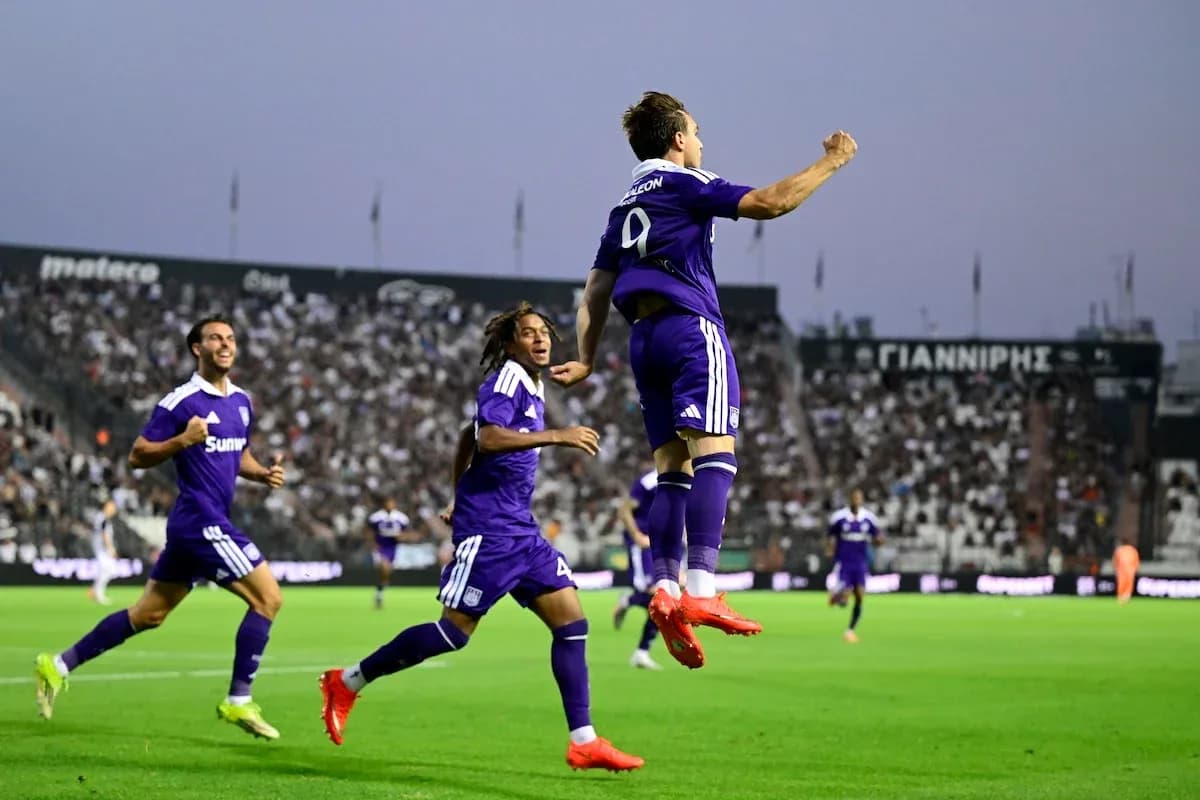
Anderlecht vs PAOK: Tactical Summary and Seasonal Impact
At Lotto Park in Anderlecht, this 3rd Qualifying Round second leg in the UEFA Europa League carries heavy seasonal weight for both clubs: progression here keeps the Europa League route to European revenue, coefficient points, and early-season momentum wide open, while elimination would immediately narrow their international profile for 2026 and shift pressure back onto domestic campaigns.
Head-to-Head Tactical Summary
The only recent meeting in the data came a week earlier on 6 August 2026 at Toumba Stadium in Thessaloniki, where PAOK hosted Anderlecht in the first leg of this 3rd Qualifying Round tie. Anderlecht won 1-0 away, leading 1-0 at half-time and holding that margin to full time. Tactically, that result underlines Anderlecht’s capacity to manage an away knockout-type game with control and defensive discipline, while PAOK showed difficulty in breaking down a compact visiting block despite home advantage.
Global Season Picture
- League Phase Performance: There is no group-stage standings data yet for the 2026 UEFA Europa League, so current performance is best read from early qualifying ties only. Both sides arrive here with unbeaten or near-unbeaten records in this competition so far, but without a formal goals-for, goals-against, and points table in place.
- Season Metrics: In the Europa League phase so far, Anderlecht have played 3 matches, winning 2 and drawing 1, scoring 5 goals and conceding 2. Their attack has been efficient (1.7 goals per match) and they have not failed to score yet, but they have only 1 clean sheet, suggesting a proactive, risk-tolerant style. PAOK have also played 3 matches, winning 2 and losing 1, with 5 goals scored and 3 conceded. Their scoring profile is similar (1.7 goals per match), but they have one clean sheet and one match without scoring, indicating a more variable attacking output. Disciplinary data shows Anderlecht accumulating yellow cards consistently across all phases of the game and even picking up a late red, pointing to an aggressive edge that could become a factor in a tense second leg. PAOK’s yellow cards cluster around the end of each half, hinting at pressure phases where they are forced into reactive defending.
- Form Trajectory: Anderlecht’s form string of DWW in this competition reflects a clear upward curve: from an initial draw into back-to-back wins, including the 1-0 away victory at PAOK. PAOK’s WWL pattern shows a strong start with two wins followed by that home defeat to Anderlecht, suggesting a momentum break at precisely the wrong time in the tie. Coming into this second leg, Anderlecht are building confidence, while PAOK must quickly arrest a negative turn to rescue the aggregate.
Tactical Efficiency
With both sides averaging 1.7 goals scored per match in the Europa League so far and conceding fewer than 1.1 on average, the tie is defined more by small tactical edges than by raw attacking power. Anderlecht’s ability to win 1-0 away at Toumba points to strong defensive efficiency under pressure and effective game management once ahead. Their single clean sheet from three games, however, shows they are not impermeable and often allow chances.
PAOK’s profile, with 5 goals for and 3 against, suggests a side that can generate multi-goal performances (as seen in a 2-3 away win earlier in qualifying) but is vulnerable when the game becomes stretched. They have already shown they can both shut opponents out (2-0 home win) and be shut out themselves (0-1 home loss to Anderlecht), underlining inconsistency in chance conversion and in protecting their own penalty area.
In this context, Anderlecht’s tactical efficiency currently leans toward controlled, result-oriented football: they have used a mix of formations (4-4-2 and 4-3-3), indicating adaptability to game state. PAOK have been more structurally stable, consistently using a 4-2-3-1, which offers balance but may become predictable in a second leg where they must chase the aggregate. If Anderlecht maintain compact spacing and transition cleanly, their existing aggregate advantage and demonstrated defensive resilience could neutralize PAOK’s need to open up, while PAOK’s best route back into the tie lies in turning this into a higher-tempo, multi-chance match similar to their earlier 2-3 away win in qualifying.
The Verdict: Seasonal Impact
From a seasonal perspective, this second leg is a hinge point. For Anderlecht, converting a 1-0 away lead into progression would consolidate an unbeaten Europa League start, validate their adaptable tactical approach, and extend their European calendar deep into 2026, with direct benefits in revenue, squad exposure, and seeding for future rounds. It would also relieve early-season pressure domestically, as European continuity tends to buy time for tactical refinement.
For PAOK, elimination after starting this Europa League run with two wins would represent a sharp early setback, cutting off a key competitive and financial pillar for 2026 and placing greater scrutiny on domestic results to compensate. Progression, by contrast, would reframe the first-leg loss as a brief stumble rather than a trend, reinforce belief in their 4-2-3-1 structure, and keep alive the possibility of a deep European run. In short, this fixture is season-defining for both clubs: Anderlecht can turn a strong early trajectory into a sustained European campaign, while PAOK are effectively fighting to prevent their 2026 continental ambitions from collapsing in August.
Related News

Francesco Totti Reveals Offers from Top European Leagues at Age 48
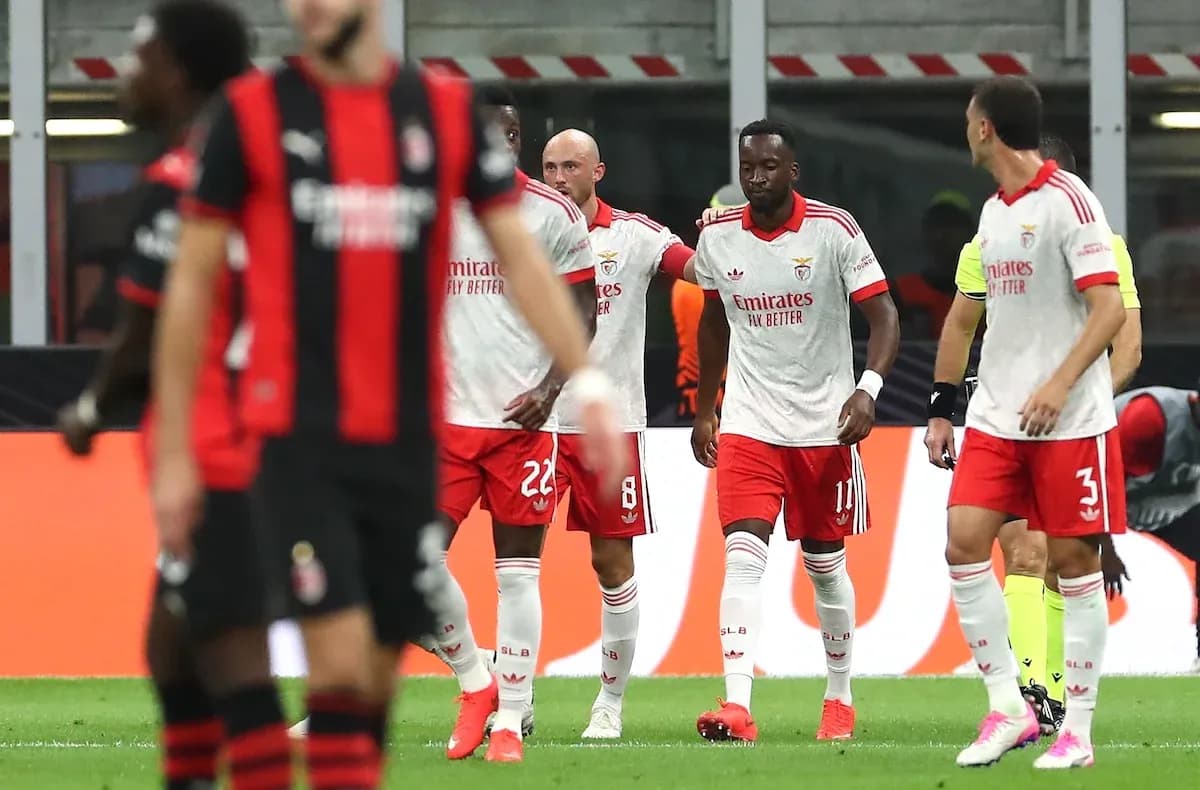
Benfica Dominates AC Milan in UEFA Europa League Opener
Levski Sofia vs Red Bull Salzburg: Europa League Defeat Analysis
Five Europa League Players to Watch in the 2026/27 Season

Celje vs Red Bull Salzburg Predicted Lineups and Team News

Anderlecht vs Red Bull Salzburg Predicted Lineups and Team News