
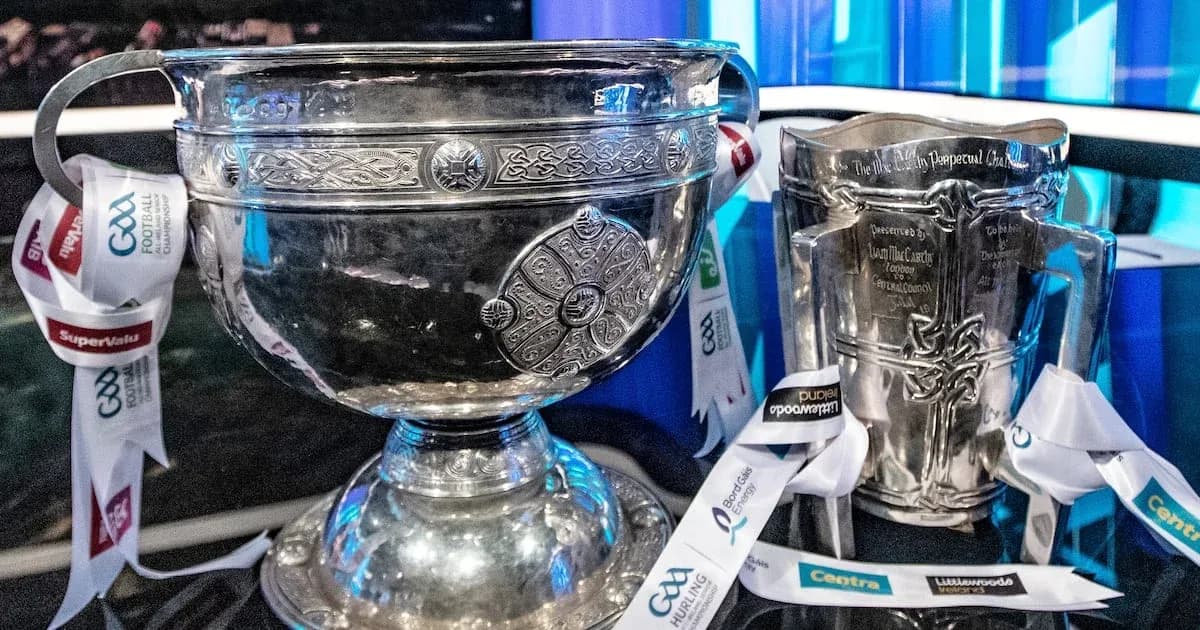
Understanding All-Ireland Final Ticket Distribution
Outside Croke Park, the chorus is already familiar. “Anyone buying or selling tickets?”
On All-Ireland final week, that call gets louder, more desperate, more creative. But the answer from the GAA hasn’t changed: if it’s not official, don’t touch it. Not for these games. Not for the biggest days in the Irish sporting year.
Because these tickets are different.
No general sale, no free-for-all
There is no public scramble at the box office for the All-Ireland hurling and football finals. No online queue stretching into the thousands. Every ticket is channelled through the GAA’s own systems, then pushed down through county boards and into the clubs.
The two counties in the final get the biggest slices, as you’d expect. After that, it becomes a nationwide jigsaw. Every club in the country – whether their county is in the decider or nowhere near it – receives an allocation based on size, membership and the range of codes they field. The All-Ireland is treated as a shared occasion, not a closed shop.
Croke Park can officially hold 82,300. For each final, 82,006 tickets go out. Demand? It dwarfs that figure every single year.
Where the tickets actually go
Strip away the corporate and premium seats and you get to the real numbers. Of the 82,006 tickets, 71,478 are available for general distribution, with 10,528 set aside for premium and corporate holders.
The GAA lays out the breakdown in the director general’s annual report. The most recent figures, in the 2025 report, cover the 2024 All-Ireland finals and show where the golden slips end up:
- Total county allocations – 59,212
- Provinces – 380
- Overseas – 480
- Ard Chomhairle/Iar Uachtarán – 800
- Camogie – 140
- Ladies football – 100
- Rounders & handball – 212
- Sponsors – 1,250
- Press – 258
- TV & radio – 74
- Schools and education bodies – 1,666
- Third-level (colleges & universities) – 240
- Croke Park residents – 200
- Match officials & national referees panel – 228
- Health bodies & Sport Ireland – 60
- Match Day/Vertigo – 148
- Staff & subcommittees – 820
- Jubilee teams – 70
- Go Games – 188
- Term tickets – 2,358
- Season tickets – 2,594
In previous years, the GAA also spelled out what the finalists receive: roughly 13,000 tickets each. If counties not involved in the decider don’t take up their full allocation, those tickets are recycled back to the competing counties. No seat is left idle.
The price of a place in the stands
Getting in was never cheap. It’s now that bit dearer.
For 2024, the GAA raised All-Ireland final prices again: a stand ticket went to €100, a terrace spot to €55. The last hike came in 2019, when prices climbed to €90 and €50. The curve only goes one way.
Still, the appetite doesn’t fade. The price goes up; the phone calls, messages and favours multiply.
Inside the clubs: raffles, favours and hard choices
Is there any chance of a spare turning up before Sunday? Officially, no. Realistically, there’s always a glimmer.
Once a club’s envelope lands, the real drama begins. Some clubs ring-fence tickets for long-serving officers, coaches and volunteers – the people who open gates in January and close dressing rooms in November. Others turn a portion into fundraising fuel, using tickets as top prizes in raffles and draws.
The creativity can stretch well beyond the clubhouse. Limerick county board, for example, are running a competition for the best-decorated home or business ahead of their All-Ireland hurling final against Galway, with two tickets for Sunday’s game as the reward. Paint your gable wall, hang the bunting, win your way to the Hogan Stand.
All of this lands on the desk – and in the inbox – of one person. The club secretary. This is the week when that role stops being honorary and becomes full-time crisis management, as “special requests” pour in from every angle.
What about the players and backroom teams?
On the inside, there is at least one certainty. According to Croke Park, anyone who is officially part of a county panel is accredited in advance and gains access on the day.
Where they work from depends on their job. Managers and selectors patrol the sideline. Analysts and statisticians plug into a dedicated box in the lower Hogan Stand. Higher up again, more seats are reserved in the upper Hogan for those running analysis and video operations.
The stadium fills, the noise climbs, and every one of those 82,006 tickets has a story behind it – a favour called in, a raffle won, a volunteer rewarded, a season ticket renewed. On All-Ireland final day, the numbers are clinical. The scramble to be one of them never is.
Related News

Ilia Topuria Accuses Justin Gaethje After UFC Defeat

Tyson Fury vs Anthony Joshua Fight Date and Venue Confirmed

Switzerland Calls Up In-Form Sion Striker Winsley Boteli for Nations League

Bournemouth Secures Historic 2-1 Win Over Real Sociedad in Spain

Portugal Announces Squad for 2026 UEFA Nations League; Cristiano Ronaldo Expected to Play

Raphinha Channels Ronaldo Nazario as Barcelona's Leading Striker After Position Change