
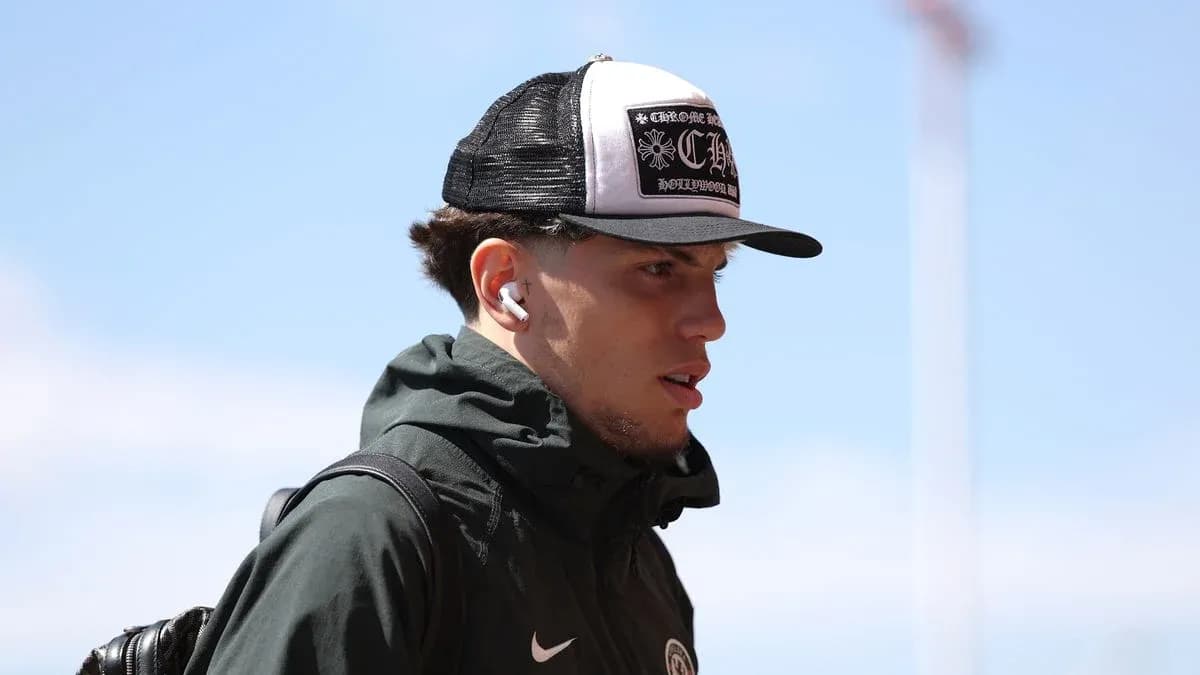
Alejandro Garnacho's World Cup Dream Derailed
Alejandro Garnacho’s World Cup dream has been ripped away before it ever really began.
Eighteen months after his last appearance for Argentina, the 21-year-old has been cut from the reigning champions’ preliminary squad, a brutal reality check for a player who only two summers ago looked set to be a fixture in the Albiceleste’s future.
From rising star to watching on
Garnacho’s international rise had been rapid. He debuted for Argentina in the summer of 2023, quickly becoming a regular name in Lionel Scaloni’s squads. He travelled to the following year’s Copa America, played his part in a tournament Argentina went on to win, and seemed to have secured his place in the world champions’ attacking pool.
But the momentum stalled. Since that Copa America, Garnacho has managed just two further appearances, three in total across the World Cup qualifying campaign, leaving him stranded on eight senior caps. This summer, that number will not grow.
The omission stings more because of who did make it. His former Manchester United team‑mate Lisandro Martinez is in. So too are Premier League colleagues Alexis Mac Allister, Cristian Romero, Emiliano Martinez and Enzo Fernandez. Argentina’s European core remains intact. Garnacho, once part of that group, has slipped out of the frame.
He is also the most-capped forward to be cut from the provisional list. That statistic underlines the scale of the decision. Others with less experience survive; he does not.
Franco Mastantuono, the Real Madrid teenager whose caps have all come since Garnacho’s last call-up, also misses out despite a breakthrough club season. Claudio Echeverri, fresh from a loan spell at Girona from Manchester City, will have to wait for a senior debut as well. Emiliano Buendia, Gianluca Prestianni, Mateo Pellegrino, Matias Soule, Santiago Castro and Tomas Aranda join them among the forwards left at home.
Argentina move on, with familiar faces
Half of the forwards who did feature for Argentina last season came through or played for Garnacho’s first club, Atletico Madrid. Giuliano Simeone, Nicolas Gonzalez, Julian Alvarez and Thiago Almada all make the cut, a reminder of the production line that shaped Garnacho’s early years but no longer includes him on the international stage.
At the top of the bill, nothing changes. Lionel Messi will lead Argentina into his sixth World Cup, an extraordinary number in a career of extraordinary numbers. Around him, Scaloni leans on a blend of proven names and emerging threats: Palmeiras striker Jose Manuel Lopez, Inter’s Lautaro Martinez and former Real Madrid academy product Nicolas Paz, now at Como, all travel with genuine roles to play.
For Garnacho, the view will be from a distance.
Chelsea move fails to deliver the final push
This was not how the script was supposed to read when he left Old Trafford.
Manchester United sold Garnacho to Chelsea for £40 million last summer, a bold move for club and player. The winger framed it as a necessary step, a fresh stage on which to prove he was ready to be a leading man for both club and country.
“Sometimes in life you have to change things to take a step forward or improve as a player,” he said in December, explaining the switch. “I think it was the right moment and the right club, so it was an easy decision. I came here to play my football and show people the player I am. The most important thing is confidence.”
The numbers from his first season in London are respectable on the surface. Forty-three appearances in all competitions, eight goals, four assists. Enough involvement to suggest trust, enough production to hint at promise.
Look closer and the picture is less flattering. Garnacho started only 22 of those 43 matches. Most of his goals came when the spotlight was dimmer, in domestic cups rather than decisive league nights. Four of his eight strikes arrived against Cardiff City, Port Vale and Wrexham, opponents that do not move the needle in an Argentina selection meeting.
He did not disappear at Chelsea, but he did not dominate either. For a national team manager weighing up attacking options in a squad chasing back‑to‑back world titles, that matters.
A brutal lesson at 21
International football can be unforgiving. Garnacho is learning that in real time.
Argentina are not short of attacking talent. They can leave out a 21-year-old with a World Cup medal in his future dreams, eight caps already on his record, and barely flinch. The message is clear: reputation and potential are not enough. Form, impact, and timing decide everything.
Garnacho backed himself when he chose Chelsea. The move has not been a failure, but it has not yet become the launchpad he imagined. As Messi heads to a sixth World Cup and a new generation of Argentine forwards board the plane without him, the winger faces a long summer to reflect on what must change next.
The question now is not whether he belongs at this level. It is how quickly he can force Argentina to remember what they have chosen to leave behind.
Related News
Raphinha’s Hat-Trick Powers Barcelona to 7-2 Victory Over Racing Santander

Carabao Cup Fourth Round Draw: Liverpool Set to Clash with Chelsea, Arsenal to Face Fleetwood Town
Key Football Matches to Watch in Azerbaijan This Autumn
Raphinha's Hat-Trick Drives Barcelona to 7-2 Triumph Over Racing Santander
Hansi Flick Leads Barcelona to Record-Breaking Seven Wins in a Row
Gavi Reflects on Injury Return as Barcelona Dominate Racing Santander 7-2