
Atlético Ottawa Triumphs Over Cavalry FC in Thrilling 3-2 Comeback
Under the lights at TD Place Stadium, this Group Stage clash in the Canadian Premier League brought together two sides whose seasons have been shaped in very different ways. Cavalry FC arrived in Ottawa as league leaders, sitting 1st with 53 points and a formidable overall goal difference of 34, built on 50 goals scored and just 16 conceded. Atlético Ottawa, 3rd with 40 points and an overall goal difference of -3 from 38 scored and 41 conceded, have been far more volatile but especially strong at home.
The 3-2 full-time scoreline in favour of Atlético Ottawa tells of a comeback, but the deeper story is of a squad designed to thrive in chaos overcoming one built on control and defensive assurance. Both coaches, Gustavo Leal and Tommy Wheeldon Jr., trusted their most-used blueprint: a 4-2-3-1 on each side, mirrored shapes that turned the evening into a duel of individual matchups and structural nuances.
Ottawa's Identity
Leal’s selection underlined Ottawa’s identity. In goal, C. Kalongo anchored a back four of T. Arnaud, J. Dunn-Johnson, Sergei Kozlovskiy and Joaquim Coulanges. Ahead of them, the double pivot of M. Aparicio and D. Gutiérrez was tasked with balancing Ottawa’s need to protect a defence that has allowed an overall average of 1.6 goals per match with the urge to feed a dangerous line of three: E. García, B. Tabla and K. Habibullah, all working off central forward N. Fleuriau Chateau.
This core is a distillation of Ottawa’s season. At home, they have been potent, scoring 24 goals in 13 matches at an average of 1.8 per game, while conceding 17 at an average of 1.3. That positive home profile contrasts sharply with their away fragility, but it also explains why Leal could afford to lean into creativity and risk. Tabla, the league’s top-rated attacker in this data set, has 9 goals and 2 assists overall, with 43 total shots and 21 on target. His 27 key passes and 23 successful dribbles make him both the finisher and the instigator of Ottawa’s attack.
Alongside him, García has chipped in with 4 goals overall and 16 key passes, while Habibullah, with 3 assists and 2 goals overall in limited minutes, offers incision between the lines. Fleuriau Chateau, with 5 goals and 2 assists overall and a 7.07 rating, gives Ottawa a penalty-box reference point and aerial presence. Behind them, Aparicio is the metronome: 1,209 passes overall at 84% accuracy and 17 key passes, but also 41 tackles and 25 interceptions, the embodiment of Leal’s demand that his playmaker be his first defender.
Defensive Fault Lines
Defensively, however, the squad carries clear fault lines. Kozlovskiy, who started at centre-back, is among the league’s most-booked players with 7 yellow cards overall. Ottawa’s yellow-card distribution shows a striking late-game spike: 18 yellows between 76-90 minutes, accounting for 33.33% of their cautions. This is a team that often finishes games on the disciplinary edge, and the single red card recorded overall underlines how thin that line can be. It is no surprise that Leal’s bench included stabilising options such as defender T. Walker and the hard-running midfielder G. Antinoro, who has 3 assists, 20 tackles and 18 interceptions overall, plus one red card in his own record.
Cavalry's Authority
On the other side, Wheeldon Jr.’s Cavalry XI reflected the authority of a side that has dominated the league. N. Ingham started in goal behind a back four of A. Pearlman, D. Klomp, A. Didic and B. Kamdem. In midfield, the double screen of H. Paton and E. Kobza sat beneath a dangerous band of three: N. Edwards, T. Warschewski and G. Ntignee, all servicing central forward A. Musse.
Cavalry’s numbers are those of a machine: overall they average 2.1 goals scored per match and just 0.7 conceded. At home they are devastating, but even on their travels they score 1.7 and allow only 0.8 on average. Klomp and Didic are at the heart of this. Klomp, with 900 passes at 89% accuracy, 17 tackles and 15 interceptions overall, and Didic, with 872 passes also at 89% accuracy, 18 tackles, 6 blocks and 13 interceptions, form a ball-playing wall that usually suffocates transitions at source.
Combative Engine Room
In front of them, the engine room is combative and disciplined. Paton has 29 tackles and 29 fouls committed overall, collecting 9 yellow cards, while Kobza adds 22 tackles, 14 interceptions and 7 yellows overall. Together they explain why Cavalry have kept 10 clean sheets overall and failed to score only 3 times.
Yet even this structure has its edges. Cavalry’s card profile shows 14 yellow cards between 46-60 minutes (25.45%), a period where their aggression can boil over, and red cards have already been shown to G. Ntignee and T. Warschewski this season. Ntignee, with 2 goals, 3 assists and 45 attempted dribbles overall, is both a weapon and a risk: 5 yellows and 1 red, plus 27 fouls committed, paint the picture of a winger who lives on the boundary of control. Warschewski, with 7 goals and 3 assists overall, 38 key passes and 2 penalties scored from 2 taken, is Cavalry’s creative spearhead but also carries 1 red card.
Match Narrative
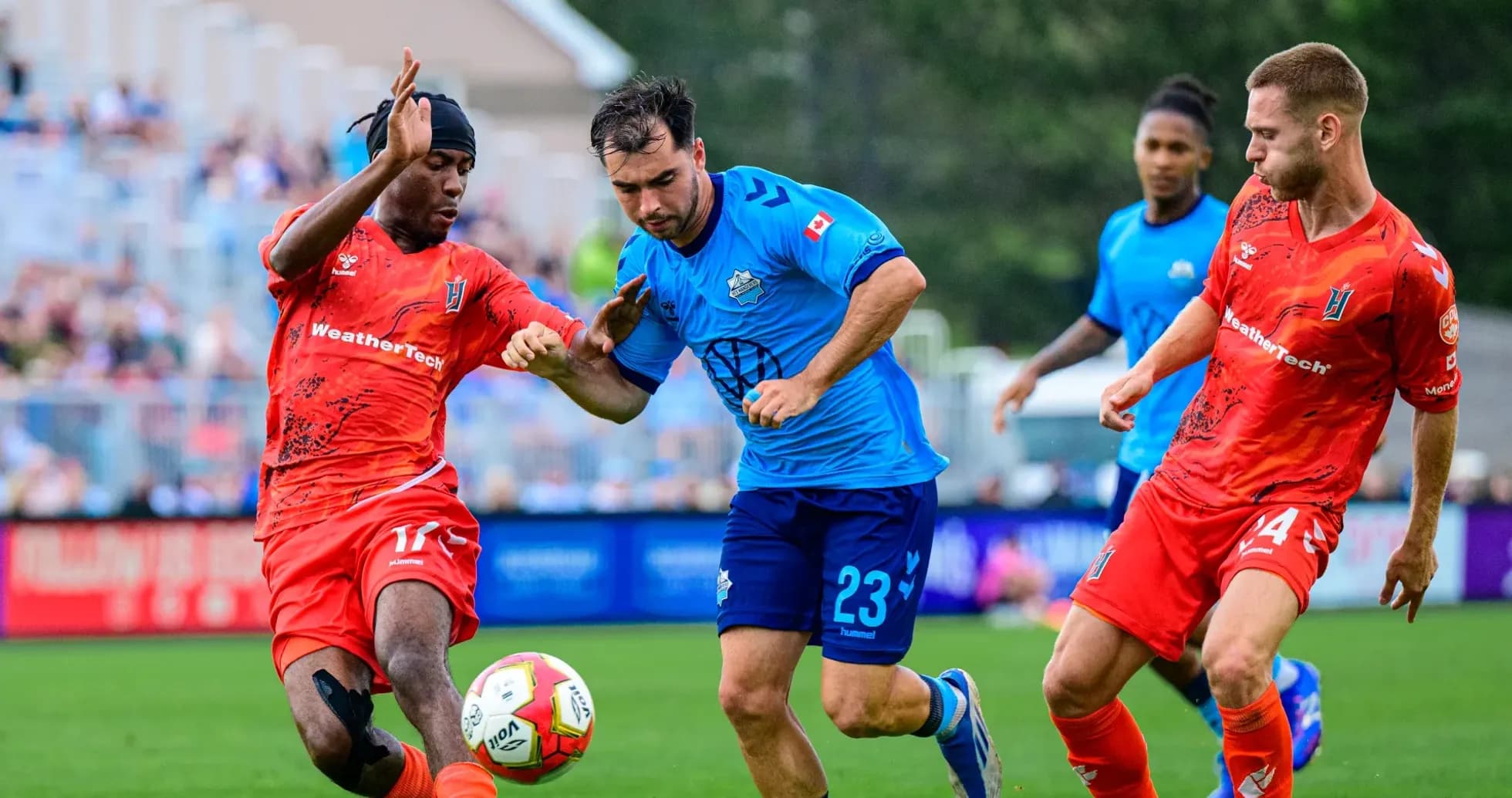
This match’s narrative—Cavalry leading at half-time, Ottawa roaring back to win 3-2—fits the statistical profiles. Ottawa’s home attack, driven by Tabla’s 9 goals and the supporting runs of García, Habibullah and Fleuriau Chateau, finally overwhelmed even a defence as efficient as Cavalry’s. At the same time, Cavalry still found a way to score twice, consistent with their relentless overall output of 50 goals.
In tactical terms, the “Hunter vs Shield” battle was Tabla and Fleuriau Chateau against the Klomp–Didic axis. The Shield blinked just enough. The “Engine Room” duel saw Aparicio and Gutiérrez wrestling with Paton and Kobza; Ottawa’s pair had to walk a tightrope against two of the league’s most card-prone enforcers, but their ability to keep the ball and draw fouls tilted momentum late on.
Statistical Prognosis
From a statistical prognosis perspective, this result looks like a high-end outlier against Cavalry’s usual defensive solidity, but not against Ottawa’s home attacking trend. Ottawa’s season-long penalty record—4 taken, 2 scored and 2 missed overall—reminds us they are far from clinical in every department, yet their capacity to generate chances and to sustain pressure, especially in emotionally charged late phases where their yellow-card rate spikes, makes them a uniquely dangerous home side.
For Cavalry, the loss does not erase the underlying dominance of a team that scores freely and concedes rarely, but it does highlight a vulnerability: against technically gifted, aggressive tens and wingers who can drag their enforcers into duels and their centre-backs into wide spaces, even the league leaders can be bent out of shape. For Atlético Ottawa, this 3-2 victory is less an upset than the logical extreme of their season’s identity: volatile, high-risk, but capable of toppling the very best when their attacking core catches fire.
Related News
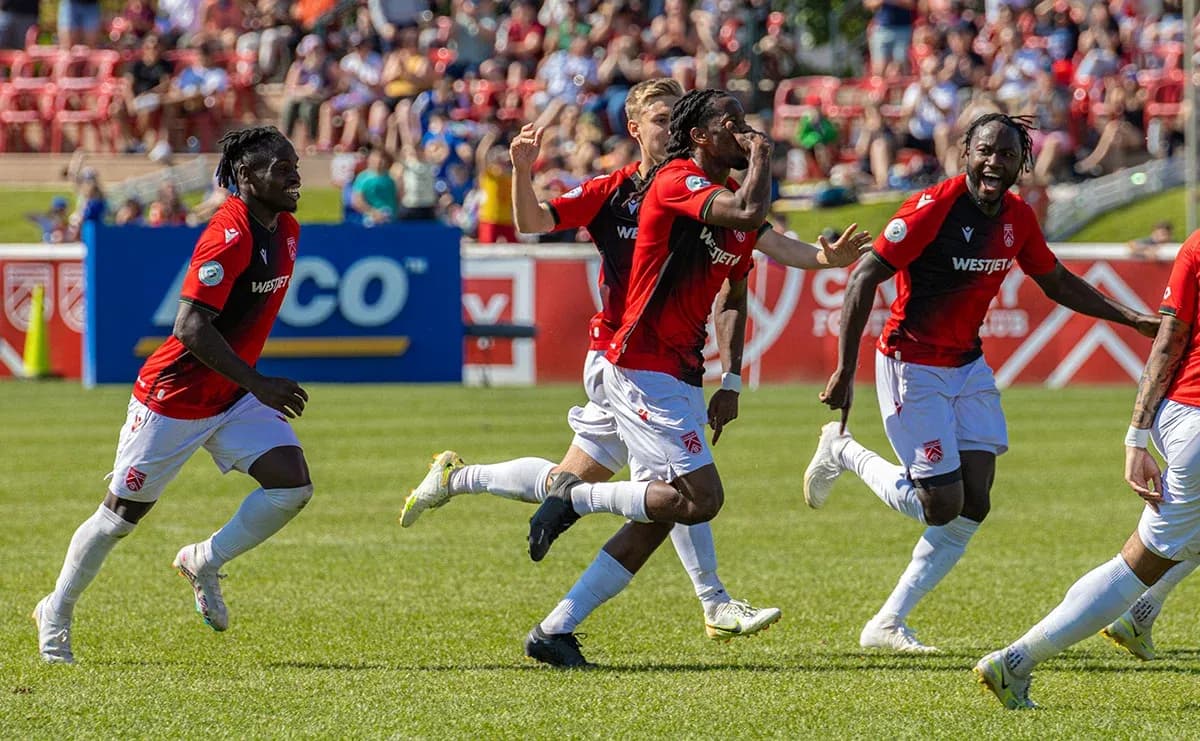
York United Upsets Cavalry FC in Canadian Premier League Showdown
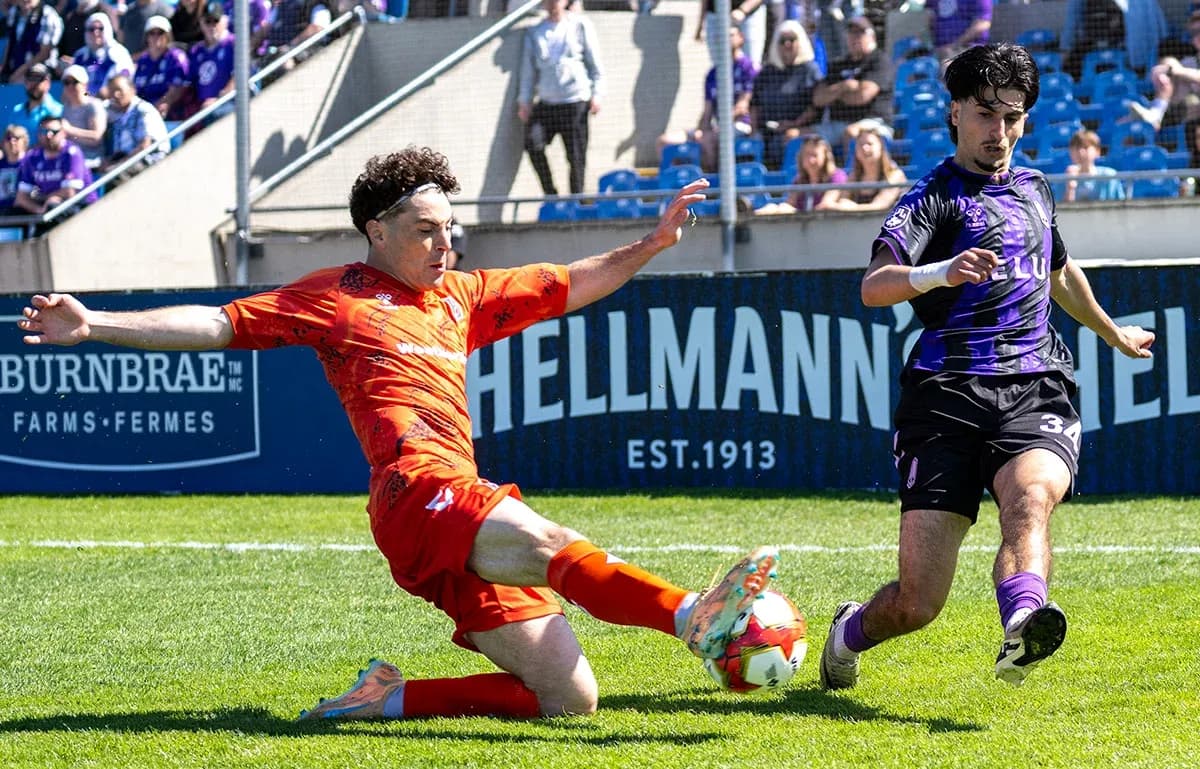
Forge vs Pacific FC Prediction: Preview and Betting Tips
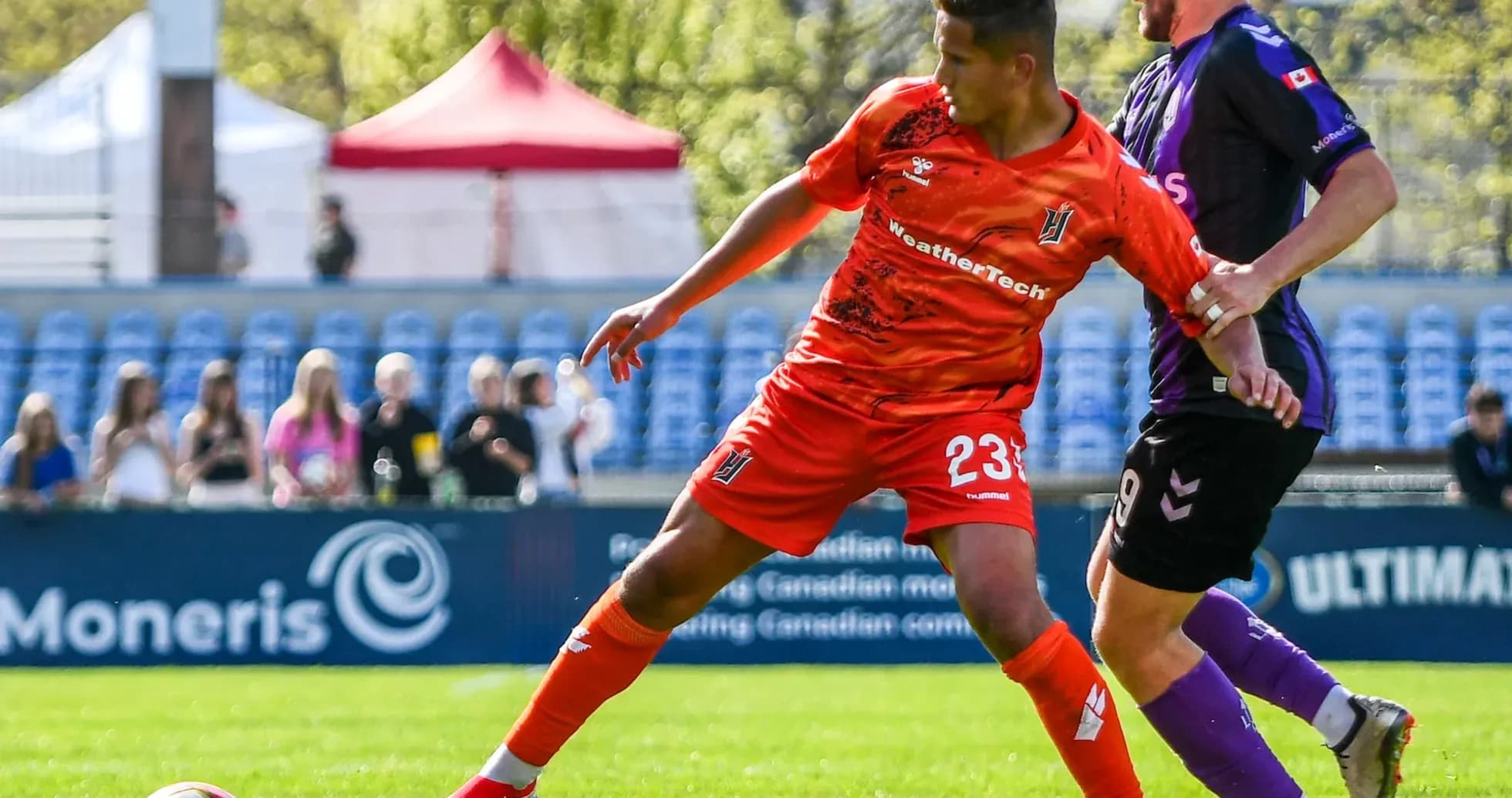
Forge vs Pacific FC Stats: Head-to-head Record and Historical Overview

Atlético Ottawa Triumphs Over Cavalry FC in Thrilling 3-2 Comeback
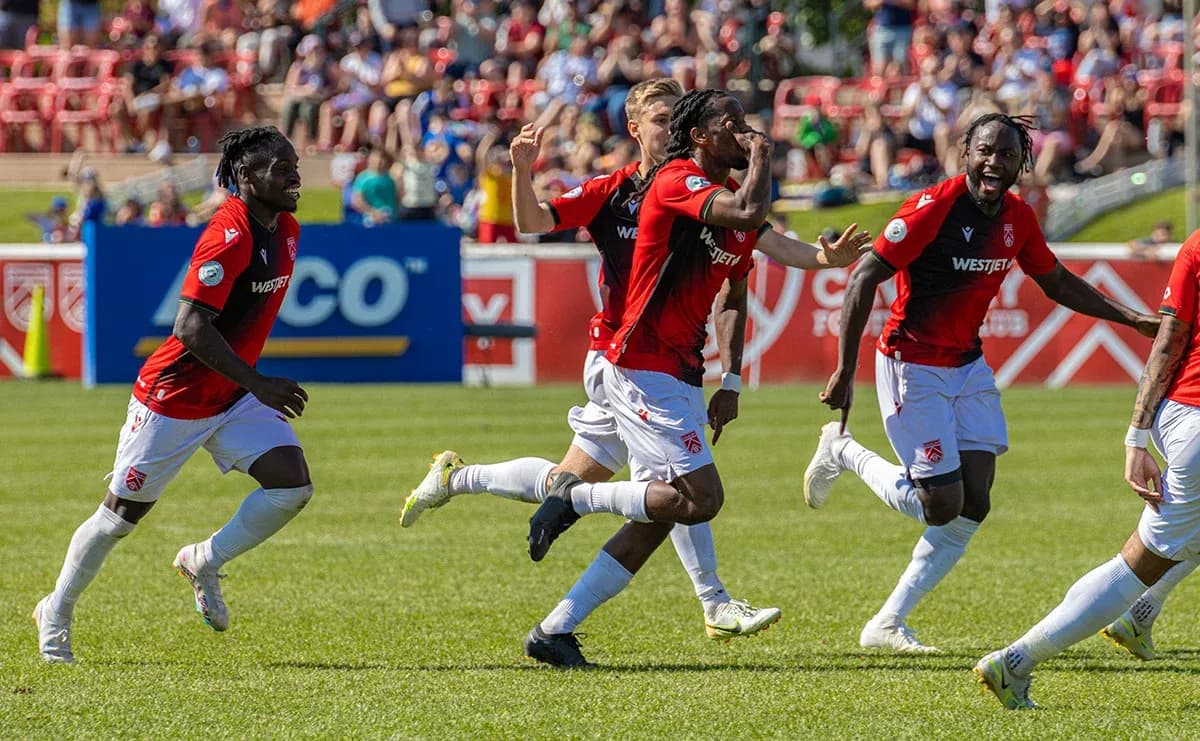
York United vs Cavalry FC: Clash of Canadian Premier League Rivals
Forge vs HFX Wanderers FC Predicted Lineups and Team News