
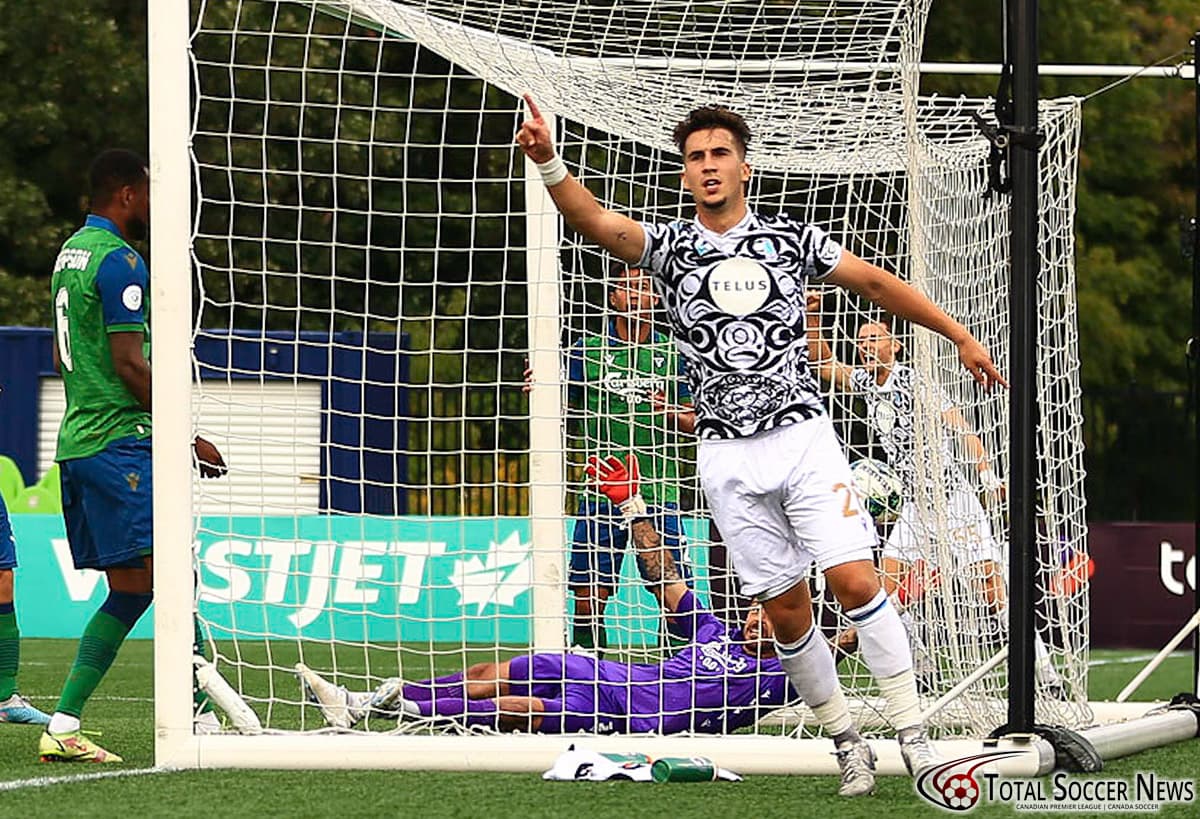
York United Defeats Pacific FC 1-0 in Canadian Premier League Clash
Under the Starlight Stadium floodlights, this Canadian Premier League group-stage meeting ended with a stark contrast of trajectories: Pacific FC rooted in eighth and still winless, York United consolidating their place in third with a 1–0 away victory. Following this result, the table tells a blunt story. Pacific’s overall record stands at 0 wins, 1 draw and 5 defeats from 6, with 6 goals for and 12 against, a goal difference of -6. At home they have played 5 and lost all 5, scoring 4 and conceding 10. York, by contrast, remain unbeaten overall with 3 wins and 2 draws from 5, scoring 9 and conceding 4 for a goal difference of +5, and on their travels they have 1 win and 1 draw, with 2 goals for and just 1 against.
The seasonal DNA of both sides framed this fixture before a ball was kicked. Heading into this game, Pacific’s goalsFor averages were split between a blunt attack at home and a more dangerous one on the road: 0.8 at home, 2.0 away, 1.0 overall. Their goalsAgainst averages were an even 2.0 in every column, a team conceding twice a match wherever they go. York arrived as a far more balanced unit: 2.3 goalsFor at home, 1.0 away, 1.8 overall, with goalsAgainst averages of 1.0 at home, 0.5 away, 0.8 overall. The clash in Victoria was always likely to be about whether Pacific could finally bend that defensive line, or whether York’s structure would suffocate yet another opponent.
James Merriman’s selection underlined Pacific’s attempt to blend experience with emerging talent. E. Himaras started in goal, shielded by a back line including the aerially dominant J. Belluz and the composed distributor D. Konincks. On the left, C. Greco-Taylor offered aggression and forward thrust, his league profile marked by 10 tackles and 6 interceptions, plus 3 yellow cards that speak to his edge in the duel. Ahead of them, M. Baldisimo and T. Gomulka suggested a double pivot capable of recycling possession, while creative responsibility fell heavily on M. Bustos, with A. Daniels and R. Kratt providing width behind central striker A. Diaz.
On the bench, the presence of B. Juach and R. Juhmi hinted at Merriman’s second-half plan: Juach as a direct, vertical runner (1 goal from just 39 minutes this season), Juhmi as a combative midfielder with 5 tackles and 4 interceptions in limited time, but also 2 yellow cards.
Mauro Eustaquio’s York United arrived with the confidence of a side whose form line read WWDWD and whose structure has been consistent. D. Urtiaga anchored a back line featuring M. Ferrari, O. Leon and R. Lopez, with young full-back or wing-back S. Jimoh offering both energy and end product: 1 assist, 3 key passes and 7 successful dribbles attempted, balanced by 2 yellow cards. In midfield, S. Yeates – 119 passes at 91% accuracy with 7 tackles and 3 interceptions – is the metronome and ball-winner, while J. Cordova adds defensive intelligence with 6 interceptions and 1 assist of his own.
Up front, J. Altobelli and S. Gonzales supported the central attacking threat. Crucially, York’s season narrative has been defined by T. Skublak, the league’s leading scorer with 3 goals from 6 shots on target and an 8.6 rating. Even when not starting, his shadow looms over defences, and his presence in the wider squad shapes how opponents defend space and depth.
Tactically, the voids in Pacific’s structure have been as much about discipline as shape. Their card distribution shows a worrying late-game volatility: 42.86% of their yellow cards arriving between 91–105 minutes, and 66.67% of their red cards between 76–90 minutes, with another 33.33% in 91–105. That pattern suggests a team that unravels under fatigue and pressure, exactly when York’s attacking rhythm often peaks. York’s goalsFor minute distribution is front-loaded into the middle of games: 25.00% of their goals between 31–45 minutes, 37.50% between 46–60, and 25.00% between 61–75. The intersection is obvious: York’s most dangerous attacking window runs from just before half-time to midway through the second half, precisely when Pacific historically begin to accumulate cards and lose control.
On the other side, York’s defensive vulnerability comes late: 40.00% of their goalsAgainst arrive between 76–90 minutes. For a Pacific side that has often chased games at home, this was the window to exploit with fresh legs like Juach and Juhmi. Yet Pacific’s own attacking patterns – and their 2 failed-to-score matches overall – speak to a side that struggles to convert late pressure into clear chances, especially with no penalties taken this season to tilt tight contests.
The “Hunter vs Shield” battle in this context is less about a single duel and more about a collective test. York’s attacking spear – built around Skublak’s penalty-box instincts, Altobelli’s 5 shots on target and Jimoh’s dribbling – faced a Pacific defence that, while leaky, does have standout individuals. Konincks has been quietly excellent: 173 passes at 90% accuracy, 4 tackles, 5 interceptions and 1 blocked shot, plus 1 goal and 1 assist from the back. Belluz, too, has won 13 of 17 duels and blocked 1 shot, though his disciplinary record (1 straight red via a yellow-red sequence) underscores Pacific’s fragility when the back line is stretched.
In the “Engine Room”, the contrast was sharp. York’s Yeates and Cordova form a double axis of control and disruption, combining high passing accuracy with 9 total tackles and 9 interceptions. Pacific’s central trio of Baldisimo, Gomulka and Bustos offers more on the ball but less bite without it, leaving their back four repeatedly exposed during York’s mid-game surges.
Statistically, the prognosis for this match always leaned toward a narrow York win. York’s overall defensive average of 0.8 goalsAgainst, and just 0.5 on their travels, suggested that even a single strike might be enough, especially against a Pacific side conceding 2.0 goalsAgainst in total and 2.0 at home, with no clean sheets anywhere. The lack of penalties for both teams (0 taken, 0 missed) meant that the margin would likely come from open play or a set-piece rather than a spot-kick.
In the end, a 1–0 scoreline at full-time fit the underlying numbers. York’s defensive solidity held firm in the late window where they are usually most vulnerable, while Pacific’s recurring issues – a porous defensive average, late-game disciplinary spikes and an attack that averages only 0.8 goalsFor at home – again conspired against them. For Merriman, the path forward is clear: harness the quality of Konincks, Bustos and Diaz within a more resilient, disciplined structure. For Eustaquio and York, this was another professional performance that confirmed their status as a playoff-calibre side, built on control in midfield, ruthlessness in their 31–75 minute attacking window and a defence that rarely gives opponents a second chance.
Related News

Cavalry FC vs Forge: Intense Rivalry Returns to ATCO Field
Pacific FC vs Vancouver FC Prediction: Key Stats and Betting Tips

Cavalry FC vs Forge Prediction: Key Stats and Betting Tips
Cavalry FC Dominates Pacific FC in 1-0 Clash
York United Triumphs Over Vancouver FC in Canadian Premier League Clash
Atlético Ottawa vs Supra du Quebec Stats: Head-to-Head Record