
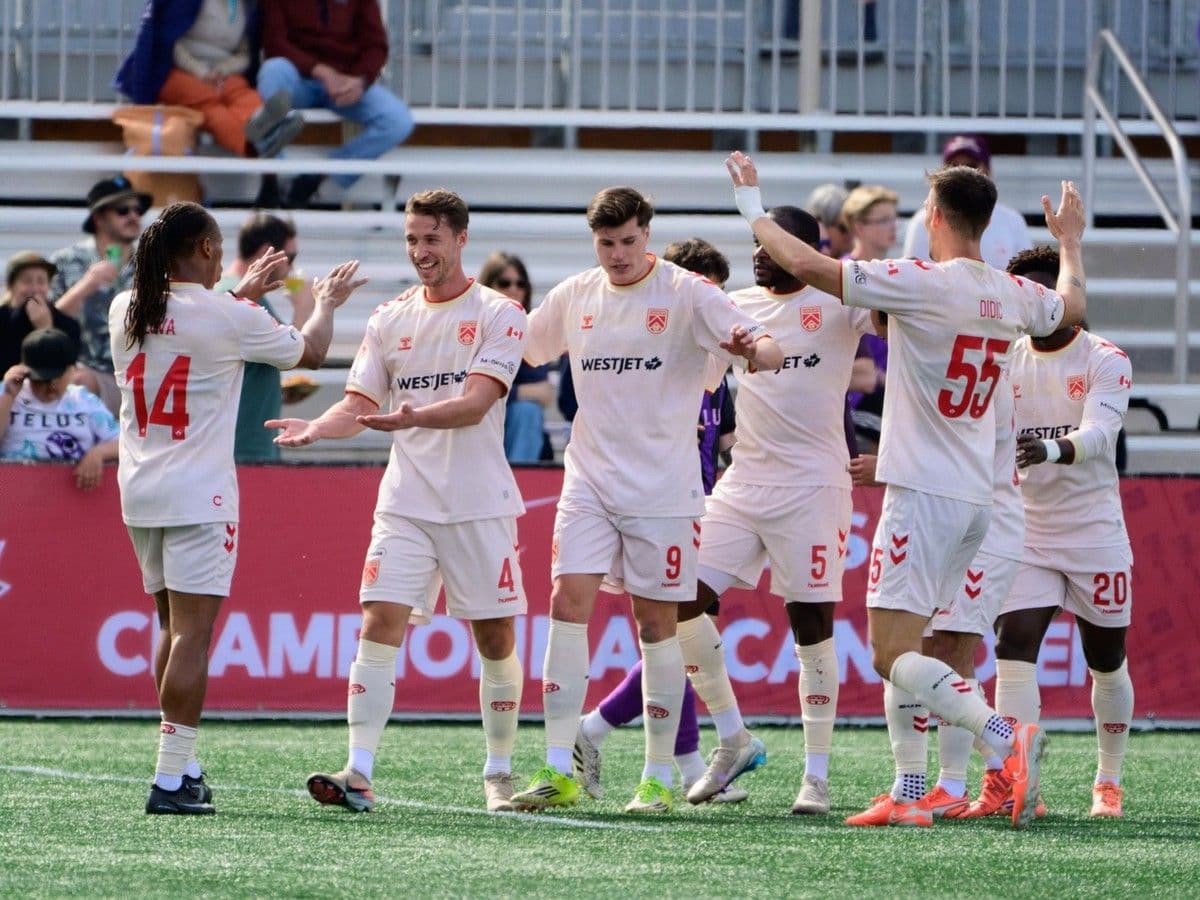
Cavalry FC Dominates Vancouver FC in Canadian Premier League Clash
Under the late lights at Willoughby Community Park Stadium, this Group Stage meeting in the Canadian Premier League felt like a referendum on two very different projects. Vancouver FC came in as a side still searching for an identity, rooted near the foot of the table in 7th with 4 points and a goal difference of -3 (4 scored, 7 conceded in total). Cavalry FC arrived as a fully formed contender: 2nd in the league on 14 points, unbeaten across 6 matches with a total goal difference of +6 (9 for, 3 against).
Following this result – a 0–2 home defeat – Vancouver’s season-long story at this venue hardened into a worrying pattern. At home they have now played 3, lost 3, scored 0 and conceded 4. The numbers tell of a side that can be stubborn for stretches but rarely threatening: overall they average 0.7 goals for per game, with a total of 4 goals in 6 fixtures, and have yet to keep a single clean sheet. Cavalry, by contrast, continue to play like a side built for long campaigns and tight title races: unbeaten in 6, with 4 wins and 2 draws, scoring 9 and conceding only 3 in total. On their travels they have been ruthless – 4 away games, 3 wins, 1 draw, 5 goals scored and just 1 conceded.
Tactical voids and discipline
There were no listed absentees in the data, so both coaches had close to full decks. That only sharpened the spotlight on structure and mentality.
For Vancouver, the void is less about missing names and more about missing certainty in the final third. Heading into this game their minute distribution for goals for was evenly spread – 25.00% of their total goals in each of the 31–45, 46–60, 61–75 and 76–90 minute windows – but that thin spread comes from just 4 goals in total, all scored away. At home, the attack has simply not existed: 0 goals in 3 home matches, with an average of 0.0 goals for at home.
The defensive profile is even more telling. Vancouver concede an average of 1.3 goals at home and 1.0 away (1.2 in total), but the timing is brutal: 57.14% of their total goals against arrive between 76–90 minutes, with another 28.57% between 61–75. They are a side that unravels late, and this match fit the script – Cavalry’s ability to control tempo and ask questions deep into the second half again exposed that fragility.
Disciplinary trends underline Vancouver’s struggle to manage games under pressure. Their yellow cards are scattered across the 90, but there is a noticeable spike late: 23.08% of their yellows come between 76–90 minutes, and another 15.38% in stoppage time (91–105). Marcello Polisi, who started here, embodies that edge: 3 yellows in 6 appearances, operating as a combative midfield screen. Mohamed Amissi has also collected 2 yellows across his 6 games. It is a side that increasingly chases, rather than dictates, the rhythm.
Cavalry’s discipline is more controlled but still combative. They pick up the bulk of their yellows in the 61–75 window (30.77%), a reflection of their tendency to raise intensity just after the hour to tilt matches their way. Adam Pearlman, Sergio Camargo and Harrison Paton each carry 2 yellows, but none has crossed the line into red. Their aggression is calibrated rather than chaotic.
Key matchups: hunter vs shield, engine room vs enforcer
The “Hunter vs Shield” narrative coming in was clear. Vancouver’s most reliable attacking reference is Amissi, with 1 goal from 6 appearances and 5 shots (4 on target). His work is supported from deep by Morey Doner, who has quietly become one of Vancouver’s most important outlets: 1 assist, 7 key passes and 6 successful dribbles from right-back, with a passing accuracy of 87%. The plan is obvious – get Doner advancing, link with Amissi and the creative pockets around him.
But that ambition ran into Cavalry’s defensive core. As a unit they concede just 0.5 goals per game overall, 1.0 at home and a miserly 0.3 on their travels. Away from home, they have allowed just 1 goal in 4 matches and kept 3 clean sheets. Daan Klomp is the emblem of that solidity: 6 appearances, 270 minutes, 166 passes at 92% accuracy, 1 goal, and a defensive line that rarely gets stretched. He has won 11 of 15 duels and blocked 1 shot, reading danger early rather than scrambling late.
Alongside him, Pearlman adds bite and mobility. With 9 tackles and 26 duels contested (15 won), he steps out of the line to engage, trusting Klomp’s positioning behind him. Against a Vancouver side that relies on Doner’s overlapping and Amissi’s 1v1s, that pairing formed a cage rather than a wall: stepping, recovering, and funnelling attacks into less dangerous central traffic.
In the “Engine Room” matchup, Polisi’s role as Vancouver’s enforcer and metronome was always going to be tested by Paton and Camargo. Polisi’s 88 total passes at 87% accuracy and 4 tackles show a midfielder who can both circulate and disrupt. Yet Cavalry’s double axis is stronger. Paton has 121 passes at 85% accuracy, 10 tackles and 39 duels contested (20 won). He is the side’s organiser and tempo-setter, equally comfortable breaking play and threading the first forward ball.
Camargo, with 93 passes at 79% accuracy and 8 dribble attempts (5 successful), offers the connective tissue between midfield and attack. His 2 yellows speak to a willingness to foul when transitions threaten. Together, they tilted the central battle in Cavalry’s favour, starving Vancouver of clean progressions and forcing long, hopeful passes rather than controlled entries.
Further up, Tobias Warschewski and Ali Musse gave Cavalry the variety Vancouver lacked. Warschewski’s 9 shots (6 on target) and 5 key passes mark him as a constant threat between the lines; Musse, with 7 key passes and 1 assist in limited minutes, is a creative spark off the flank. Even when neither dominates the scoresheet, their movement pins back full-backs and stretches midfield lines.
Statistical prognosis and what this result confirms
From an xG-style lens, even without explicit expected goals numbers, the patterns are stark. Cavalry arrive in most matches with a strong probability base: they score 1.5 goals per game in total and concede just 0.5. Vancouver, by contrast, sit at 0.7 for and 1.2 against. That statistical gap was always likely to manifest across 90 minutes, and the 0–2 scoreline in regular time is a faithful reflection of the underlying trends rather than an outlier.
The late-game intersection is decisive. Cavalry spread their goals across the 16–90 minute range, with 22.22% of their total goals in each of the 16–30, 31–45, 61–75 and 76–90 windows. They stay dangerous right to the end. Vancouver, meanwhile, concede heavily late – 57.14% of their goals against in the final quarter of an hour. This is where Cavalry’s fitness, structure and bench options (Paton, Musse, Jay Herdman, among others) become overwhelming. Even if Vancouver hang in for an hour, the final 30 minutes tilt sharply toward the visitors’ profile.
Following this result, the trajectories of the two squads feel locked in. Vancouver are a side with interesting individual pieces – Doner’s creative thrust, Amissi’s directness, Polisi’s combative presence – but no settled attacking pattern at home and a worrying tendency to fade under pressure. Cavalry are the opposite: a system that elevates its individuals. Klomp’s calm, Pearlman’s bite, Paton’s orchestration and the layered threats of Warschewski and Musse all plug into a structure that concedes little and creates enough.
On the evidence of this 0–2 and the season-long numbers behind it, any tactical preview of these sides in the coming weeks will lean the same way: unless Vancouver find a way to score at home and shore up the final quarter of an hour, Cavalry will remain the archetype of what they are not yet – organised, ruthless, and built to win the long game.
Related News

Cavalry FC vs Forge: Intense Rivalry Returns to ATCO Field
Pacific FC vs Vancouver FC Prediction: Key Stats and Betting Tips

Cavalry FC vs Forge Prediction: Key Stats and Betting Tips
Cavalry FC Dominates Pacific FC in 1-0 Clash
York United Triumphs Over Vancouver FC in Canadian Premier League Clash
Atlético Ottawa vs Supra du Quebec Stats: Head-to-Head Record