
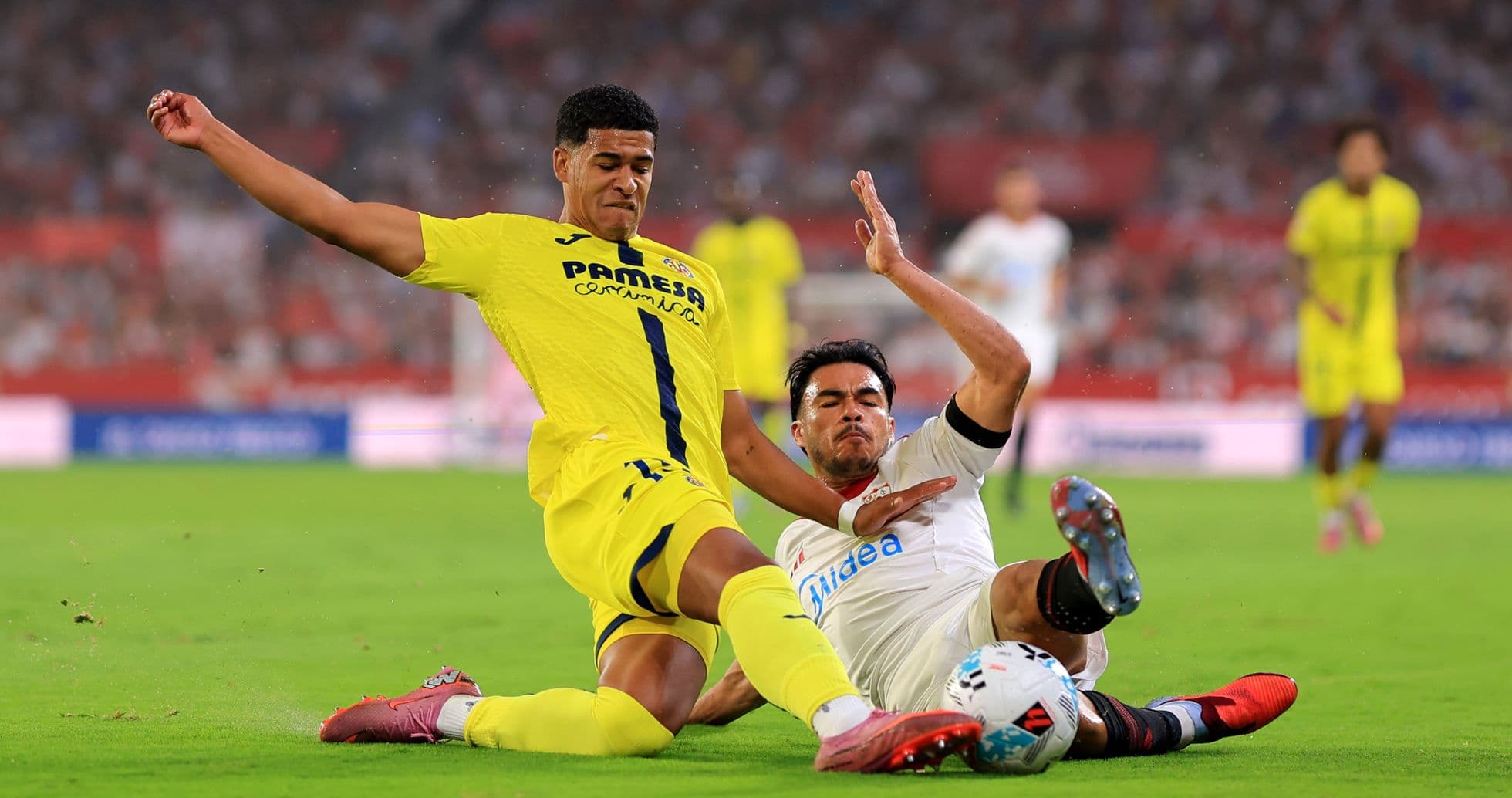
Villarreal's Defeat to Sevilla: A Tactical Breakdown
The evening at Estadio de la Ceramica ended with a sting. Villarreal, chasing a top-three finish in La Liga, saw a 2-0 lead evaporate into a 2-3 defeat against a Sevilla side that arrived as an awkward, shape-shifting mid-table guest. Following this result, the table tells a story of contrasting campaigns: Villarreal sit 3rd on 69 points with a goal difference of +24 (67 scored, 43 conceded in total), while Sevilla remain 12th on 43 points, their goal difference a stark -12 (46 for, 58 against overall). Yet for ninety minutes, those macro-numbers were bent by tactical choices, individual duels, and a Sevilla game plan that grew bolder as the night wore on.
I. The Big Picture – Structure vs Survival Instincts
Villarreal’s seasonal identity has been clear. Heading into this game they were one of La Liga’s most assertive home sides: 14 wins from 18 at home, scoring 43 and conceding just 18. An average of 2.4 goals for and 1.0 against at home underlines a team built to dominate on their own turf, and Marcelino leaned fully into that with a classic 4-4-2.
A. Tenas anchored a back four of A. Pedraza, Renato Veiga, P. Navarro and A. Freeman. Ahead of them, a technically gifted midfield line of A. Moleiro, P. Gueye, D. Parejo and N. Pepe was designed to both control the ball and supply a front two of G. Moreno and G. Mikautadze. This is the shape Villarreal have used in 35 league matches; it is their tactical mother tongue.
Sevilla, by contrast, arrived as a team still searching for a stable identity. Their season-long numbers away from home – 5 wins, 3 draws, 10 losses, 22 goals scored and 34 conceded on their travels, with an average of 1.2 for and 1.9 against – paint a picture of fragility. Yet Luis Garcia Plaza set them up in a 5-3-2 that was anything but timid. O. Vlachodimos sat behind a back five of Oso, G. Suazo, K. Salas, C. Azpilicueta and J. A. Carmona, with a compact midfield trio of D. Sow, L. Agoume and R. Vargas feeding a mobile front pairing of A. Adams and N. Maupay.
The first half’s 2-2 scoreline reflected the clash of these identities: Villarreal’s home firepower versus Sevilla’s willingness to absorb and then break with purpose.
II. Tactical Voids – Who Was Missing, and What It Cost
Both sides entered the fixture carrying absences that subtly reshaped their plans.
For Villarreal, J. Foyth’s Achilles tendon injury and P. Cabanes’ convalescence removed depth and versatility from the defensive rotation. Without Foyth’s ability to defend wide spaces and step into midfield, Marcelino doubled down on Renato Veiga’s presence in the back line. Veiga, who has appeared 32 times this league campaign, brings composure on the ball and impressive defensive numbers – 30 blocked shots and 24 interceptions in total – but he is still learning the nuances of high-line defending in a team that attacks with numbers.
Sevilla’s list was longer and more structurally significant. M. Bueno (knee injury), Marcao (wrist injury) and I. Romero (injury) were all out. Marcao’s absence, in particular, removed a left-sided stopper from a team already conceding 1.9 goals per away match. Without him, K. Salas had to shoulder more responsibility as the central pillar of the back three, while G. Suazo and Oso were tasked with both defending wide and offering outlets in transition.
Disciplinary trends also hung over the match like a quiet threat. Villarreal’s season-long yellow-card profile shows a clear late-game surge: 25.64% of their yellows arrive between 76-90 minutes, another 8.97% between 91-105. Sevilla mirror that volatility, with 18.63% of their yellows in the 76-90 window and an even more dramatic 20.59% between 91-105. It is no surprise that the final quarter of an hour became a psychological battleground where composure was as valuable as quality.
III. Key Matchups – Hunter vs Shield, Engine Room vs Enforcer
The marquee duel was always going to be Villarreal’s attacking tandem against Sevilla’s stretched defensive block.
On one side, G. Mikautadze arrived as Villarreal’s leading scorer and a top-11 attacker in the league: 12 goals and 6 assists in 31 appearances, with 51 shots and 29 on target. His partner in crime, A. Moleiro, has 10 goals and 5 assists, while N. Pepe adds 8 goals and 6 assists, plus a relentless dribbling threat (121 attempts, 59 successful). This trio embodies Villarreal’s attacking DNA: constant movement between the lines, quick combinations, and the capacity to overload either flank.
On the other side, Sevilla’s “shield” was a back five fronted by L. Agoume. Agoume’s profile is that of a modern enforcer: 66 tackles, 47 interceptions and 10 yellow cards in total, a midfielder who both breaks play and initiates it with 1,250 completed passes at 80% accuracy. Behind him, C. Azpilicueta and K. Salas were charged with tracking Mikautadze’s runs between centre-back and full-back, while J. A. Carmona had to handle N. Pepe’s one‑v‑one threat. Carmona is combative – 63 tackles, 8 blocked shots, 36 interceptions, 13 yellow cards – but that aggression can be double-edged against a dribbler as elusive as Pepe.
The “Engine Room” battle was just as decisive. D. Parejo’s orchestration and P. Gueye’s physicality met Sevilla’s triangle of Sow, Agoume and Vargas. R. Vargas, with 6 assists and 25 key passes this season, offered Sevilla their primary creative outlet between the lines. His ability to drift into pockets behind Parejo and between Villarreal’s lines gave Sevilla a way out of deep pressure and a path to feed A. Adams.
Adams himself, with 10 league goals and 3 assists, plus 3 penalties scored, is the quintessential “Hunter” for Sevilla. His duel with Renato Veiga and P. Navarro was about space and timing: could he pull onto the weaker shoulder, isolate a centre-back, and attack crosses or through balls before Villarreal’s block reset?
IV. Statistical Prognosis – Why the Game Tilted Sevilla’s Way
From a season-long lens, Villarreal’s overall goal difference of +24 (67 for, 43 against) versus Sevilla’s -12 (46 for, 58 against) would normally predict a home win, especially with Villarreal’s 14 home victories and 2.4 goals per home match. Sevilla’s away record – 10 defeats and 34 conceded on their travels – suggested their defensive structure would crack under sustained pressure.
Yet the 2-3 full-time score hints at a different balance in the micro-details. Sevilla’s tactical choice of a 5-3-2 gave them both width in the back line and numbers in central midfield, blunting Villarreal’s usual ability to create clear central overloads. With both teams perfect from the spot this season (Villarreal 6 penalties scored from 6, Sevilla 5 from 5, though Sevilla’s Isaac Romero has missed 1 for the club in total), the threat of set-piece xG hovered over every incursion into the box, forcing defenders into more cautious duels.
Defensively, Villarreal’s high line and aggressive full-backs left spaces that Sevilla’s front two and Vargas exploited. Renato Veiga’s shot-blocking and positioning, so often a strength, were not enough to fully contain Adams’ movement and Maupay’s channel runs. Meanwhile, Sevilla’s back five, led by Carmona’s physicality and Azpilicueta’s experience, managed to survive Villarreal’s early onslaught and then gradually compress the spaces Pepe and Mikautadze love to attack.
Following this result, the statistical prognosis for both sides sharpens. Villarreal remain an elite attacking force but with a defensive vulnerability that can be exposed by teams brave enough to commit runners beyond the first line of pressure. Sevilla, despite their negative goal difference and fragile away record, showed that in a compact 5-3-2 with Agoume screening and Vargas linking, they can tilt the xG balance in their favour even in hostile territory.
In narrative terms, this was not just a 2-3 away win; it was a reminder that in the final stretch of a season, structure, discipline and the right matchups can temporarily overturn the logic of the league table.
Related News

LaLiga 2026-27 Season Schedule Released: Kickoff on August 15, Clásico on October 25

Atletico Madrid vs Real Madrid: Head-to-head Stats and Past Meetings
Real Madrid Dominates Rayo Vallecano in La Liga Clash
Atletico Madrid Dominates Real Sociedad 3-0 at Reale Arena
Barcelona Dominates Levante in High-Scoring Clash

Sevilla vs Barcelona Stats: Head-to-Head Record and Past Meetings