
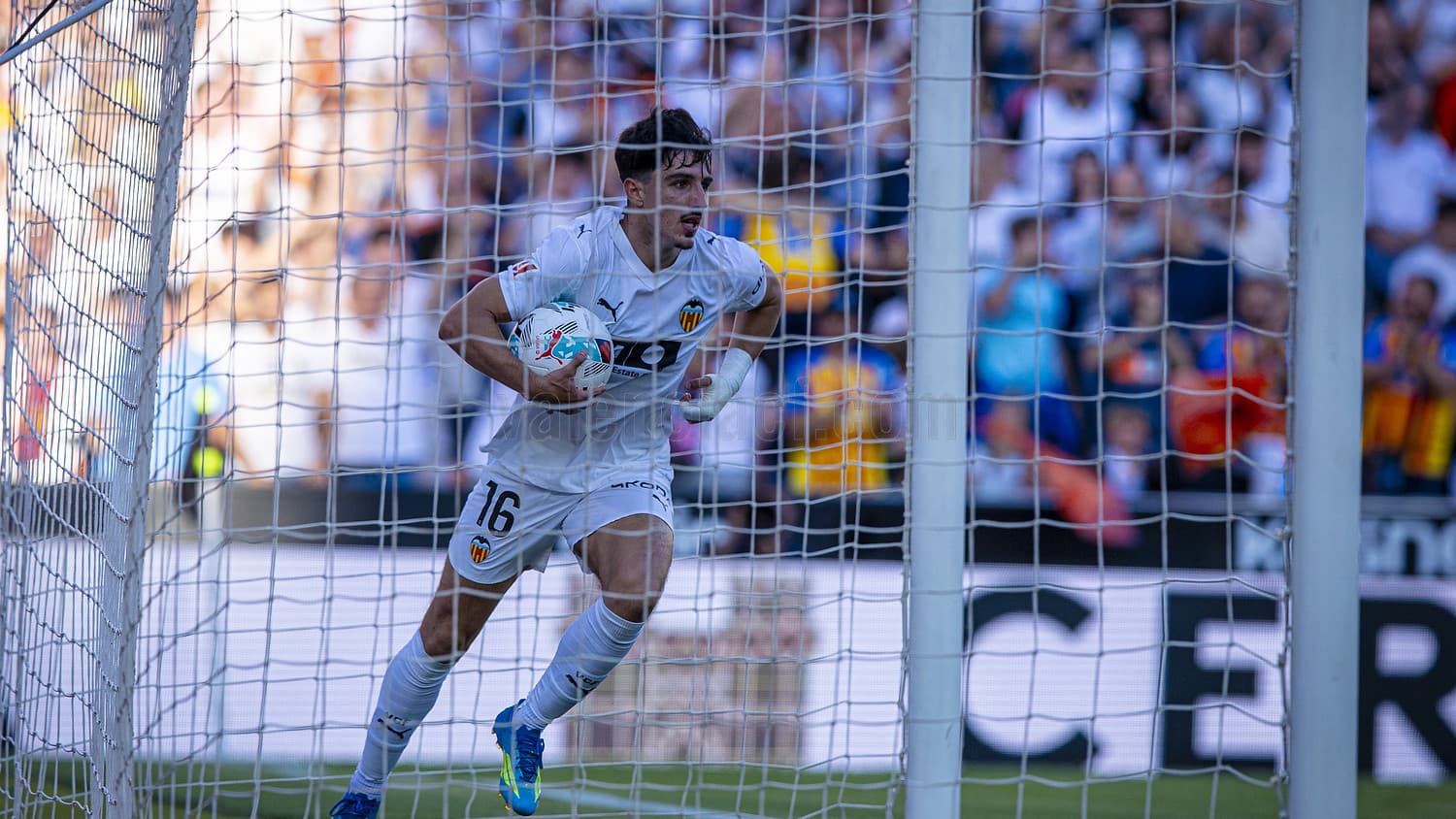
Valencia vs Rayo Vallecano: A Tactical Stalemate in La Liga
On a warm evening at Estadio de Mestalla, Valencia and Rayo Vallecano played out a 1–1 draw that felt like a microcosm of their seasons: flawed, combative, and tactically intriguing. Following this result, Rayo remain just ahead in the La Liga table, sitting 10th with 44 points and a goal difference of -6, while Valencia trail in 11th on 43 points with a goal difference of -12. Both have now completed 36 matches, and the point each reflects how evenly matched these sides are in their current incarnations.
I. The Big Picture – Two Mid-Table Identities Collide
This was not a cup tie, but it had the rhythm of one: Valencia’s more direct, 4-4-2 aggression against a Rayo Vallecano side whose 4-2-3-1 has become their structural signature. Over the season, Valencia have leaned on 4-4-2 in 22 league matches, while Rayo have turned to 4-2-3-1 in 22 of their own. The formations on the night were not improvisations; they were the distilled identities of Carlos Corberan and Inigo Perez.
Valencia’s campaign at home has been defined by narrow margins. At Mestalla they have played 18 times, winning 7, drawing 6 and losing 5, scoring 24 and conceding 22. That home goal difference of +2 is in stark contrast to their overall goal difference of -12, underlining how much more fragile they are on their travels. Rayo, by contrast, arrive as one of the league’s most stubborn home sides but a far more vulnerable away outfit: on their travels they have played 18, winning 4, drawing 4 and losing 10, with 15 goals scored and 28 conceded for an away goal difference of -13.
The 1–1 scoreline fits the season-long profiles: Valencia average 1.3 goals at home and concede 1.2, while Rayo away average 0.8 goals scored and 1.6 conceded. This match slotted almost perfectly into those patterns, a statistical equilibrium expressed on the pitch.
II. Tactical Voids – Absences Shape the Chessboard
Both managers were forced to redraw their plans around significant absences.
Valencia were without L. Beltran (knee injury), J. Copete (ankle), M. Diakhaby (muscle) and D. Foulquier (knee). The result was a back four anchored by C. Tarrega and E. Comert, with Renzo Saravia and Jose Gaya as full-backs. The lack of Diakhaby’s physical presence and Copete’s depth option pushed Corberan toward stability over risk: Tarrega and Comert were tasked with holding the line rather than stepping aggressively into midfield.
In midfield, Pepelu and D. Lopez formed the central spine, flanked by G. Rodriguez on the right and Luis Rioja on the left. Without Beltran’s metronomic passing, Pepelu had to assume more responsibility as the first distributor, while Rioja’s role as a progressive outlet became even more pronounced.
Rayo’s absences were just as consequential. I. Akhomach (muscle injury), A. Garcia, Luiz Felipe, D. Mendez (knee) and, crucially, Isi Palazon (suspended after a red card) all missed out. Palazon’s absence removed one of La Liga’s most productive agitators: he has accumulated 10 yellow cards and 1 red, and his suspension here was the direct consequence of that edge. He has also missed a penalty this season, so Rayo were without both his creativity and his high-risk, high-reward profile.
In his place, Rayo leaned heavily on a spine of F. Lejeune and N. Mendy at centre-back, shielded by the double pivot of O. Valentin and G. Gumbau. Ahead of them, F. Perez, P. Diaz and Pacha operated behind R. Nteka. Without Palazon, the “number 10” zone became more functional than flamboyant, more about linking and pressing than individual invention.
Disciplinary trends also hovered over the contest. Valencia’s yellow-card profile peaks late: 22.86% of their yellows arrive between 76–90 minutes, with another 15.71% from 91–105. Rayo’s are more evenly spread but spike between 46–75 minutes (a combined 38.38%). That set the stage for a second half where fatigue and risk-taking would likely bring cards and broken rhythm.
III. Key Matchups – Hunter vs Shield, Engine vs Enforcer
Hunter vs Shield
The clearest “Hunter vs Shield” narrative came from Rayo’s attacking threat against Valencia’s fragile overall defence. Overall, Valencia have conceded 51 goals, while Rayo have scored 37. On their travels, Rayo’s 15 goals meet Valencia’s 22 conceded at Mestalla – a clash between a modest away attack and a relatively solid home rearguard.
Here, R. Nteka’s role as the nominal striker was less about sheer volume of shots and more about occupying Tarrega and Comert, creating corridors for late runners like P. Diaz and F. Perez. The true hunter in Rayo’s season has been Jorge de Frutos, with 10 league goals and 1 assist. Though he started on the bench here, his season numbers tell the story: 47 shots, 26 on target, and 27 key passes. When he appears, he offers a dual threat between the lines and in the box, ideal for exploiting a Valencia defence that, overall, concedes 1.4 goals per match.
Valencia’s own forward pairing, H. Duro and Javi Guerra, offered a different profile. Guerra, listed as a forward here but statistically one of La Liga’s most productive creative midfielders, has 6 assists and 1 goal this season, with 29 key passes and 6 blocked shots – those 6 blocks underscoring his work against the ball. Duro’s presence stretches back lines, creating pockets for Guerra to arrive late, particularly against a Rayo back four where N. Mendy’s aggression can sometimes leave space in behind.
Engine Room – Playmaker vs Enforcer
The midfield duel was where the match’s tempo was truly decided. For Valencia, Pepelu and D. Lopez formed the central engine, with Rioja drifting infield from the left. Rioja’s season – 6 assists and 37 key passes – has made him one of La Liga’s quiet creative hubs. He attempts 61 dribbles with 35 successes, and his duels (215 contested, 100 won) reveal a winger as comfortable in the scrap as in open space.
Opposite them, G. Gumbau and O. Valentin were tasked with breaking Valencia’s rhythm. Gumbau’s left foot is Rayo’s metronome, while Valentin’s energy closes passing lanes. The real enforcer, though, lurked on the bench: P. Ciss, one of the league’s leading red-card recipients with 2 reds and 8 yellows. His 51 tackles and 15 blocked shots show a midfielder who loves contact; his disciplinary record shows the cost. When he enters a match, Rayo gain bite but flirt with numerical inferiority.
Behind them, N. Mendy’s defensive profile is striking: 21 blocked shots and 21 interceptions, plus 8 yellow cards and 1 red. He is a pure “shield” centre-back, stepping into duels (135 contested, 71 won) and throwing his body in front of goal-bound efforts. In this draw, his positioning against crosses toward Duro and Guerra was essential in keeping Valencia from turning pressure into a second goal.
On the flanks, the duel between Jose Gaya and Rayo’s wide midfielders was another tactical hinge. Gaya, with 69 tackles, 7 blocked shots and 23 interceptions, is one of the league’s most complete full-backs. His 2 assists and 25 key passes reflect his dual role as outlet and creator. But his 6 yellow cards and 1 red underline the risk in his high-intensity style. Up against Rayo’s rotating wide options, he had to balance overlapping ambition with the need to protect Tarrega and Comert from isolation.
IV. Statistical Prognosis – xG Logic and Defensive Solidity
We do not have explicit xG values from the data, but the season-long shot and goal patterns allow a reasoned projection. Heading into this game, Valencia’s home profile – 1.3 goals scored and 1.2 conceded per match – suggests a typical xG balance close to parity at Mestalla. Rayo’s away profile – 0.8 goals scored, 1.6 conceded – hints at a recurring pattern: they allow better chances than they create on their travels.
Overlaying those numbers, a pre-match xG forecast would likely have leaned slightly toward Valencia: something like a narrow home edge in chance quality, but not dominance. Rayo’s 11 clean sheets overall, including 4 away, show they can bend without breaking, particularly when Lejeune and Mendy are in sync and when the double pivot screens effectively.
Defensively, Valencia’s 9 clean sheets overall (4 at home, 5 away) and their preference for 4-4-2 speak to a team that relies on compactness and clear roles rather than high pressing or complex build-up. Their failure to score in 9 matches this season, however, warns that when the wide players are stifled – especially Rioja – the attack can become blunt.
Following this result, the 1–1 draw feels almost preordained by the numbers. Valencia’s slight attacking edge at home met Rayo’s capacity to absorb and counter. Without Isi Palazon’s chaos and with Jorge de Frutos not starting, Rayo’s ceiling in open play was naturally lowered. Valencia, missing key defensive and midfield pieces, could not quite tilt the match decisively their way.
From a tactical and statistical standpoint, the match confirmed what the season has been whispering: these are two mid-table sides whose margins are fine, whose systems are stable, and whose futures may depend less on radical change and more on sharpening what already works. In a league of extremes, Valencia and Rayo Vallecano remain, fittingly, balanced on the knife-edge between ambition and limitation.
Related News

LaLiga 2026-27 Season Schedule Released: Kickoff on August 15, Clásico on October 25

Atletico Madrid vs Real Madrid: Head-to-head Stats and Past Meetings
Real Madrid Dominates Rayo Vallecano in La Liga Clash
Atletico Madrid Dominates Real Sociedad 3-0 at Reale Arena
Barcelona Dominates Levante in High-Scoring Clash

Sevilla vs Barcelona Stats: Head-to-Head Record and Past Meetings