
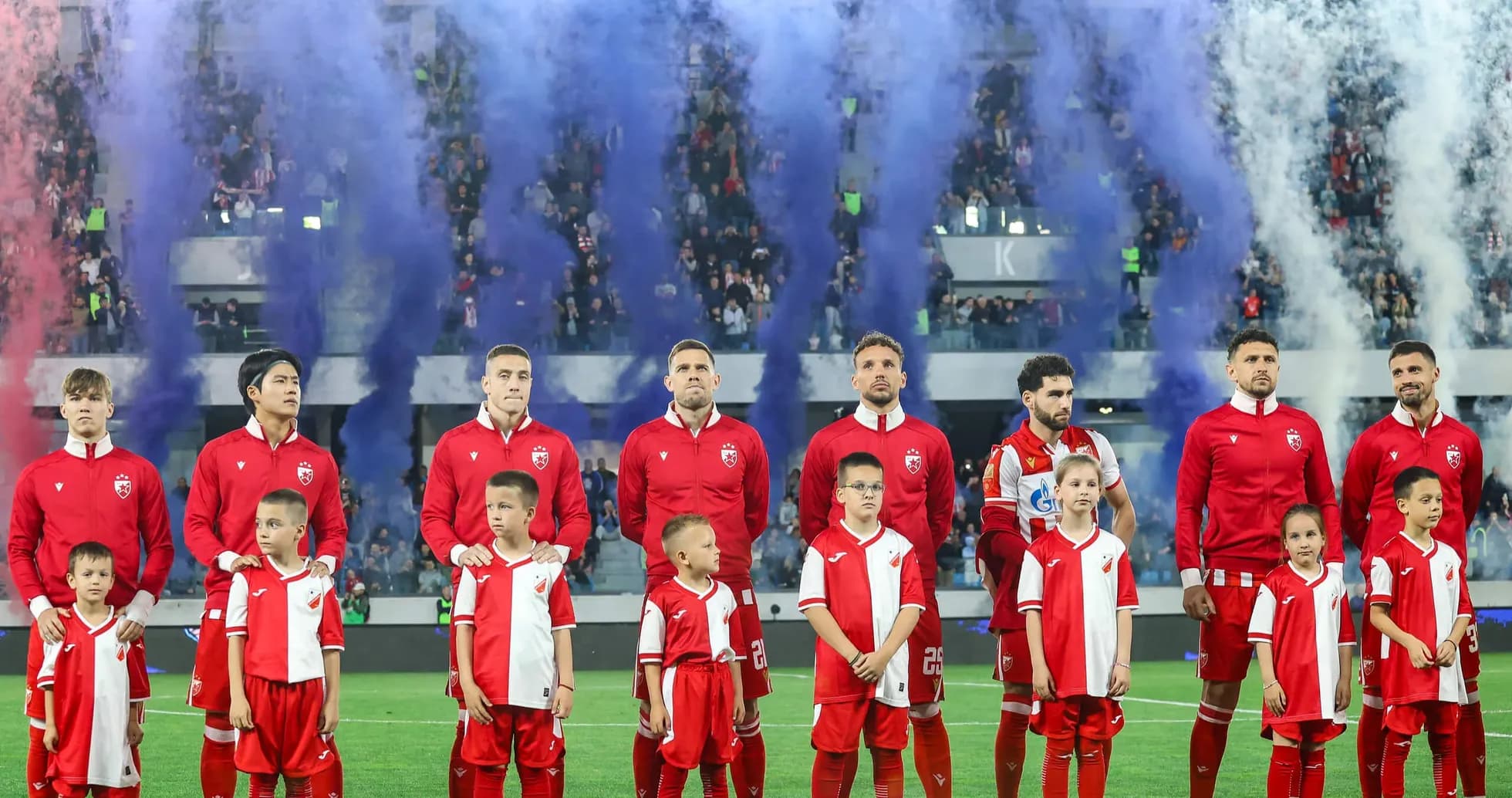
UEFA Champions League Qualifying: FK Crvena Zvezda vs Hapoel Beer Sheva
This third qualifying round second leg in the UEFA Champions League at Stadion Rajko Mit in Belgrade carries direct consequences for FK Crvena Zvezda’s 2026 European campaign: overturning or protecting the first-leg result will decide whether they stay on the Champions path towards the group stage or drop out of the competition, while Hapoel Beer Sheva are 90 minutes away from a significant qualification that would extend their continental calendar and revenue prospects.
Head-to-Head Tactical Summary
The only recent meeting between these sides came in the first leg on 4 August 2026 in Szombathely, where Hapoel Beer Sheva, as the home team, beat FK Crvena Zvezda 1–0. The match was decided by a first-half goal, with a half-time score of 1–0 and no further goals after the break, underlining Hapoel’s ability to protect a narrow lead over 90 minutes against this opponent.
Global Season Picture
- League Phase Performance: There is no current group-stage or league-table data available for either FK Crvena Zvezda or Hapoel Beer Sheva in the 2026 UEFA Champions League, so their trajectory is best inferred from early qualifying-round match statistics rather than points or goal differences in a standings table.
- Season Metrics: In the qualifying phase, FK Crvena Zvezda have played 3 matches, winning 2 and losing 1, with 9 goals scored and only 1 conceded. Their attacking output has been explosive at home (5 goals in 1 match) and strong away (4 goals in 2 matches), while defensively they have kept 2 clean sheets and allowed just a single goal overall. Hapoel Beer Sheva have also played 3 matches, with 2 wins and 1 loss, scoring 4 and conceding 2. They have been solid at home (3 goals for, none against across 2 games) but more fragile away, where they have scored once and conceded twice in their only road match. Disciplinary profiles differ: Crvena Zvezda’s yellow cards are spread across the match, with a notable spike late on (half of their cautions coming from the 76th minute onwards), while Hapoel Beer Sheva accumulate most of their yellows between minutes 46–75 and have already received one red card in the 46–60 window, suggesting potential vulnerability under second-half pressure.
- Form Trajectory: FK Crvena Zvezda’s form line of “WWL” shows two straight wins followed by the first-leg defeat, indicating a slight downward kink just as the tie reaches its decisive leg. Hapoel Beer Sheva’s “LWW” pattern runs in the opposite direction: an opening loss followed by two consecutive victories, including the 1–0 first-leg win, pointing to an upward trend in confidence and effectiveness as qualifying has progressed.
Tactical Efficiency
Across their qualifying matches, FK Crvena Zvezda have been markedly efficient in both boxes: averaging 3 goals per game and conceding only 0.3. Their biggest home win of 5–0 and an away 4–0 result underline a high attacking ceiling, while 2 clean sheets in 3 matches show a defence that, so far, rarely allows clear chances. The single 1–0 away defeat indicates that when opponents can slow the tempo and restrict space, Crvena Zvezda’s attack can be contained, but it has taken a very disciplined effort to do so.
Hapoel Beer Sheva’s profile is more balanced but less explosive. They average around 1.3 goals scored and 0.7 conceded per match, with two home clean sheets pointing to strong defensive structure on familiar or neutral territory. However, their only away outing ended in a 2–1 defeat, with 2 goals conceded and no clean sheet, hinting at a drop in defensive efficiency when they have to absorb pressure away from home. Their card distribution, with a cluster of yellows and a red in the second half, suggests that as matches become stretched, their defensive aggression can turn into a liability, especially against a side like Crvena Zvezda that has shown it can sustain attacking pressure deep into games.
The Verdict: Seasonal Impact
From a seasonal perspective, this second leg is a hinge point for both clubs. For FK Crvena Zvezda, elimination here would cut off the main revenue and prestige stream of a Champions League campaign, forcing them to recalibrate their year around domestic dominance and potentially a lower-tier European competition. Given their strong attacking metrics so far, failing to overturn a single-goal deficit at home would represent a significant underperformance relative to their early-season numbers and could trigger tactical adjustments, particularly in how they break down compact defences in high-stakes fixtures.
For Hapoel Beer Sheva, successfully defending their 1–0 advantage in Belgrade would validate their upward form curve and consolidate a tactical identity built on defensive solidity and game management. Progression would extend their European calendar, increase financial headroom, and raise the club’s profile, potentially impacting recruitment and squad depth decisions later in 2026. Conversely, if their away defensive fragilities and disciplinary issues resurface and they exit the competition, the season’s narrative shifts back towards domestic priorities, with the Champions League run remembered as a missed opportunity after gaining a first-leg lead. In either case, the outcome of this tie will largely define how both clubs’ 2026 campaigns are judged in terms of ambition, progress, and competitive ceiling.
Related News

Luis Díaz Confident Bayern Munich Can Win Champions League

Insights from AFC Champions League Matchday One: K League Clubs’ Strategies

Vincent Kompany's Bayern Munich Future Not Tied Solely to Champions League Outcome
Barcelona's Camp Nou Chosen for 2029 Champions League Final, Munich Set for 2028
Allianz Arena to Host 2028 UEFA Champions League Final

Allianz Arena to Host 2028 Champions League Final for Third Time