
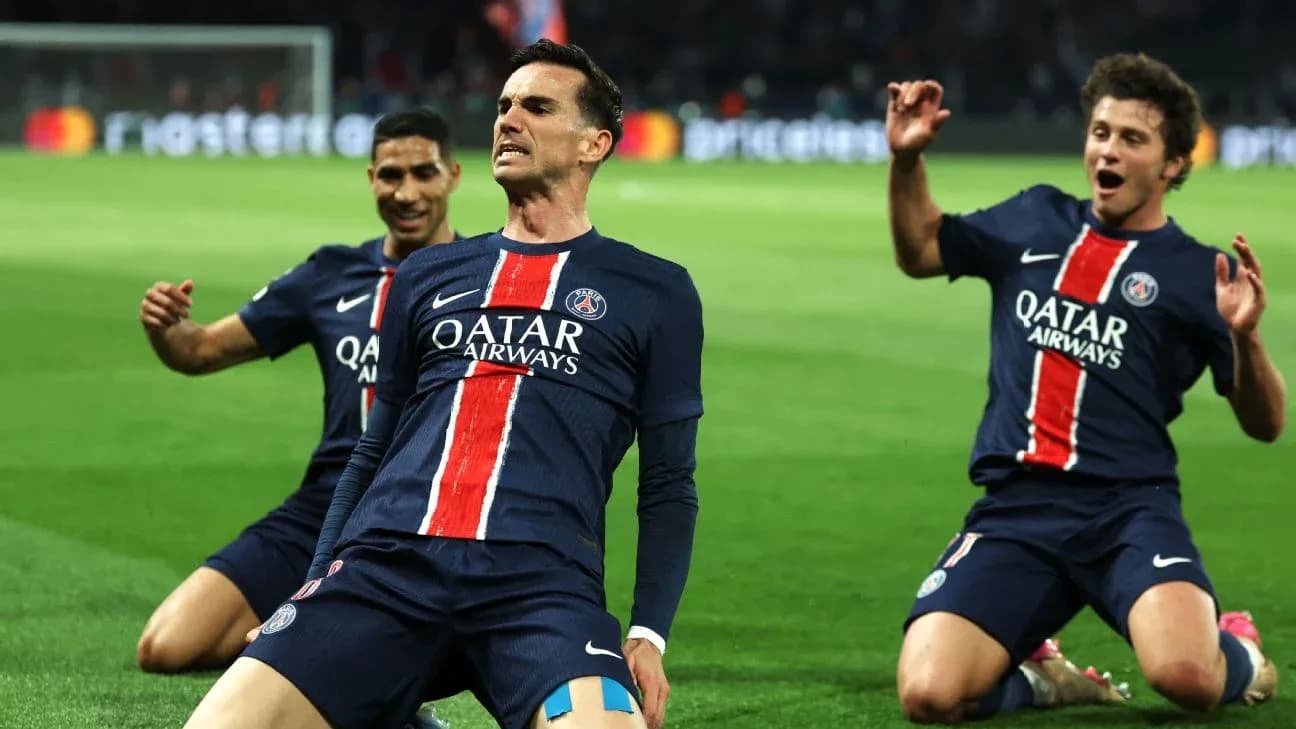
UEFA Champions League Final Preview: Paris Saint Germain vs Arsenal
On 30 May 2026, under the vast arch of the Puskas Arena in Budapest, Paris Saint Germain and Arsenal walk out knowing there is nothing beyond this night: the UEFA Champions League final, a single match to define a year’s work. Paris Saint Germain arrive as a dangerous knockout force with goals spread across their attack, chasing a first European crown of this calendar year. Arsenal come in as the competition’s benchmark side, top of the table phase and almost flawless, seeking to confirm their rise by lifting the biggest trophy in club football.
Season Context
For Paris Saint Germain, the road here has been built on firepower. They have played 8 matches in this Champions League campaign, taking 14 points with 21 goals scored and 11 conceded. That goal difference of +10 underpins their status in the “Promotion - Champions League (Play Offs: 1/16-finals)” bracket, a reminder that while they have not been perfect, they have been consistently dangerous in both home and away ties.
Arsenal’s campaign has been close to immaculate. They top the standings with 24 points from 8 matches, winning every game with 23 goals scored and only 4 conceded (goal difference +19). Already locked into “Promotion - Champions League (Play Offs: 1/8-finals)”, they have combined a ruthless attack with an almost watertight defence, setting the standard that every other contender has had to chase.
Form & Momentum
Paris Saint Germain’s recent form line of DLDWL suggests volatility, but within that inconsistency lies a side that still averages 2.6 goals per game in this campaign (21 goals in 8 matches) and concedes 1.4 per match (11 in 8). Their last-five indicator in the predictive model shows strong overall momentum at 87% form, with 62% in attack and 76% in defence, underlining how explosive they can be when their forwards click (44 total goals across their broader Champions League sample).
Arsenal arrive with the most intimidating sequence possible: WWWWW. Eight wins from eight in this competition translate into an attack averaging 2.9 goals per game (23 in 8) and a defence conceding just 0.5 per match (4 in 8), a combination that fully justifies their description as a dominant two-way side (goal difference +19). The model’s last-five snapshot paints a slightly different texture: 73% form, with a relatively modest 24% attacking index but an outstanding 95% defensive rating, pointing to a team that has recently prioritised control and solidity.
Head-to-Head Patterns
The recent history between these clubs has swung back and forth at the very highest level. On 7 May 2025, Paris Saint Germain edged Arsenal 2-1 at Parc des Princes (UEFA Champions League, season 2024, May 2025), a semi-final second leg where the French side’s home edge proved decisive over 90 tense minutes. Just days earlier, on 29 April 2025, Paris Saint Germain had also prevailed 1-0 at Emirates Stadium (UEFA Champions League, season 2024, April 2025), a disciplined away performance that showcased their ability to manage tight knockout ties. Go back to 1 October 2024, however, and the balance shifts: Arsenal defeated Paris Saint Germain 2-0 at Emirates Stadium (UEFA Champions League, season 2024, October 2024), a statement league-stage win built on sharp pressing and clinical finishing.
Tactical Preview
Paris Saint Germain are expected to lean again on their familiar 4-3-3, a shape they have used 16 times in this Champions League run. That system maximises the influence of K. Kvaratskhelia, whose 10 goals and 6 assists in the competition make him a central attacking reference (30 shots, 18 on target, and 51 dribble attempts with 29 successful). Around him, O. Dembélé offers direct running and end-product from wide areas (7 goals and 2 assists), while D. Doué adds creativity and pressing from the front (5 goals, 4 assists, 50 dribble attempts with 23 successes). Vitinha, operating as a high-volume midfielder, knits the structure together with 1,553 completed passes at 93% accuracy, plus 25 tackles and 17 interceptions, giving Paris Saint Germain a platform to dominate possession and sustain pressure.
Defensively, Paris Saint Germain’s broader Champions League statistics show they can be vulnerable (22 goals conceded across 16 matches in the wider sample, 1.4 per game), and the presence of I. Zabarnyi and L. Hernández among the top red-carded players (each with one red card) hints at moments of defensive risk under stress. Still, with A. Hakimi providing width and progression from full-back (793 passes at 89% accuracy, 23 key passes, 6 assists), they will likely accept a high defensive line to keep Arsenal pinned back, trusting their attacking output to outweigh any exposure.
Arsenal, by contrast, have alternated between 4-3-3 (9 times) and 4-2-3-1 (5 times), systems that both emphasise structural balance and compactness. Their campaign numbers in the broader sample are strikingly controlled: 29 goals scored and only 6 conceded in 14 matches (2.1 for and 0.4 against per game), supported by 9 clean sheets. In midfield, Martín Zubimendi offers a disciplined screen (14 tackles, 5 blocks, 10 interceptions and 4 yellow cards), key to protecting a back line that has yet to lose in this Champions League run.
Going forward, Arsenal’s threat is diversified. Gabriel Martinelli has been a key figure between the lines and on the flanks, with 6 goals and 2 assists from 13 appearances, plus 16 key passes and 38 dribble attempts (17 successful), providing the direct running that can stretch Paris Saint Germain’s back four. Around him, a cluster of attackers such as Gabriel Jesus, V. Gyökeres, B. Saka and K. Havertz (all listed as forwards or attacking players in the squad) give Arsenal multiple profiles to attack the channels behind an adventurous Paris Saint Germain defence. Their last-five attacking index of 24% suggests they have recently been more pragmatic, but with 2.9 goals per game in this specific campaign, they are fully capable of opening up if the final turns into a shootout.
Statistical Snapshot
- Competition: UEFA Champions League, season 2025 — 30 May 2026.
- Venue: Puskas Arena, Budapest.
- Prediction: Win or draw — Double chance : draw or Arsenal.
- Win Probabilities: Home 10% / Draw 45% / Away 45%.
- Model: Paris Saint Germain 42.0% — Arsenal 58.2%.
Betting Verdict
The predictive model leans towards Arsenal avoiding defeat, driven by their perfect 8-win campaign (23 goals scored, 4 conceded) and an outstanding defensive profile in the last five matches (95% defensive index). Paris Saint Germain’s attacking ceiling is undeniably high (21 goals in 8 this campaign and 44 in the wider sample), but their more fragile back line and recent DLDWL run temper confidence. With most bookmakers pricing Arsenal as the outsider but still relatively short — away odds clustered roughly around 3.00–3.30 and the draw near 3.10–3.35 — the value aligns with the data-backed advice: “Double chance : draw or Arsenal”. In a final that could swing on fine margins, siding with Arsenal to lift or at least extend the contest looks the most analytically justified position.
Related News

Vincent Kompany's Bayern Munich Future Not Tied Solely to Champions League Outcome
Barcelona's Camp Nou Chosen for 2029 Champions League Final, Munich Set for 2028
Allianz Arena to Host 2028 UEFA Champions League Final
Allianz Arena to Host 2028 Champions League Final for Third Time
Barcelona's Nou Camp Chosen for 2029 UEFA Champions League Final Over Wembley and Dortmund
Five English Clubs Secure Wins in Champions League Opening Round