
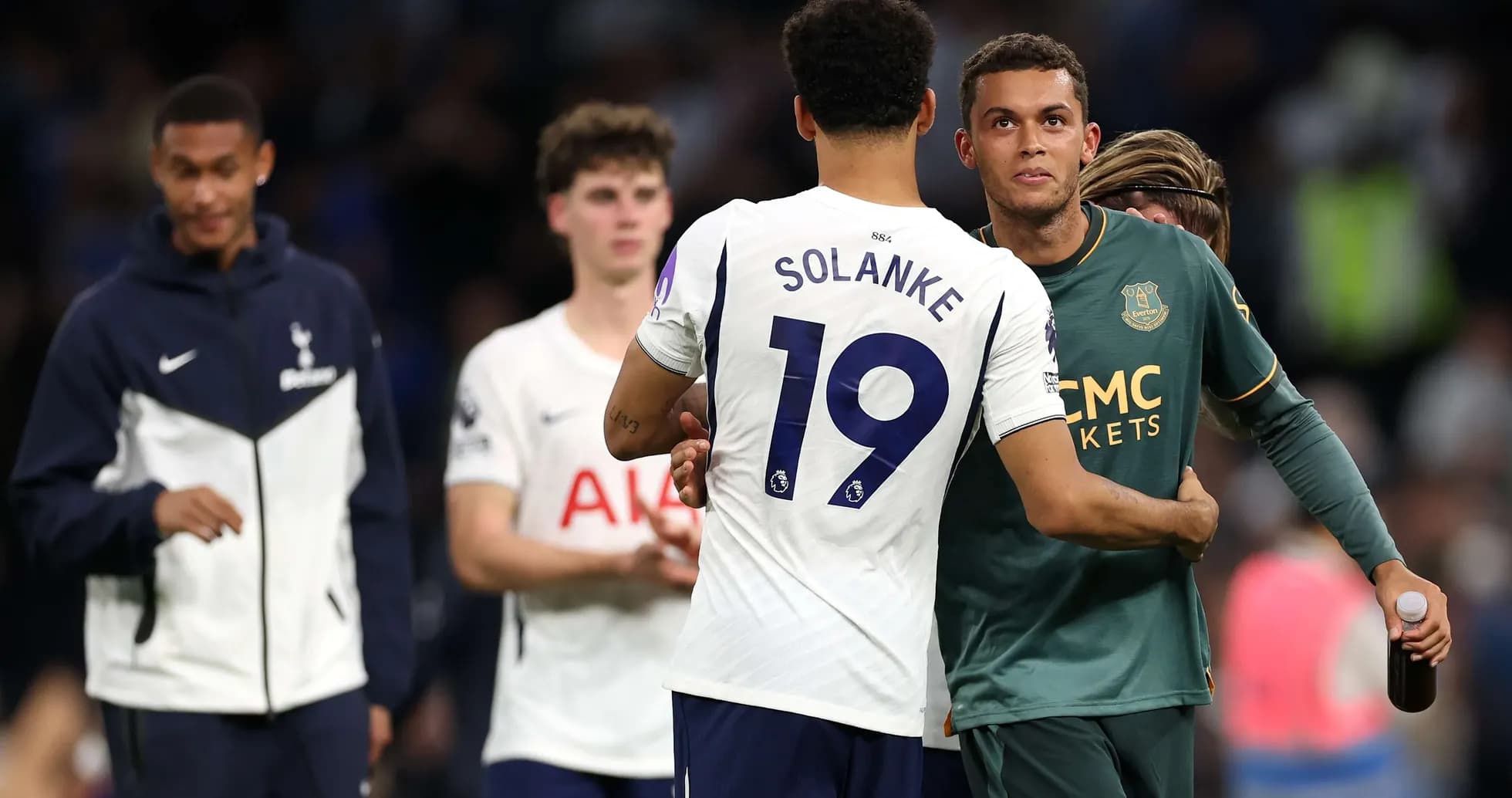
Tottenham vs Everton: A Goalless Stalemate in the Premier League
The lights went out on a tense evening at Tottenham Hotspur Stadium with the scoreboard still untouched: Tottenham 0–0 Everton, a stalemate that said as much about the two teams’ identities as any high‑scoring thriller. In Regular Season - 4 of the Premier League, the point nudged Tottenham to 17th with 2 points and a goal difference of -5, and kept Everton in 8th on 6 points with a goal difference of 2. Following this result, the numbers underline a stark contrast: Tottenham have still not scored in 4 league games, while Everton remain unbeaten.
I. The Big Picture – Two 4-2-3-1s, two very different moods
Both managers leaned into a 4-2-3-1, but the shapes told different stories. For Roberto De Zerbi, the system looked like a search for balance in a side that has failed to find the net in any of its 4 matches. Overall, Tottenham’s attack has produced 0 goals, with an average of 0.0 at home and 0.0 on their travels. At the other end, they have conceded 5 in total, 2 at home and 3 away, an overall average of 1.3 goals against per match.
David Moyes, by contrast, arrived with an Everton side that has quietly become one of the league’s most solid units. Overall, Everton have scored 5 goals, with 2.0 on average at home and 0.5 away, while conceding just 3 in total, averaging 1.0 at home and 0.5 away. The defensive platform has been the bedrock of their unbeaten run: 1 win and 3 draws overall, with 2 away draws built on discipline and compactness.
On the night, the mirrored formations created a chessboard feel: line against line, double pivot against double pivot, full‑backs locked in cautious advance. The absence of goals did not mean a lack of structure; rather, it revealed just how constrained both teams were by their own seasonal narratives.
II. Tactical Voids – The missing edge in the final third
Tottenham’s team sheet carried the scars of a disrupted attacking unit. Dejan Kulusevski (knee injury), Mykhailo Mudryk (ankle injury), Wilson Odobert (knee injury), and Xavi Simons (knee injury) were all ruled out, while Richarlison was unavailable due to transfer negotiations. That is an entire layer of creativity and incision stripped away, forcing De Zerbi to improvise.
Into that void stepped a front four of Sávio, Mateus Fernandes, Omar Marmoush, and Dominic Solanke, supported by Sandro Tonali and Rodrigo Bentancur as the double pivot. The structure was neat, but the numbers from the season framed the problem: Tottenham have failed to score in all 4 league fixtures so far, and despite 2 clean sheets overall, their attack remains entirely theoretical.
The bench, however, hinted at what this squad might become when fully knitted together. James Maddison, Mohamed Kudus, L. Bergvall, and Mathys Tel all waited in reserve – creative and dynamic options, but in this match they were more insurance policy than transformation.
Everton’s own absentee list was shorter but significant: Christian Norgaard, a natural screen and tempo-setter, missed out through injury. Yet Moyes compensated through structure rather than star power. The double pivot of H. Armstrong and James Garner sat in front of a settled back four, while K. Dewsbury-Hall, B. Johnson, Tyrique George, and T. Barry provided a fluid band of four ahead.
Disciplinary trends added another layer to the tactical caution. Heading into this game, Tottenham’s yellow cards were heavily back‑loaded: 40.00% of their bookings arrived between 76–90 minutes, with 20.00% in each of the 0–15, 31–45, and 46–60 windows. Everton, meanwhile, showed a broader spread, with 28.57% of their yellows between 61–75 minutes and 14.29% in most other intervals. Both teams, notably, had no reds in the league so far, and that restraint carried into a match where neither side lost its head.
III. Key Matchups – Hunter vs Shield, Engine Room vs Enforcer
Hunter vs Shield
With Tottenham still goalless overall, the “hunter” role fell by default to Dominic Solanke. His task was to find space between James Tarkowski and Jarrad Branthwaite, a pairing that has underpinned Everton’s defensive record of just 3 goals conceded in 4 games. On their travels, Everton have allowed only 1 goal in 2 matches, an away average of 0.5 goals against, and that composure was evident again as they funneled Spurs into wide, low‑percentage areas.
For Everton, the focal point was T. Barry, flanked by the drifting movements of Dewsbury-Hall and Johnson. Against a Tottenham side that has conceded 2 at home and 3 away, Barry’s job was to exploit any hesitation in a back four anchored by Micky van de Ven and Jan Paul van Hecke, with Andrew Robertson and A. Gray tasked with providing width without leaving Kinský exposed.
Engine Room – Tonali and Bentancur vs Garner and Armstrong
The heart of the contest lay in midfield. Sandro Tonali and Rodrigo Bentancur offered Tottenham control and progression, but their mandate was complicated: they needed to protect a defence that has already leaked 5 goals overall while also feeding an attack still searching for its first strike.
Opposite them, James Garner and H. Armstrong embodied Moyes’ pragmatism. Garner, already a statistical standout in the league with 128 passes, 3 key passes, 11 tackles and 2 yellow cards in 4 appearances, is Everton’s metronome and disruptor in one. His duel with Tonali was about more than possession; it was about who could tilt the pitch in their team’s favour without overcommitting.
IV. Statistical Prognosis – A draw that fits the numbers
Following this result, Tottenham’s season remains defined by their attacking drought: 0 goals in total, 4 matches without scoring, and 4 failures to score overall (2 at home, 2 away). The defensive record is not catastrophic – 5 conceded in 4 – but without any output at the other end, even marginal defensive slips carry heavy consequences.
Everton, meanwhile, continue to look like a side built from the back outwards. With 5 goals scored overall and only 3 conceded, plus clean sheets both at home and on their travels, Moyes’ template is clear: keep games tight, trust the structure, and accept that away draws, like this one, are the foundation of a stable season.
In xG terms, this had the feel of a low‑margin encounter that never truly broke open: Tottenham’s sterile dominance versus Everton’s controlled risk. The goalless scoreline, rather than a surprise, was the logical meeting point of a team that cannot yet turn structure into goals and another that has made defensive solidity its calling card.
Related News
Tottenham vs Aston Villa Predicted Lineups: Team News for Premier League Clash
Manchester City vs Sunderland: Premier League Clash Preview
Tottenham vs Aston Villa: Early Relegation Battle
Brentford vs Chelsea Predicted Lineups: Team News and Match Insights
Brighton vs Arsenal Prediction: Key Stats and Betting Tips
Manchester City vs Sunderland Prediction: Key Insights and Betting Tips