
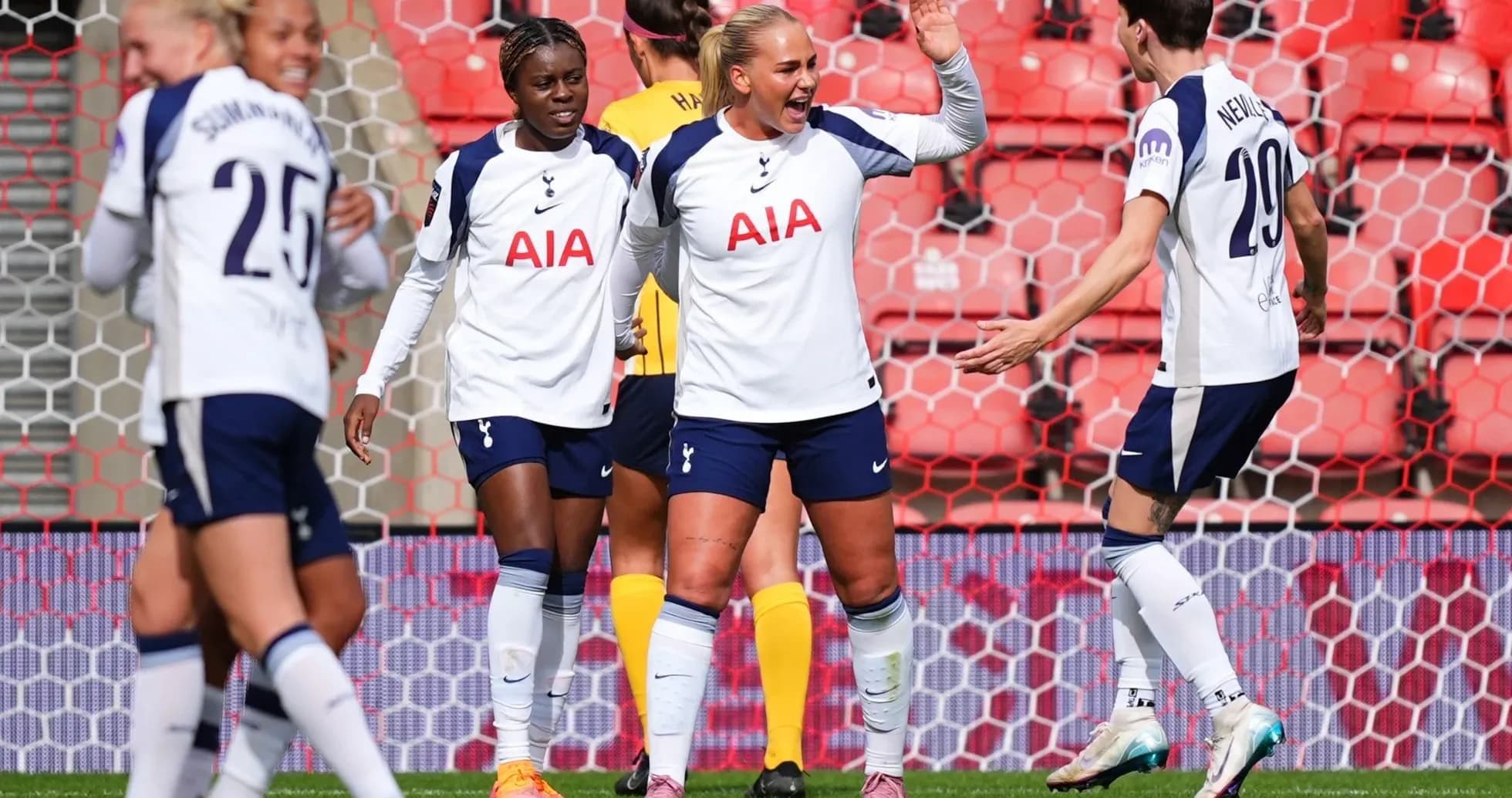
Tottenham Hotspur W Claims Victory Over Brighton W in FA WSL Clash
Under a grey May sky at the Amex Stadium, Brighton W and Tottenham Hotspur W closed their FA WSL campaigns with a contest that distilled their seasons into 90 tense minutes. The league table framed the narrative: Tottenham arriving as the 5th‑placed side on 36 points, Brighton in 7th on 26. Over 22 matches in total, Brighton had lived on a fine margin – 27 goals for and 28 against, a goal difference of -1 – while Tottenham embodied volatility, scoring 35 and conceding 38 overall for a goal difference of -3.
Following this result, the 2-1 away win for Tottenham felt like a logical extension of their season’s DNA. On their travels they had been wild and open: 24 away goals for and 26 against, averaging 2.2 goals scored and 2.4 conceded away. Brighton, by contrast, had been more measured at home, with 17 goals for and 15 against at the Amex, averaging 1.5 scored and 1.4 conceded at home. This was the clash: Brighton’s attempt at controlled, mid-table consolidation versus Tottenham’s high‑risk, high‑reward football.
The lineups underlined that contrast. Dario Vidosic sent Brighton out with a technical spine: S. Baggaley in goal, a backline featuring C. Rule, C. Hayes, M. Minami and M. Vanegas, and a creative band where K. Seike, M. Symonds, J. Cankovic and M. Olislagers were tasked with feeding F. Kirby and M. Haley. Martin Ho’s Tottenham leaned into mobility and directness: L. Kop in goal behind a defensive unit including E. Morris, T. Koga, A. Nilden and J. Blakstad, with D. Spence anchoring a midfield that had the guile of S. Gaupset, M. Hamano and O. Holdt, and the vertical threat of M. Vinberg and C. Tandberg up front.
Tactical Voids and Discipline
There were no officially listed absentees in the data, so both coaches had the luxury of near‑full squads. The real “voids” were structural rather than personnel-based.
For Brighton, the season-long issue was defensive balance. Overall they conceded 1.3 goals per match, and even at home the 1.4 goals conceded on average hinted at fragility once their first line of pressure was bypassed. Vidosic’s frequent use of back‑four structures – 4-2-3-1, 4-4-1-1, 4-4-2 – was an ongoing search for stability without sacrificing the attacking freedom of Seike and Haley.
Tottenham’s void was different: control. Their away average of 2.4 goals conceded spoke of a side that could be pulled apart in transition. Yet their card profile suggested a team that often woke up to the defensive fight late. Their yellow cards peaked in the 76-90 minute window with 30.56% of their bookings, and another 11.11% arriving between 91-105 minutes. This pattern pointed to late-game scrappiness, tactical fouls, and a midfield that sometimes had to firefight after being stretched.
Brighton’s own disciplinary map told a story of a side that often ramped up aggression either side of half-time. They took 26.32% of their yellows between 31-45 minutes and 21.05% between 76-90, with another 18.42% in the 61-75 bracket. That profile suited a team trying to press in bursts, but it also risked giving away cheap set‑pieces precisely when concentration was most needed.
Key Matchups
The headline duel belonged to Tottenham’s attacking cadre against Brighton’s home defence. On their travels, Spurs averaged 2.2 goals scored, powered by a spread of threats: B. England with 5 goals overall, O. Holdt, K. Seike’s counterpart on the other side, with 4 goals and 3 assists overall, and C. Tandberg also on 4 goals overall. Tandberg’s season was particularly telling: 16 shots, 8 on target, and a penalty scored, wrapped inside a combative profile of 79 duels and 6 yellow cards overall. She is not just a finisher but a disruptive force who tests centre-backs physically and mentally.
Brighton’s “shield” at home had been respectable but not impregnable: 15 goals conceded in 11 matches at the Amex. C. Rule, who accumulated 4 yellow cards overall, symbolised their edge on the flank – 16 tackles, 2 blocked shots and 10 interceptions overall, a defender who steps out to engage rather than sit passively. But against Tottenham’s fluid front line, any mistimed step could be punished.
On the other side, Brighton’s own “hunter” was K. Seike. With 4 goals and 1 assist overall, 16 shots and 10 on target, plus 19 key passes and 17 dribble attempts (8 successful), Seike offered direct penetration from midfield. Tottenham’s away defensive record – 26 goals conceded on their travels, 2.4 per match – left space for exactly that kind of runner between the lines, especially if D. Spence and S. Gaupset were dragged wide or high.
The Engine Room
The game’s rhythm revolved around the midfield triangle of J. Cankovic and M. Symonds against Tottenham’s duo of D. Spence and O. Holdt. Spence’s season numbers painted her as Ho’s enforcer: 19 tackles, 18 interceptions and 1 red card overall, plus 3 yellow cards. She is the player who steps in to break play, even at the risk of disciplinary damage. Tottenham’s card distribution – with a red between 91-105 minutes – underscored how that edge can spill over in late, desperate phases.
Holdt, by contrast, was the conductor. With 4 goals, 3 assists, 16 key passes and 57 dribble attempts (25 successful) overall, she blurred the line between playmaker and second striker. Her duels (133 in total, 58 won) showed a willingness to engage physically, not just float between the lines. Against Brighton’s central block, her ability to receive under pressure and release runners like Vinberg or Tandberg was decisive.
For Brighton, Haley was the hybrid piece between midfield and attack. Her 3 assists and 2 goals overall, backed by 9 key passes and 24 dribble attempts (10 successful), made her the hinge for counters. But her disciplinary line – 4 yellow cards and a missed penalty overall – hinted at a volatile edge. Tottenham’s habit of drawing games into late chaos could tempt her into risky challenges or emotional decisions, especially if chasing the game.
Statistical Prognosis and Tactical Verdict
From a pure numbers standpoint, this fixture always leaned toward Tottenham if the match opened up. Overall, Spurs scored 1.6 goals per game and conceded 1.7, while Brighton sat at 1.2 scored and 1.3 conceded. The away side’s attacking ceiling was simply higher, especially on their travels where they had already produced a 3-7 win as their biggest away victory.
Brighton’s route to control lay in compressing the game into their home averages – keeping it closer to 1.5 scored and 1.4 conceded at the Amex – through structured pressing and careful management of transitions. Their six clean sheets overall suggested they could lock things down when the block stayed compact. But failing to score in 5 matches overall also hinted at the risk: if Seike and Haley were contained, the attacking plan could run dry.
Tottenham’s statistical profile suggested an Expected Goals tilt in their favour. Their volume of away goals, the variety of scorers, and the creative spine of Holdt and Vinberg pointed to a side that would generate more and better chances, even if they also allowed Brighton opportunities. The away team’s perfect penalty record overall – 2 scored from 2 – contrasted sharply with Haley’s 1 missed penalty overall, a small but telling detail about ruthlessness in key moments.
Following this result, the 2-1 scoreline felt like the natural meeting point of those trajectories. Brighton were competitive, as their narrow overall goal difference implied, but Tottenham’s attacking depth and late‑game edge nudged the balance. In a season defined by fine margins and fluctuating control, the Amex finale confirmed the story: Brighton as a brave, evolving mid‑table side; Tottenham as a flawed but potent force whose chaos, more often than not, breaks in their favour.
Related News

Charlton Athletic W vs Leicester City WFC: FA WSL Final Preview

London City Lionesses Secure Comeback Victory Over Aston Villa W

Chelsea W vs Manchester United W: A Tactical Analysis of the FA WSL Clash
Tottenham Hotspur W Claims Victory Over Brighton W in FA WSL Clash

Liverpool W vs Arsenal W: A Tale of Two Teams in FA WSL

Manchester City Dominates West Ham in 2025 FA WSL Clash