
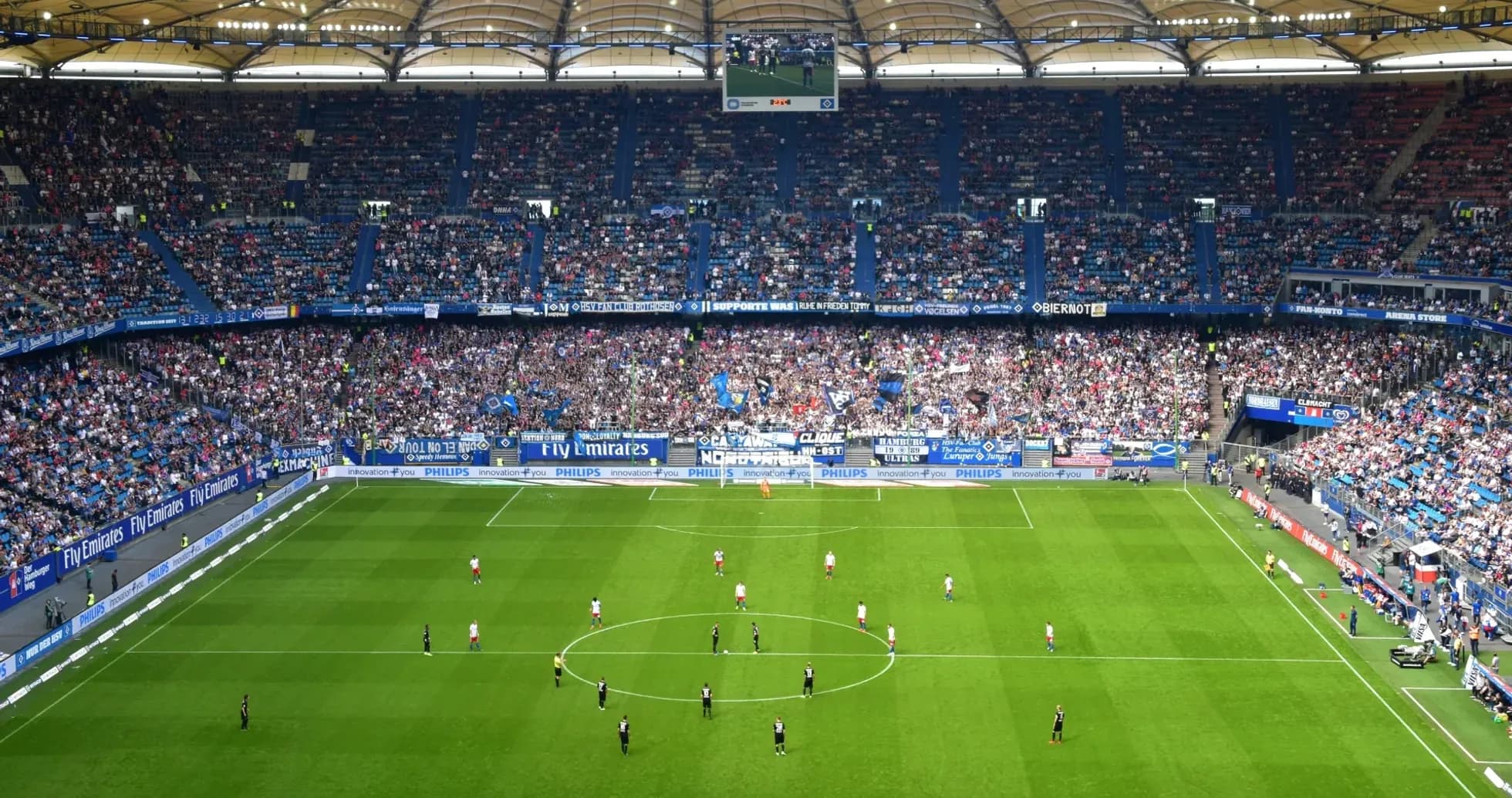
Tampa Bay Rowdies Dominate Sporting JAX in USL League One Cup
Under the lights at Hodges Stadium, Sporting JAX ran into the fully formed machine that is Tampa Bay Rowdies in the USL League One Cup, Group 7. The 2–0 away win confirmed what the standings had been hinting at: Tampa Bay are the group’s benchmark, while Sporting JAX are still trying to work out their identity at this level.
I. The Big Picture – contrasting trajectories
Following this result, the table snapshots are stark. Tampa Bay sit top of Group 7 with 9 points, a perfect record of 3 wins from 3, and a goal difference of 7, built from 8 goals scored and just 1 conceded overall. Their campaign numbers underline a ruthless balance: on their travels they average 3.0 goals for and only 0.5 against, and they have yet to fail to score home or away.
Sporting JAX, by contrast, are in 3rd with 4 points and a goal difference of -3, scoring 4 and conceding 7 overall. The most telling split is home versus away. At home, across 2 games, they have yet to score and have conceded 3; away, they have shown more bite, with 3 goals scored and only 2 conceded. Heading into this game, their total scoring rate stood at 0.8 goals per match, but that was entirely driven by their form on their travels, where they averaged 1.5. At Hodges Stadium, the attack has simply not arrived.
That duality framed the tactical story: a home side that is more comfortable counter-punching on the road, against an away side that can both dominate and suffocate.
II. Tactical Voids – where the squads were thin
Sporting JAX’s lineup felt functional rather than fully weaponised. J. McGuire in goal had a back line of W. Ackwei, A. Gomez, E. Dudley and E. Rito in front of him. In midfield, W. Kuzain and B. Soumaoro were tasked with knitting together possession, while T. Rose, J. Evans and E. Jaaskelainen supported K. Sadlier as the nominal attacking spearhead.
The issue was not numbers but profiles. There is no clear, natural penalty-box predator in this XI; Sadlier likes to drift and combine, Evans and Jaaskelainen are more hybrid creators than pure finishers. Without a reliable home scoring record – and with the data confirming 2 home games without a single goal – Sporting JAX’s structure often resembled a side designed for transitions rather than for breaking down a compact opponent.
On the bench, options like A. Reid, R. Pedder and L. Granitur offered energy and fresh legs, but not a proven solution to the finishing problem that has defined their home campaign. There were no obvious absences flagged in the data, yet tactically it felt as if they were missing a penalty-box focal point.
Tampa Bay, under Dominic Casciato, arrived with a deeper, more versatile squad. J. Waite anchored the back, shielded by a line including A. Rodriguez, L. Wyke and B. Schaefer. The wide and midfield zones were populated by N. Dossantos, C. Ostrem, M. Schneider and L. Perez, with S. Cruz and M. Micaletto linking play into M. Myers up front.
Crucially, the bench carried a second wave of attacking threats: R. Cicerone, Mattheus, G. Vivi Quesada and E. Conway all represent different types of forward thrust – runners in behind, technicians between the lines, and direct goal threats. This depth is reflected in their season numbers: 8 goals overall, spread across home and away, and no failures to score. Even when the starting front line is contained, Casciato can reshuffle the deck.
Disciplinary trends further shaped the tactical voids. Sporting JAX’s yellow card distribution is heavily skewed towards the 46–60 minute window, where 55.56% of their cautions arrive, and there is a late-game surge at 76–90 minutes with 22.22%. That pattern hints at a team that often ends up chasing games after the break, stretching themselves and fouling to slow counters. Tampa Bay’s yellows are more evenly spread, with 33.33% in 46–60 and another 33.33% in 76–90, suggesting a side that maintains intensity but rarely loses control.
III. Key Matchups – Hunter vs Shield, Engine Room vs Enforcer
Without explicit top-scorer data, the “Hunter vs Shield” duel is best read through unit performance. Tampa Bay’s attacking unit, led by Myers and supported by Micaletto and Cruz, represents the Hunter: on their travels they average 3.0 goals, and their biggest away win, a 1–4 result, shows their capacity to explode once they sense weakness. Sporting JAX’s defensive Shield at home has conceded 1.5 goals per game, and has yet to be reinforced by the psychological comfort of a clean sheet at Hodges Stadium.
That imbalance played out exactly as the numbers suggested. Tampa Bay did not need to chase chaos; they could lean on structure, knowing that one or two incisive moves would likely be enough against a home attack that averages 0.0 goals at this venue.
In the “Engine Room” battle, W. Kuzain and B. Soumaoro were tasked with controlling tempo for Sporting JAX. Their challenge was immense: Tampa Bay’s midfield block, with Schneider’s work rate and Micaletto’s intelligence between the lines, has underpinned a defensive record of just 1 goal conceded overall and 0.5 away. Every Sporting JAX foray forward risked leaving space for Tampa Bay’s counters, where Cruz and Perez could spring into the channels.
With Sporting JAX’s yellow cards peaking immediately after half-time, the danger zone for them was always the first 15 minutes of the second half – precisely the period when Tampa Bay’s fresh legs from the bench could tilt the game further in their favour. The Rowdies’ own late-game yellow spike (33.33% in 76–90) speaks to a team that is often protecting a lead, committing tactical fouls high up the pitch rather than scrambling desperately in their own box.
IV. Statistical Prognosis – what this game tells us next
Following this result, the statistical prognosis is clear. Tampa Bay’s underlying profile – 2.7 goals for and 0.3 against per match overall, 2 clean sheets, and no failures to score – belongs to a side built for knockout football. Their squad depth, tactical flexibility and capacity to manage game states mean their xG trends are almost certainly positive: they create enough, concede little, and control when and where the game is played.
Sporting JAX’s numbers point in the opposite direction, especially at home. An overall average of 0.8 goals for and 1.3 against, combined with 2 failures to score and no home wins, suggests that their current tactical model is better suited to away counter-attacks than to imposing themselves at Hodges Stadium. Their defensive structure is not disastrous – 5 conceded overall is manageable – but the lack of home goals turns every mistake into a potential defeat.
Narratively, this match felt less like an upset and more like a confirmation of trends. Tampa Bay Rowdies arrived as the group’s standard-setters and left with that status reinforced. Sporting JAX, meanwhile, are left with a clear, data-backed mandate: find a way to translate their away attacking verve into home matches, or accept that every night at Hodges Stadium will begin with a margin for error that is vanishingly small.
Related News

Indy Eleven Edges Lexington in USL League One Cup Showdown
Louisville City Edges Detroit City in Penalty Shootout
Lexington vs Indy Eleven: Key USL League One Cup Clash
Lexington vs Indy Eleven: USL League One Cup Group Stage Preview
Detroit City vs Louisville City Match Preview

Lexington vs Indy Eleven Predicted Lineups: Team News and Match Insights