
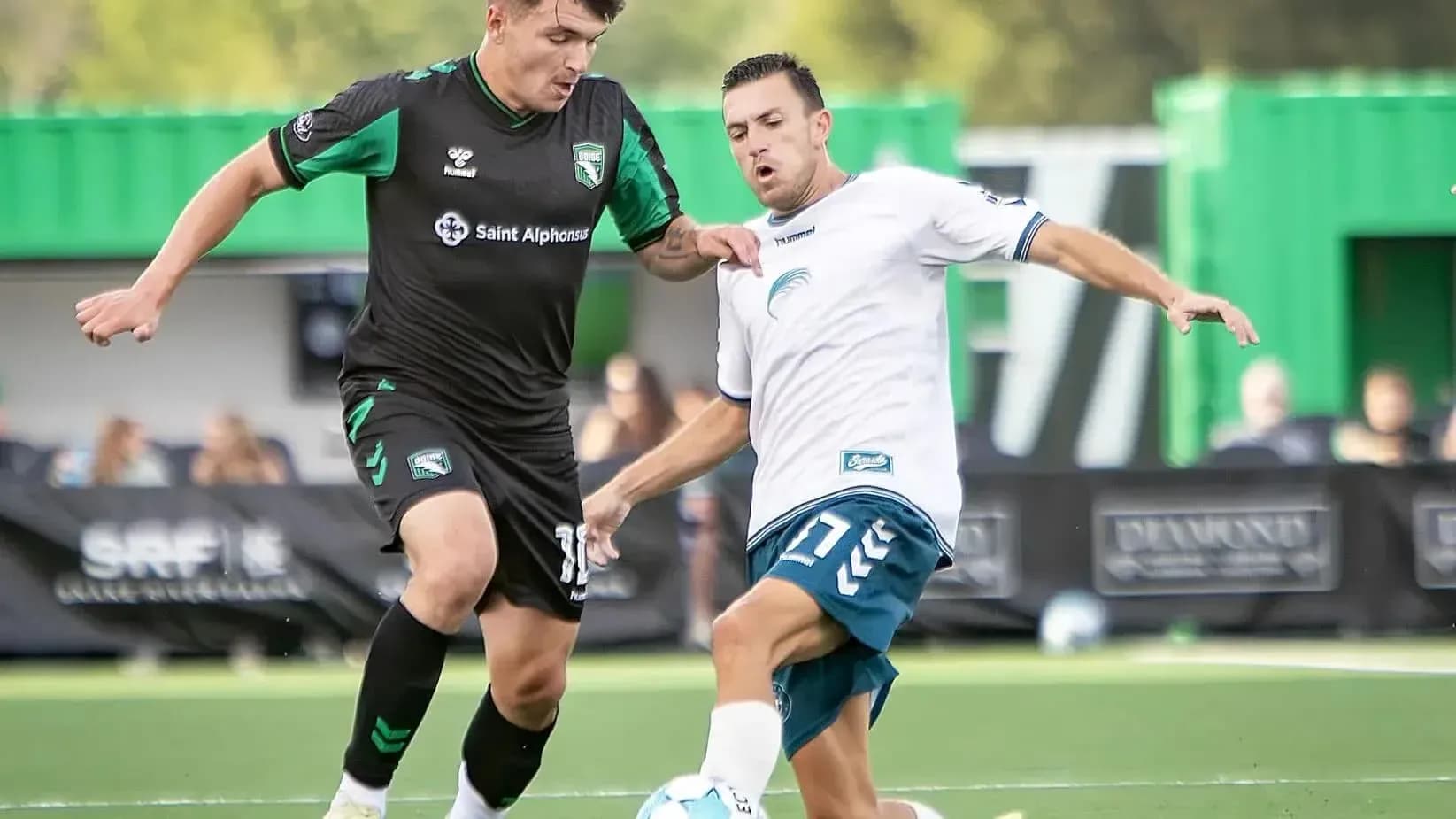
Spokane Velocity Edges Boise in USL League One Clash
On a cool night at One Spokane Stadium, Spokane Velocity and Boise met in a Group 1 clash that felt far bigger than an early-stage USL League One Cup fixture. By the final whistle, Spokane had edged it 2–1, a scoreline that neatly captured the collision of styles between a meticulous home side and a more chaotic, free-scoring visitor.
Seasonal Profile
Heading into this game, Spokane’s seasonal profile was defined by control and narrow margins. Overall they had taken 6 points from 3 matches, with a goal difference of -2, built on 3 goals scored and 5 conceded. The split between home and away told the deeper story: at home they were perfect, with 2 wins from 2, scoring 3 and conceding just 1, an average of 1.5 goals for and 0.5 against at One Spokane Stadium. On their travels, though, they had lost their only match 4–0, failing to score and conceding at an average of 4.0 away. This was a side that clearly needed the comfort of home to express itself.
Boise arrived as the group’s wild card. Their 5 points from 3 matches came with a goal difference of 2 overall, built on 10 goals for and 8 against. The raw attacking output was unmistakable: at home they averaged 4.0 goals for and 3.0 against; away, they still scored 1.5 and conceded 1.5 on average. Clean sheets were non-existent in total, but so were blank scoresheets. Boise’s football was high-wire, high-variance, and unapologetically front-foot.
Tactical Lineups
Within that context, the lineups framed a fascinating tactical chessboard.
For Spokane, S. Lewis in the number 1 shirt anchored a defence that had been so much more secure at home than away. In front of him, the presence of S. Fitch and G. Margvelashvili, alongside C. Miller and D. Waldeck, suggested a back line built more for structure than improvisation. The defensive unit’s task was clear: tame a Boise attack that had already produced 7 goals in total, with an away average of 1.5.
Ahead of them, the spine of C. Fernandez and A. Lewis looked like the natural “engine room” pairing. Fernandez, wearing 6, and A. Lewis, in 77, formed the axis from which Spokane could both protect their fragile overall goal difference and feed a lively attacking trio. The creative burden likely fell on L. Gil in the 10 shirt, with J. Gallardo and the sharp N. Brett (9) offering vertical threat and movement.
On the bench, Spokane had an intriguing mix of profiles: the technical N. Vinyals (8), the energy of L. Opara (13) and M. Hernandez (14), and the defensive insurance of N. Spielman (3). Later in the match, the option for fresh legs like I. Covi (20), M. Mensah (33), J. Buck (37), or R. Wells (22) gave Leigh Veidman the tools to either shut a game down or chase it.
Boise’s XI, by contrast, looked every bit as adventurous as their numbers suggested. J. Mazzola (99) in goal has been left exposed by a side that concedes 2.0 goals on average overall, but his shot-stopping is regularly tested. In front of him, the defensive quartet of J. Ricketts, J. Yaro, J. Crull, and N. Moon had to cope with a Spokane side that, at home, scores consistently if not prolifically.
The real Boise identity was in midfield and attack. P. Mayaka (66) and M. Ndiaye (5) formed the likely double pivot, tasked with both screening and sparking transitions. Ahead of them, the creative trio of D. Kostyshyn (10), B. Bodily (7), and T. Moshobane (11) offered varied routes to goal: late runs, wide dribbles, and shots from distance. Leading the line, T. Amang (22) was the spearhead of a side that had already shown they could score 4 at home and 3 on their travels.
From the bench, Boise could alter the game’s rhythm with the introduction of Luan Brito (9) as an alternative focal point, or inject defensive steel with H. Sargis (33) and K. Oyler (3). Wide and creative options like J. Hanson (17), J. Stephens (27), and O. Yehya (23) offered tactical flexibility if the initial plan stalled.
Disciplinary Trends
Disciplinary trends added another layer to the narrative. Spokane’s yellow cards were heavily clustered between 61–75 minutes, with 42.86% of their cautions arriving in that window, and they had already seen a red card shown between 46–60 minutes (100.00% of their reds in that range). Boise’s bookings were more evenly spread, but with noticeable spikes: 33.33% of their yellows came between 31–45 minutes, and they picked up further cautions in every quarter-hour from 0–15 through 76–90. This hinted that the middle of each half, and the final stretch, would be fractious, stop-start phases where set pieces and transitions could swing the tie.
Match Dynamics
That is where the “Hunter vs Shield” dynamic crystallised. Boise, the hunter, brought a total goals-for average of 2.3 into a stadium where Spokane’s defensive shield at home had allowed just 0.5 goals per match. Conversely, Spokane’s more modest total attacking average of 1.0 met a Boise back line that conceded 2.0 overall and had yet to record a clean sheet in total. The match always felt likely to be decided by whether Spokane’s controlled structure could drag Boise’s chaos into narrower channels, or whether Boise could blow the game open.
In midfield, the “engine room” duel between Spokane’s C. Fernandez and A. Lewis and Boise’s Mayaka and Ndiaye was central. Spokane needed their pair to slow Boise’s transitions, recycle possession, and give Gil the pockets to operate. Boise’s duo, by contrast, had to win second balls and feed Kostyshyn and Bodily early, turning Spokane’s compactness against them.
Conclusion
Following this result, the numbers and the narrative align: Spokane remain a formidable home outfit, their One Spokane Stadium form continuing to outstrip their overall goal difference. Boise, even in defeat, stayed true to their identity: they scored, they conceded, and they lived on the edge. In a tournament where xG and defensive solidity often decide who survives the group, Spokane’s balance between cautious structure and timely incision may yet prove more sustainable than Boise’s exhilarating volatility.
Related News
Indy Eleven Edges Lexington in USL League One Cup Showdown
Louisville City Edges Detroit City in Penalty Shootout
Lexington vs Indy Eleven: Key USL League One Cup Clash
Lexington vs Indy Eleven: USL League One Cup Group Stage Preview
Detroit City vs Louisville City Match Preview
Lexington vs Indy Eleven Predicted Lineups: Team News and Match Insights