
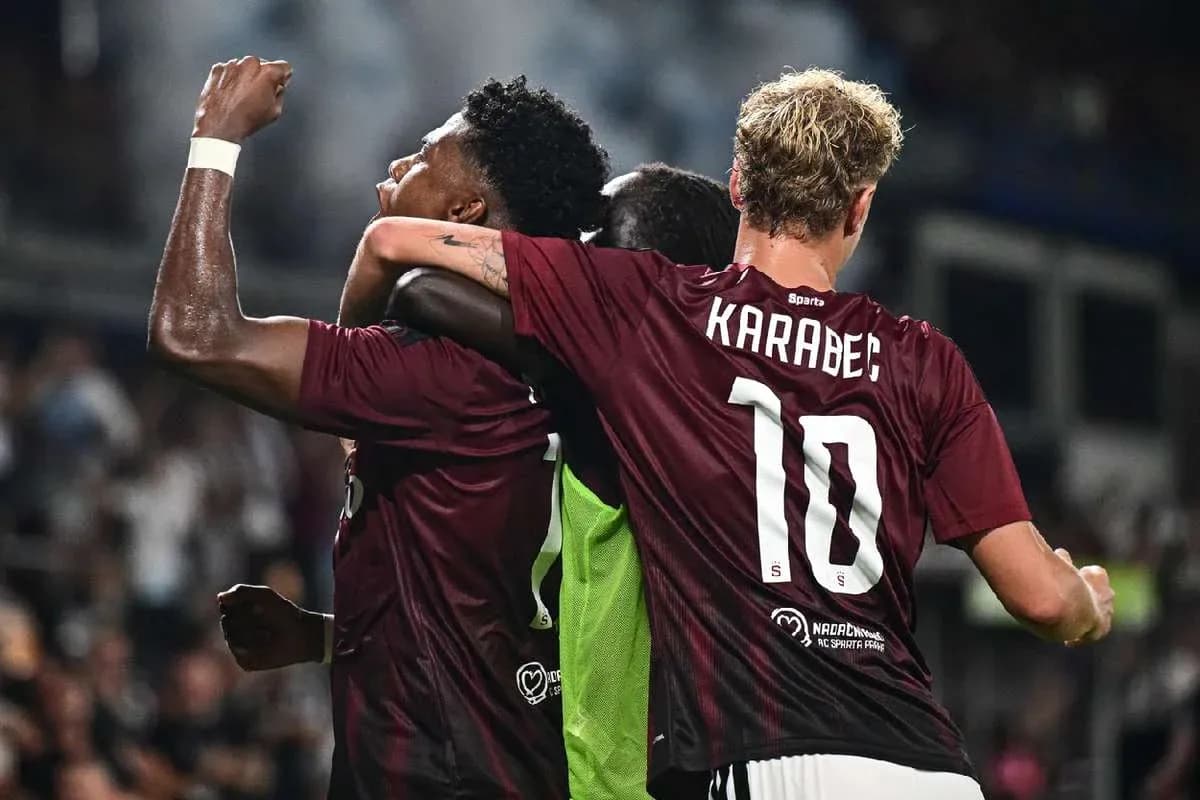
Sparta Praha's Tactical Mastery Over Lyon in UEFA Qualifiers
Sparta Praha’s 2-1 comeback win over Lyon at Pragues Letna Hill in the UEFA Champions League 3rd Qualifying Round was defined by structural clarity and superior adaptation rather than sheer dominance. Lyon’s 3-4-3 gave them early control of vertical spaces and produced the opening own goal, but Sparta’s 4-2-3-1, under Brian Priske, steadily asserted itself through better use of the double pivot and half-spaces. The hosts edged possession 52% to 48%, but more importantly translated that into cleaner progression and higher passing security: 442 passes with 383 accurate (87%) versus Lyon’s 404 and 331 (82%). Once Sparta adjusted their pressing and full-back heights after the break, Lyon’s back three and wing-backs were increasingly pinned, and the game tilted decisively towards the Czech side.
Out of possession, Sparta’s 4-2-3-1 behaved like a 4-4-2, with J. Brunes stepping up alongside the No. 10 line to press Lyon’s central centre-back and screen passes into midfield. The double pivot of R. Macek and A. Irving was crucial: they alternated stepping to Lyon’s interior midfielders (T. Morton and M. de Carvalho) while the ball-near winger tucked in to protect the half-space. This compactness limited Lyon to 11 total shots and only 4 on goal despite their 9 corners and 8 shots inside the box, forcing much of their threat to come from set-pieces and chaotic moments rather than sustained positional attacks.
In possession, Sparta’s full-backs M. Rynes and M. Suchomel were the main structural levers. Against Lyon’s front three, they consistently pushed high to create a 2-v-1 on the flanks against the wing-backs. On the left, Rynes’ timing was especially influential: his overlaps and underlaps not only produced Sparta’s equaliser but also dragged Lyon’s wide centre-back (often R. Kluivert) into uncomfortable wide zones, opening lanes for A. Karabec and J. Mercado to receive between the lines. Sparta’s 8 shots inside the box from 9 total attempts underline how their attacks were engineered to reach high-value zones rather than speculative efforts.
Key Tactical Turning Point
The key tactical turning point came after half-time. Lyon’s 3-4-3 had initially found joy by pushing A. Maitland-Niles and M. Ouedraogo high to pin Sparta’s full-backs, with L. Openda threatening depth. However, once Sparta raised their pressing height and shortened their build-up distances, Lyon’s midfield duo were forced to receive under pressure facing their own goal. This reduced Lyon’s ability to connect quickly into their front three and left C. Tolisso and Openda increasingly isolated. The fact that Lyon, despite 9 corners and 4 blocked shots, could not generate a second goal speaks to how Sparta’s central block stabilised.
Individually, M. Rynes was the emblem of Sparta’s tactical shift. Defensively, he held his line well in the first half to manage Lyon’s right-sided rotations, and offensively he became a constant outlet as Sparta pushed for parity. His goal at 63’ came from exactly the pattern Sparta had been cultivating: a full-back arriving from deep into a well-constructed attacking shape, fed by A. Irving, who had been the metronome in the pivot. Later, Rynes turned provider for J. Mercado, underlining how the left flank became Sparta’s primary route to dismantle Lyon’s back three.
In the central corridor, A. Karabec’s role as the No. 10 was to connect lines and trigger pressure. His yellow card at 66’ for “Argument” reflected both the emotional intensity of the contest and his centrality in the duel zones. Before his withdrawal at 85’ (H. Sochurek IN for Karabec OUT), he had repeatedly dropped between the lines to overload Lyon’s double pivot, helping Sparta maintain their pass accuracy advantage and control the rhythm after going ahead.
Lyon’s attacking structure, nominally a 3-4-3, often morphed into a 3-2-5 in possession, with wing-backs pushing very high and one of the forwards dropping into the half-space. This created width and allowed them to reach 11 total shots and 8 inside the box, but their shot profile was less controlled than Sparta’s. The missed penalty by Corentin Tolisso at 67’ epitomised a night where Lyon’s best chances came from moments rather than patterns. Their 4 shots on goal were met by 4 saves from J. Surovcik (Sparta Praha), whose handling and positioning were key in maintaining Sparta’s platform for the comeback.
From a defensive standpoint, Sparta’s back four, especially the central pairing of A. Sevinsky and A. Sorensen, were disciplined in holding the line and dealing with Lyon’s attempts to stretch them with diagonal runs. The own goal by M. Suchomel just before half-time was a structural accident rather than a systemic flaw: Sparta’s defensive block had largely contained Lyon’s open-play threat. After the interval, the back line held a slightly higher position, compressing the field and allowing the midfield to contest second balls more aggressively, which in turn limited Lyon’s ability to sustain pressure despite their corner count.
Lyon’s defensive issues stemmed from the spaces between their wide centre-backs and wing-backs. Once Sparta’s wingers and full-backs synchronised their movements, Lyon’s 3-4-3 struggled to cover both the touchline and the half-space. The late introduction of M. Fofana (IN) for M. de Carvalho (OUT) and E. Nuamah (IN) for M. Ouedraogo (OUT) at 75’ aimed to inject more verticality and dribbling, but by then Sparta had already established territorial control and were managing the tempo through controlled possession and timely substitutions.
In goal, D. Greif (Lyon) faced 3 shots on goal and made 1 save, a reflection of how Sparta’s finishing, once they broke Lyon’s structure, was both efficient and well-prepared. J. Surovcik (Sparta Praha), by contrast, had more to do with 4 saves, matching Lyon’s 4 shots on target and underpinning the hosts’ resilience after the early setback. The goalkeeper performances aligned with the broader tactical story: Lyon generated more raw volume, but Sparta generated clearer, better-structured chances and defended their box with greater composure.
Overall, the match was a study in mid-game adjustment. Sparta Praha used their 4-2-3-1 framework to gradually dismantle Lyon’s 3-4-3, leveraging superior pass accuracy, intelligent full-back usage, and a compact pressing block to turn a 0-1 deficit into a 2-1 advantage, and then manage it with tactical maturity.
Related News

Luis Díaz Confident Bayern Munich Can Win Champions League
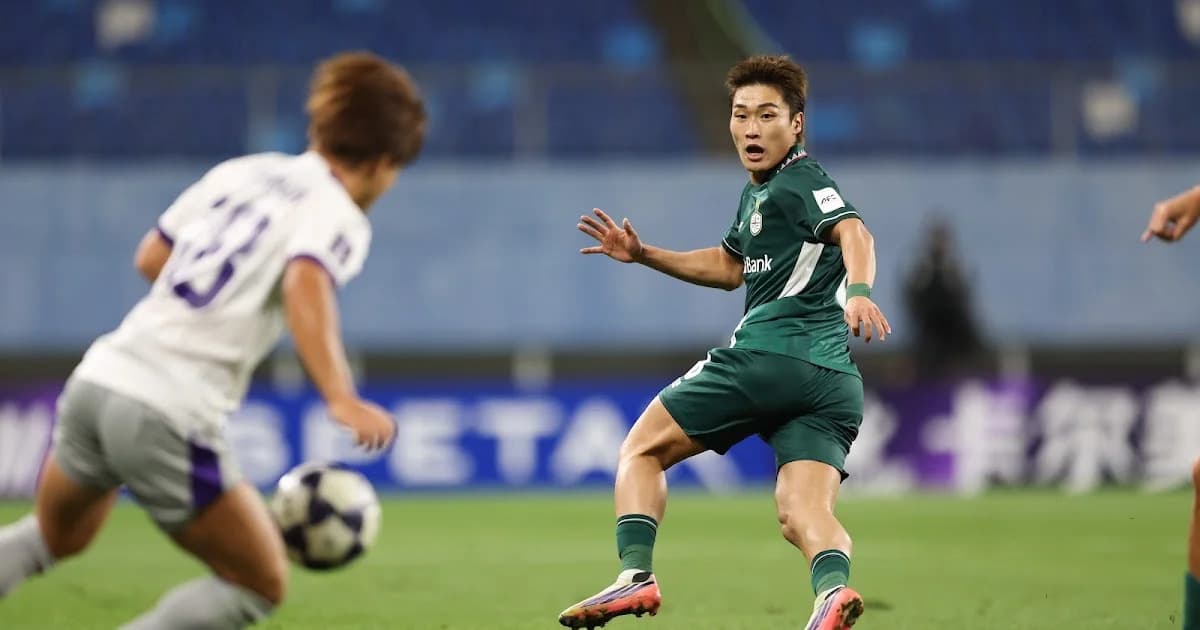
Insights from AFC Champions League Matchday One: K League Clubs’ Strategies

Vincent Kompany's Bayern Munich Future Not Tied Solely to Champions League Outcome
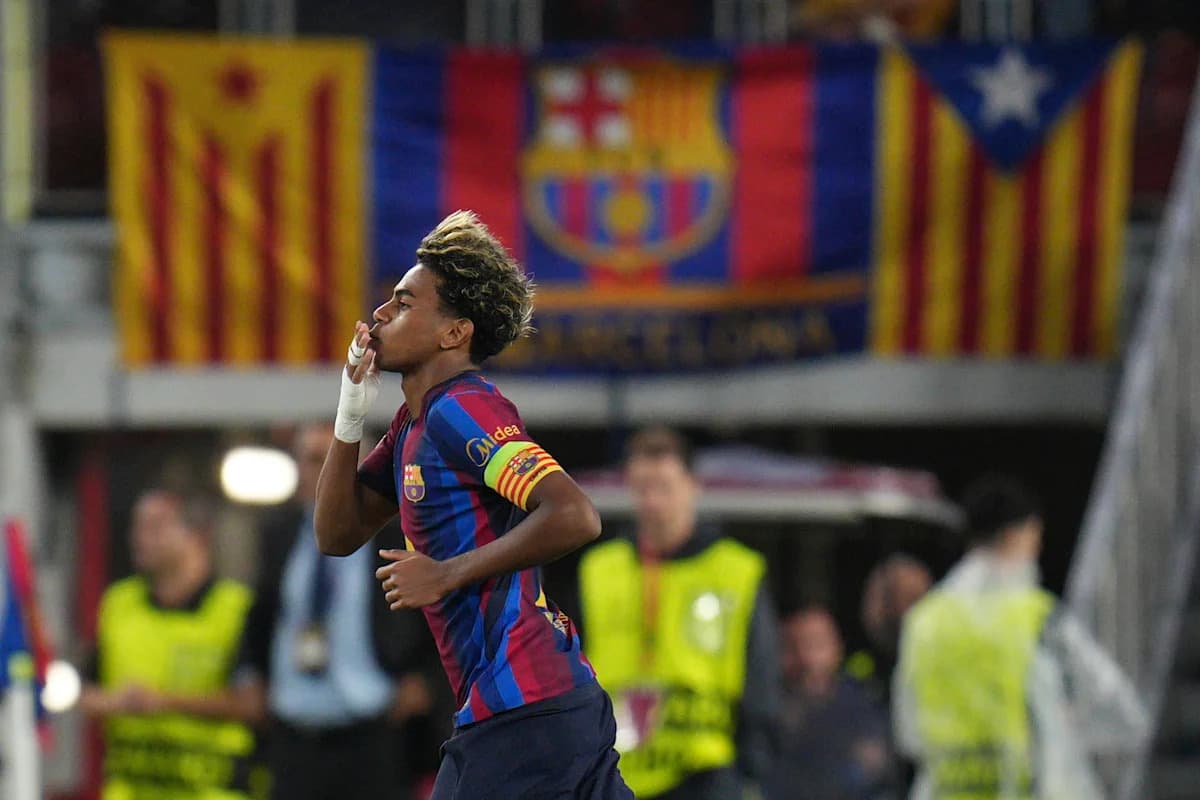
Barcelona's Camp Nou Chosen for 2029 Champions League Final, Munich Set for 2028
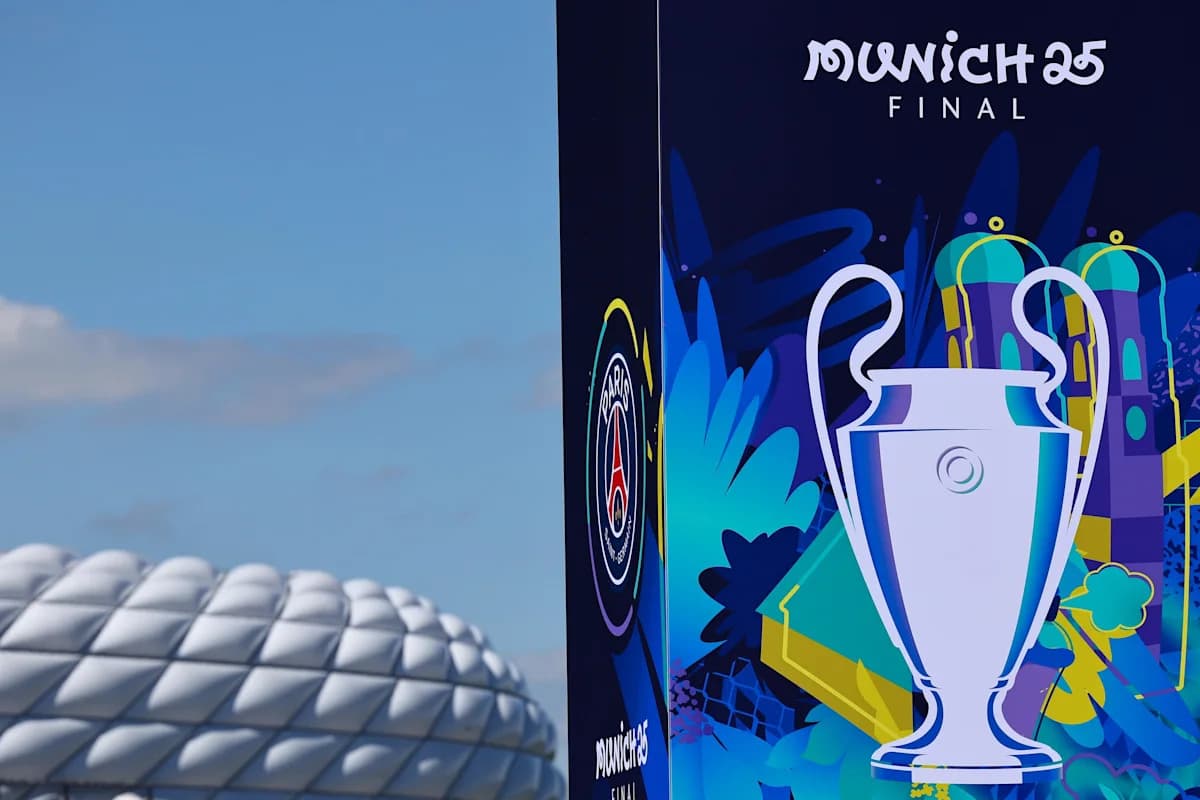
Allianz Arena to Host 2028 UEFA Champions League Final

Allianz Arena to Host 2028 Champions League Final for Third Time