
Spain’s Tactical Mastery Behind Their Second World Cup Triumph
Spain secured the 2026 FIFA World Cup title by defeating Argentina 1-0 in extra time, thanks to Ferran Torres' late goal. Their success was not just about that moment but a tournament-long display of control, solid defence, and tactical sharpness.
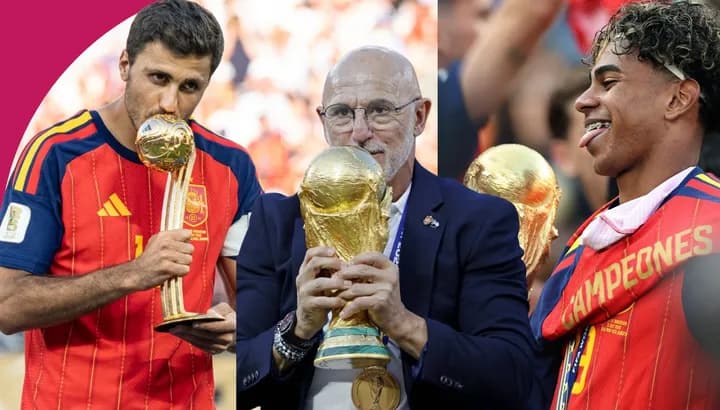
This victory marked Spain’s second men’s World Cup championship, coming 16 years after their first in South Africa. Unlike the possession-heavy style of 2010, Luis de la Fuente’s team blended technical skill with a more direct and adaptable approach, allowing them to overcome every opponent they faced.
Building Momentum Through the Tournament
Spain entered the expanded 48-team competition as one of the favourites, carrying momentum from recent international victories under De la Fuente. Rather than rushing through, they grew stronger with each match.
- Group Stage: Spain topped Group H unbeaten — 0-0 vs Cabo Verde, 4-0 win over Saudi Arabia, and 1-0 victory against Uruguay.
- Round of 32: A commanding 3-0 win against Austria.
- Round of 16: Narrow 1-0 victory in the Iberian derby versus Portugal.
- Quarter-finals: Edged Belgium 2-1.
- Semi-finals: Controlled 2-0 win over France.
- Final: Extra-time 1-0 triumph against Argentina.
Eliminating four football giants consecutively—Portugal, Belgium, France, and Argentina—Spain stuck to their core principles throughout.
Defensive Strength Was Key
While Spain’s attack drew attention, it was their defence that laid the foundation for victory. Over eight games, they conceded just one goal and kept seven clean sheets.
Spain did not sit back defensively. Instead, they used possession as a defensive tool, controlling midfield and forcing opponents into low-quality chances. When they lost the ball, pressing was swift and coordinated to regain possession quickly.
Rodri played a crucial role shielding the defence, while the backline stayed compact, minimizing gaps between midfield and defence. Goalkeeper Unai Simón provided reliability with confident saves when tested.
Youth also shone through with defender Pau Cubarsi impressing by remaining calm on the ball and composed under pressure, showing maturity beyond his years.
Possession with Intent
Spain maintained control of matches through possession but avoided aimless passing. Instead, they dictated tempo and manipulated opponents, drawing them out of position to exploit the spaces created.
The final showcased this philosophy: Spain held around 65% possession, completed more passes, and had more shots on target, effectively disrupting Argentina's rhythm.
Each sustained passing sequence served as both an attacking and defensive weapon, limiting counterattacks.
De la Fuente’s Modern Spain
Head coach Luis de la Fuente modernized Spain’s style instead of copying past teams. He kept technical quality while making the side more flexible, faster in transitions, and ready to attack vertically when openings appeared.
He also trusted younger players, creating a squad that sustained high intensity across the tournament, building on previous European Championship and Nations League success.
The Rise of New Talents
Spain’s win reflected investment in youth development. Lamine Yamal emerged as a star, using his pace and creativity to stretch defences and create space.
Pedri and Gavi added intelligence and technique in midfield, while Alex Baena offered speed and directness on the wings. Cubarsi stood out as one of the tournament’s breakthrough defenders, exemplifying Spain’s focus on technical skills and tactical awareness.
Rodri’s Silent Control
Rodri quietly dominated the midfield, offering protection to the defence, recovering possession, controlling tempo, and connecting play. His positional sense freed teammates to attack while maintaining balance.
His passing consistently broke opposition lines securely. These qualities earned him the Golden Ball as the tournament’s best player.
Tactical Adaptations in Knockouts
Each knockout game required a unique approach. Portugal tested patience, Belgium forced careful transition management, and France challenged defensive organisation.
Against Argentina in the final, Spain controlled possession, limited attacks, and stayed disciplined until Ferran Torres scored in extra time. It wasn’t flashy but perhaps Spain’s most complete performance.
Key Stats From the Tournament
- Record: Unbeaten, seven wins and one draw.
- Goals scored: 14
- Goals conceded: 1
- Clean sheets: 7
- Advanced metrics: Highest expected goals (xG) and among the best in expected goals against (xGA), showing their balance in attack and defence.
A New Era for Spanish Football
The 2026 champions balanced Spain’s traditional technical excellence with greater tactical flexibility, defensive resilience, and varied attacking options. This combination separated them from the competition, allowing Spain not just to win but to command the tournament.
Related News
World Cup 2026 Best XI: Messi, Rodri, Mbappe Lead the Lineup
Spain’s Tactical Mastery Behind Their Second World Cup Triumph
Gianni Infantino Criticizes World Cup 2026 Detractors Amid Event's Success
FIFA President Gianni Infantino Responds Strongly to 2026 World Cup Critics
Kylian Mbappé Pens Open Letter to France Fans After 2026 World Cup

July 2026 Football Transfers: All Confirmed Moves Across Top Leagues