
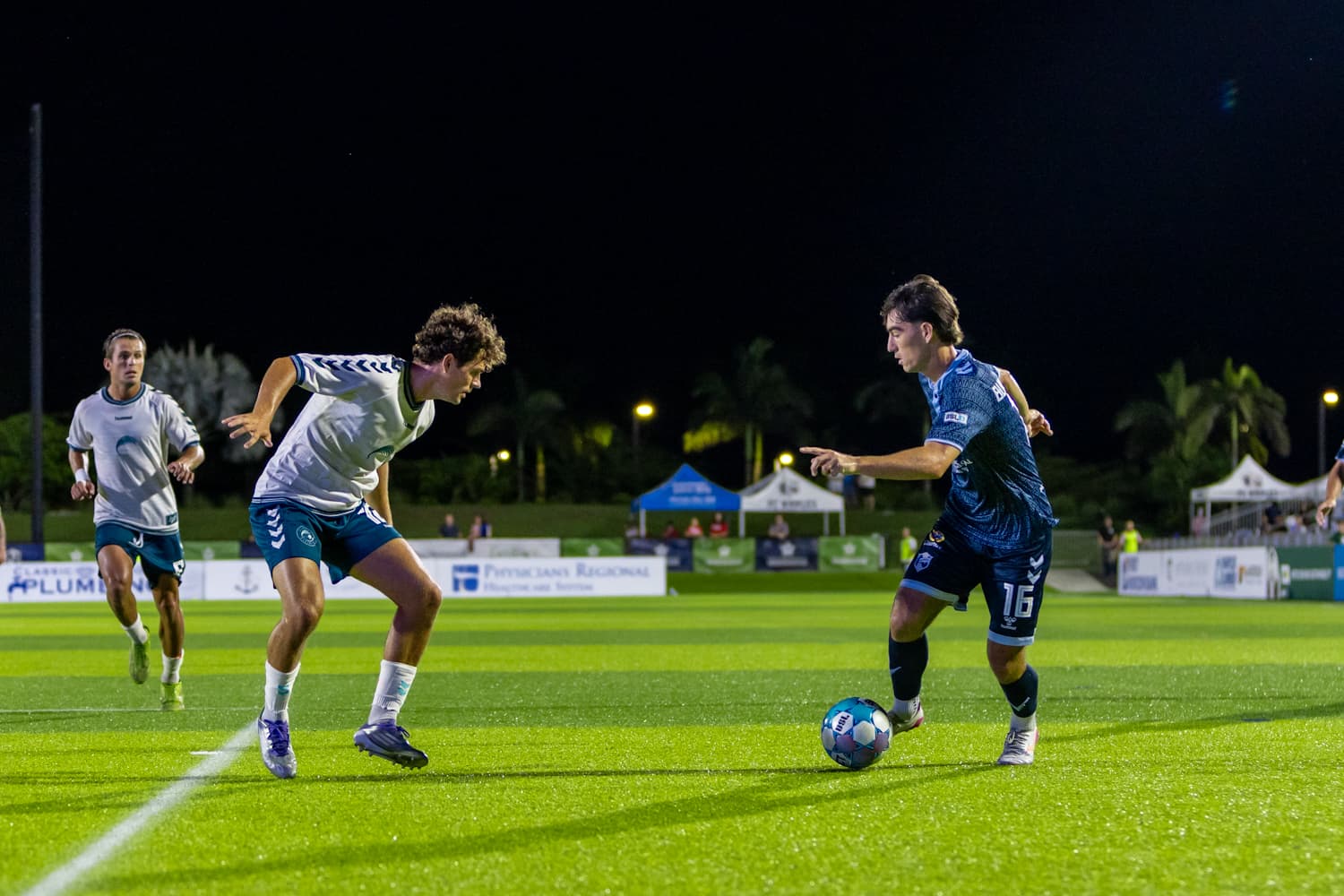
Sarasota Paradise Defeats Naples 2-0 in USL League One Cup
Under the lights at Paradise Coast Sports Complex, this USL League One Cup Group 7 tie finished with a clear verdict: Sarasota Paradise left Naples with a 2–0 away win, a result that sharpened the contrast between the two sides’ developing identities in this inaugural cup campaign.
I. The Big Picture – Group 7 fault lines
Following this result, the table tells a blunt story. Naples sit 5th in Group 7 with 2 points and a goal difference of -3, having taken 1 win and 2 defeats from 3 matches. Overall they have scored 5 and conceded 8; their season so far has been defined by fragility without the ball. At home, they have played 2, winning 1 and losing 1, with 2 goals for and 3 against.
Sarasota Paradise, meanwhile, occupy 4th with 3 points and a goal difference of -2. Across their 3 group matches they have 1 win and 2 defeats, scoring 2 and conceding 4. The pattern is stark: their total goals for (2) exactly matches what they produced on their travels, where they have played 2, winning 1 and losing 1, with 2 goals scored and 2 conceded away. This victory in Naples neatly mirrors that away profile: low-scoring, controlled, and built on a compact defensive block.
The broader seasonal DNA is already emerging. Naples are open, almost naïve at times: total goals for average 1.0 per game both at home and away, but total goals against balloon to 2.3 overall, driven by a punishing 4.0 conceded on their travels. Sarasota Paradise are more cautious and measured: total goals for average 0.7 per match, goals against 1.3, with a notably tighter away record of 1.0 conceded per game.
II. Tactical Voids – Discipline and the unseen absences
There is no explicit injury list for either side, so the tactical voids here are less about who is missing and more about how each squad manages emotional control and structural discipline.
Naples’ disciplinary profile is revealing. Heading into this game, 40.00% of their yellow cards arrived between 46–60 minutes, with another 20.00% in the 31–45 window and 20.00% from 76–90. Crucially, their only red card in the competition came in the 46–60 minute band, a period where their intensity too often curdles into recklessness. It speaks of a side that starts brightly, then loses composure as the second half opens.
Sarasota Paradise, by contrast, spread their cautions more broadly, but with a late spike. Heading into this match, 37.50% of their yellows came from 76–90 minutes, 25.00% between 46–60, and 12.50% in both the 16–30 and 31–45 ranges. They push the line more as the game wears on, but have so far avoided a red card in any time band.
The absence of clean sheets for Naples – 0 at home, 0 away, 0 in total – is another structural void. They have already failed to score once at home, underlining how a bad defensive day is rarely rescued by attacking firepower. Sarasota Paradise arrived with 1 clean sheet in total, earned away from home, and another shutout here only reinforces that their defensive unit travels well.
III. Key Matchups – Hunter vs Shield, Engine Room vs Enforcer
Without explicit individual scoring charts, the “Hunter vs Shield” narrative is collective rather than centered on one striker. For Naples, the attacking burden falls on a front unit featuring J. Grant (shirt 99), G. Miglietti (9) and C. Garcia (11). This trio is tasked with lifting a home attack that had produced just 2 goals in 2 home games heading into the night, averaging 1.0 per match at Paradise Coast.
Their challenge was to pierce a Sarasota Paradise away defence that had conceded only 2 goals in 2 away fixtures, again an average of 1.0 per game on their travels. That “Shield” held. Sarasota’s back line, anchored by R. Burlew (2), D. Watters (4) and R. Valentine (3), supported by the wide defensive work of H. Backstrand (22), managed the spaces around the Naples forwards with calm, often forcing Grant and Miglietti to receive with their backs to goal rather than attacking space.
In midfield – the “Engine Room” – Naples leaned heavily on the technical profiles of J. Osorio (8) and J. Yearwood (20), supported by the energy of H. Gay (12) and the wide industry of M. Torrellas (21) and J. Cisneros (3). Their task was to outplay Sarasota’s central core of A. Rodriguez (16), E. Bryant (7), M. Tainio (20) and the roaming threat of J. Bender (9).
Here, Sarasota Paradise’s balance told. Bryant and Tainio provided the metronome, recycling possession and pulling Naples’ midfield block from side to side. Bender’s movement between the lines prevented Naples from locking into a settled shape, and every time Osorio tried to step out to engage, space opened behind him. With S. Karani (11) and D. Brulinski (50) stretching the flanks, Sarasota repeatedly created 3v2 and 4v3 situations in wide areas, suffocating Naples’ attempts to counter.
The bench options underscored the contrast in profiles. Naples had creative and attacking changes in A. Ferrin (10), T. Gray (7) and A. Bulai-Tudor (16), plus the stabilising presence of L. Mastrantonio (5) and A. Mesias (23). Sarasota Paradise, on the other hand, could tighten the screws with C. Stretch (6), add fresh attacking legs in S. Roed (46) and J. Pettersen (14), or simply refresh the front line with B. Krueger (18) and K. Sanchez (52). The away side’s substitutions were geared toward maintaining structure and preserving a lead; Naples’ bench was built to chase games, not protect them.
IV. Statistical Prognosis – What this result really says
Even without explicit xG numbers, the season data offers a clear analytical verdict.
Naples’ total goals against average of 2.3 per match, with 1.5 conceded at home, is simply incompatible with their modest attacking return of 1.0 goals for overall. They live on a knife-edge: every game demands attacking overperformance just to reach parity. The lack of any clean sheet in total underlines that their baseline defensive structure is not yet robust enough for knockout-style cup football, even in a group stage environment.
Sarasota Paradise, by contrast, operate at slimmer margins but with greater control. Their total goals against average of 1.3, and particularly their away figure of 1.0, gives them a platform to win low-scoring matches. Yes, their total goals for average of 0.7 is modest, and they have already failed to score twice in total, but when they do strike – as they did twice here – their defensive solidity away from home makes those goals count double.
Following this result, the trajectories diverge. Naples must confront a structural question: can they lower that goals-against curve without losing the attacking ambition symbolised by Grant, Miglietti and Garcia? Their disciplinary profile suggests that improved emotional control around the 46–60 minute window – where 40.00% of their yellows and 100.00% of their reds have clustered – could be the first tactical adjustment.
For Sarasota Paradise, the path is clearer. Their away template is proven: compact back four, industrious midfield, and just enough incision from Bender, Karani and the wide runners to tilt tight games. If they can nudge that total goals for average upward without loosening their defensive grip, this 2–0 in Naples may be remembered as the night their Group 7 campaign truly found its shape.
Related News

Indy Eleven Edges Lexington in USL League One Cup Showdown

Louisville City Edges Detroit City in Penalty Shootout
Lexington vs Indy Eleven: Key USL League One Cup Clash
Lexington vs Indy Eleven: USL League One Cup Group Stage Preview

Detroit City vs Louisville City Match Preview

Lexington vs Indy Eleven Predicted Lineups: Team News and Match Insights